
One of ancient Greece’s most renowned philosophers, Aristotle was born in 384 BCE in the city of Stagira. A student of Plato and later the tutor of Alexander the Great, he built a philosophy based on observation, reason, and practical wisdom. His voluminous works span ethics, politics, logic, metaphysics, and science-the expression of his boundless interest in knowing this world and human life. Aristotle extolled the virtue of living, an ethical mean in human character that reaches a state of being good and happy. His ideas continue to influence contemporary philosophy, education, and our understanding of knowledge and morality even into the present day.The quote, “The beauty of the soul shines out when a man bears with composure one heavy mischance after another, not because he does not feel them, but because he is a man of high and heroic temper,” is widely attributed to Aristotle.
Meaning of the quote
According to Aristotle, soul beauty is actually reflected, not when things are going well, but when they are going from bad to worse repeatedly because it is easy to behave with endurance when things are going smoothly in life, but it can be a challenge when trouble comes calling repeatedly when things are no longer going well.But importantly, Aristotle explains that to be in a state of calm means to know nothing about emotional numbness. The person who bears suffering with dignity is not someone who feels nothing. Pain, sorrow, and disappointment are all very human experiences. The person with high and heroic temper is distinguished from the rest, not by their feeling nothing, but by their ability to lift themselves above despair. The expression “one heavy mischance after another” adds meaning to the quote. Aristotle is not writing about a problem but about a situation that keeps persisting. Often, when people suffer for an extended period, this can cause bitterness, cynicism, or hopelessness. To be able to remain unflappable under this pressure in life takes some kind of virtuous character, some kind of strength of character. He believes an individual exhibits a soul trained in virtue because of this endurance.
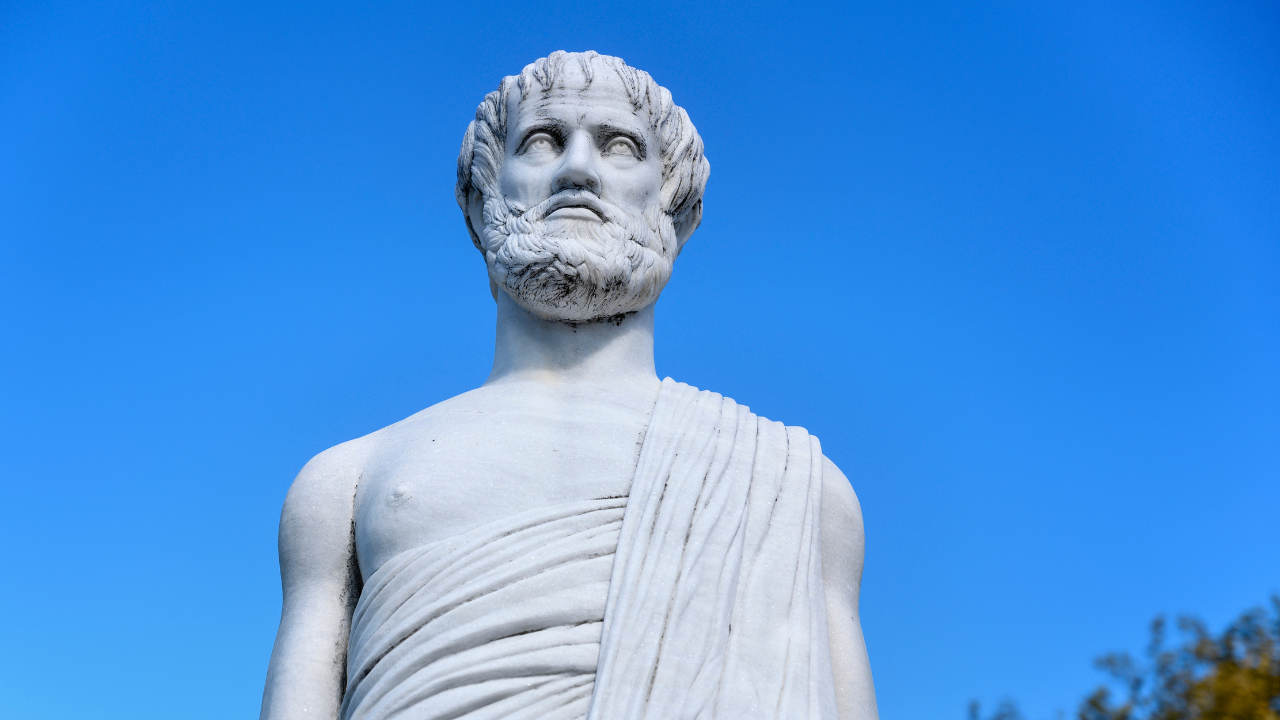
Image Credit: Canva
Aristotle’s works and ethical vision
Aristotle’s ethics finds perhaps its clearest expression in the Nicomachean Ethics, where he introduces the notions of arete and eudaimonia. According to Aristotle, the good life is not pleasurable, rich, or comfortable but rational and virtuous. Virtue, according to him, is acquired through habit and practice, particularly when one habitually selects the right response in difficult situations.In his other works, like Politics, Rhetoric, Poetics, and biology and metaphysics writings, Aristotle insists on the importance of balance, purpose, and excellence. He has viewed humans as rational and social animals whose ultimate fulfillment consists in being virtuous within the social community. For him, endurance, moderation, and bravery are real-life qualities rather than some abstract ideals to guide a person through life. The quotation above expresses such a vision. It underlines that suffering is an opportunity for virtue to shine rather than to give grounds for despair.The words attributed to Aristotle are a timeless insight into resilience and the moral virtues. The soul’s true value, as these words remind us, is best understood in times of grappling ups and downs. To suffer and to be collected about it, to be resilent, does not mean a lack of passion and feeling, but means instead to possess a backbone and to possess moral virtues. Taken in the context of the philosophy of Epictetus, these words take on even deeper meaning: suffering is inevitable, but dignity is a choice and it is through this choice that true character, strength, and inner beauty are revealed over time.
About the Author


