
If there’s one thing 2025 quietly taught us, it’s this: Indians are no longer waiting for a medical report to scare them into taking health seriously. This year, health and fitness stopped being a “New Year resolution that fades by February” and became something far more real, and far more personal.The TOI Habit Index data paints a fascinating picture of how Indians approached health in 2025. And no, it’s not about everyone waking up at 5 am or surviving on smoothies. It’s about priorities shifting, routines bending, and people doing the best they could with the time, energy, and motivation they had.
About TOI Habit Index
The respondents came from all stages of life, which makes the insights even more relatable. A large chunk,32.5%, are still in school or college, showing how health conversations are starting early. Those early in their careers made up 17.47%, juggling new jobs and long hours. Mid-career professionals accounted for 19.48%, often balancing work, family, and fitness. Another 21.37% were experienced professionals, likely more conscious about long-term health. Meanwhile, 9.19% were either taking a break or retired, reminding us that wellness matters at every age and phase.Responses were gathered through simple, relatable questions such as “What was your biggest health priority in 2025?”, “How consistent were you with your health or wellness routine?” and *“What helped or held you back from staying fit this year?” Instead of complicated jargon, people could choose everyday options that actually reflect real life from medical reasons and fitness challenges to small but meaningful changes like cutting down on caffeine or managing daily stress. The idea was to capture honest, lived experiences rather than picture-perfect health routines.The responses came from people living in very different settings, which adds depth to the findings. A majority, 56.2%, spend most of their time in metro cities like Mumbai or Delhi, where fast-paced lives, long commutes, and packed schedules often shape health choices. Another 19.84% live in growing cities such as Indore or Lucknow, where urban lifestyles are catching up quickly, along with new fitness trends. Meanwhile, 23.97% come from smaller towns or semi-urban areas, showing that conversations around health and wellness are no longer limited to big cities.In terms of how people identify themselves, most respondents, 70.96%, preferred He/Him, while 24.01% chose She/Her. A smaller but important 5.02% selected They/Them or preferred not to say, reminding us that inclusivity matters in conversations about health. Together, these responses reflect a diverse mix of locations and identities, making the insights feel more real, grounded, and truly representative of everyday lives across India.
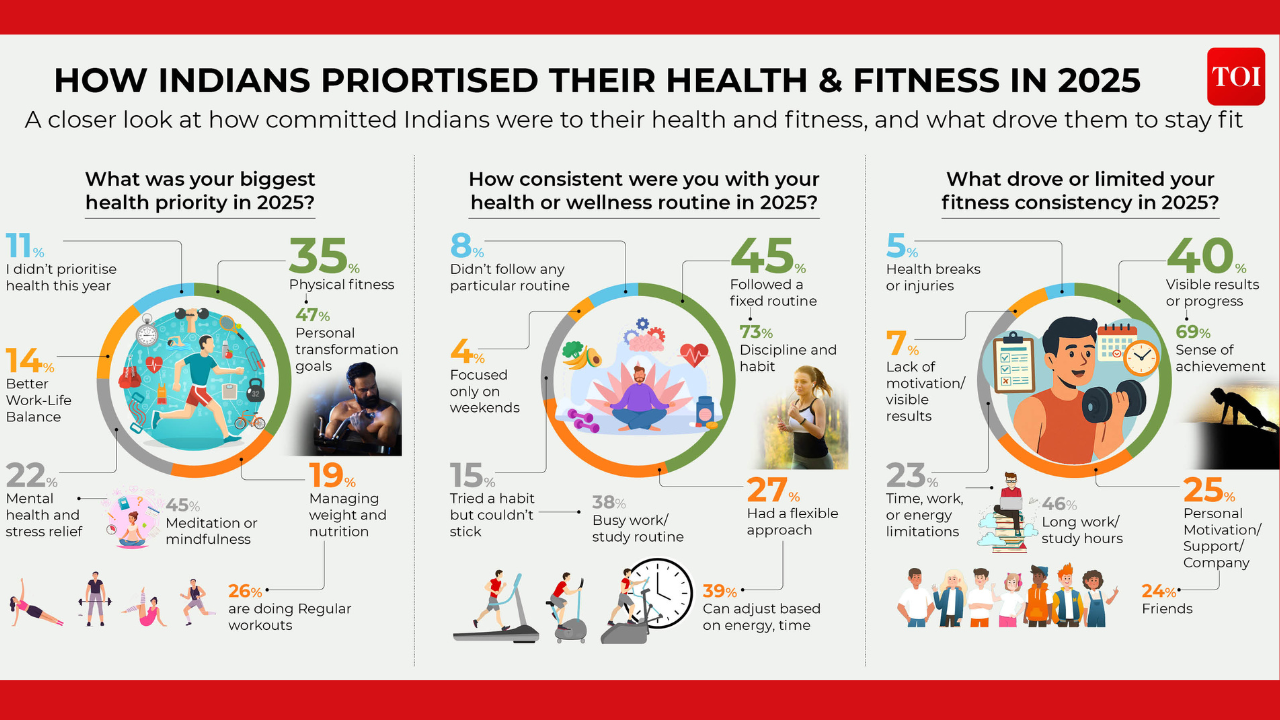
First things first: What did Indians actually care about?
When asked about their biggest health priority in 2025, 35% of respondents said physical fitness topped their list and 47% out of these prioritised personal transformation goals. That’s huge. It tells us that people weren’t just chasing weight loss or a certain body type, they were looking for deeper change. Feeling better. Becoming stronger. Sleeping well. Managing stress. Just being healthier overall. Exercise, movement, strength, stamina, it clearly mattered. But what’s interesting is that fitness didn’t completely overpower other priorities.A solid 22% focused on mental health and stress relief, which says a lot about the year we lived through. Stress, burnout, emotional overload, Indians aren’t brushing it under the carpet anymore. They’re acknowledging it.
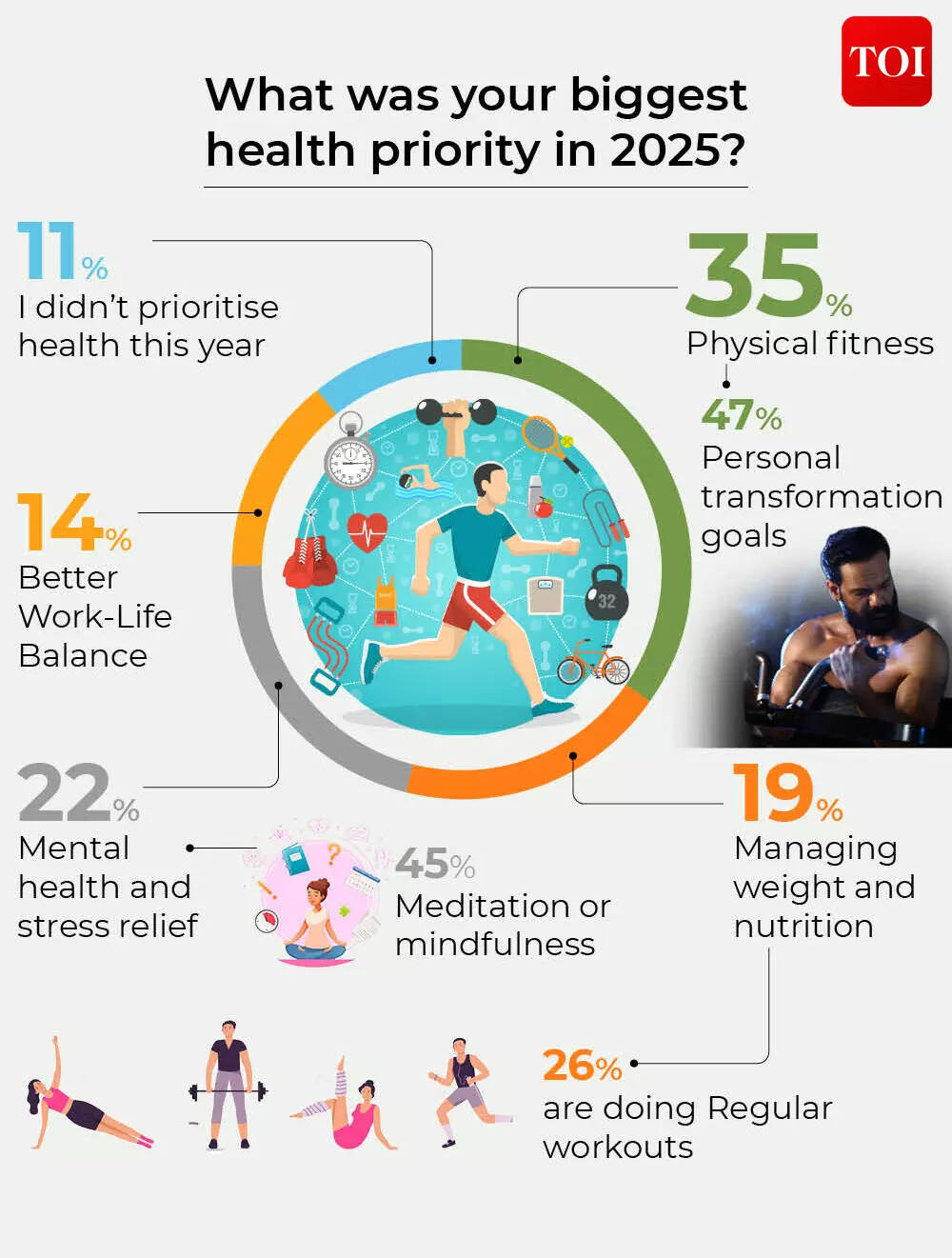
Then there’s work-life balance, which mattered to 14% of participants. That may sound small, but in a culture where long hours are worn like a badge of honour, this number feels significant.And yes, honesty wins: 11% admitted they didn’t prioritise health at all in 2025. Life got in the way, and that’s real.One thing the infographic, comprising 74.7% males and 25.3% females makes very clear is that “health” didn’t mean the same thing to everyone.Among those focusing on mental well-being, 45% of those who prioritised mental health turned to meditation and mindfulness. Breathing exercises, quiet moments, guided apps, mental calm became a daily tool, not a luxury.On the physical side, 19% focused on managing weight and nutrition and 26% out of them said they were doing regular workouts. That could mean anything from portion control to cutting back on junk or simply eating more home-cooked food.Together, these numbers show something important: Indians in 2025 weren’t chasing extremes. They were choosing what fit into their lives.
Consistency: The real battle
Now comes the most relatable part, consistency.When asked how consistent they were with their health or wellness routines, only 45% said they followed a fixed routine. That’s less than half. And honestly? That feels about right.Another 27% followed a flexible approach, adjusting workouts or wellness habits based on time and energy. Some days you hit the gym, some days you stretch at home, some days you just sleep. And that’s okay.But consistency wasn’t easy. 15% said they tried forming a habit but just couldn’t stick to it, while 4% admitted they focused only on weekends. And here’s the big culprit behind all this inconsistency: busy work or study routines, which affected 38% of these people. Long hours, deadlines, commutes, family responsibilities, it all adds up. We all know how that goes, Saturday enthusiasm, Monday reality.
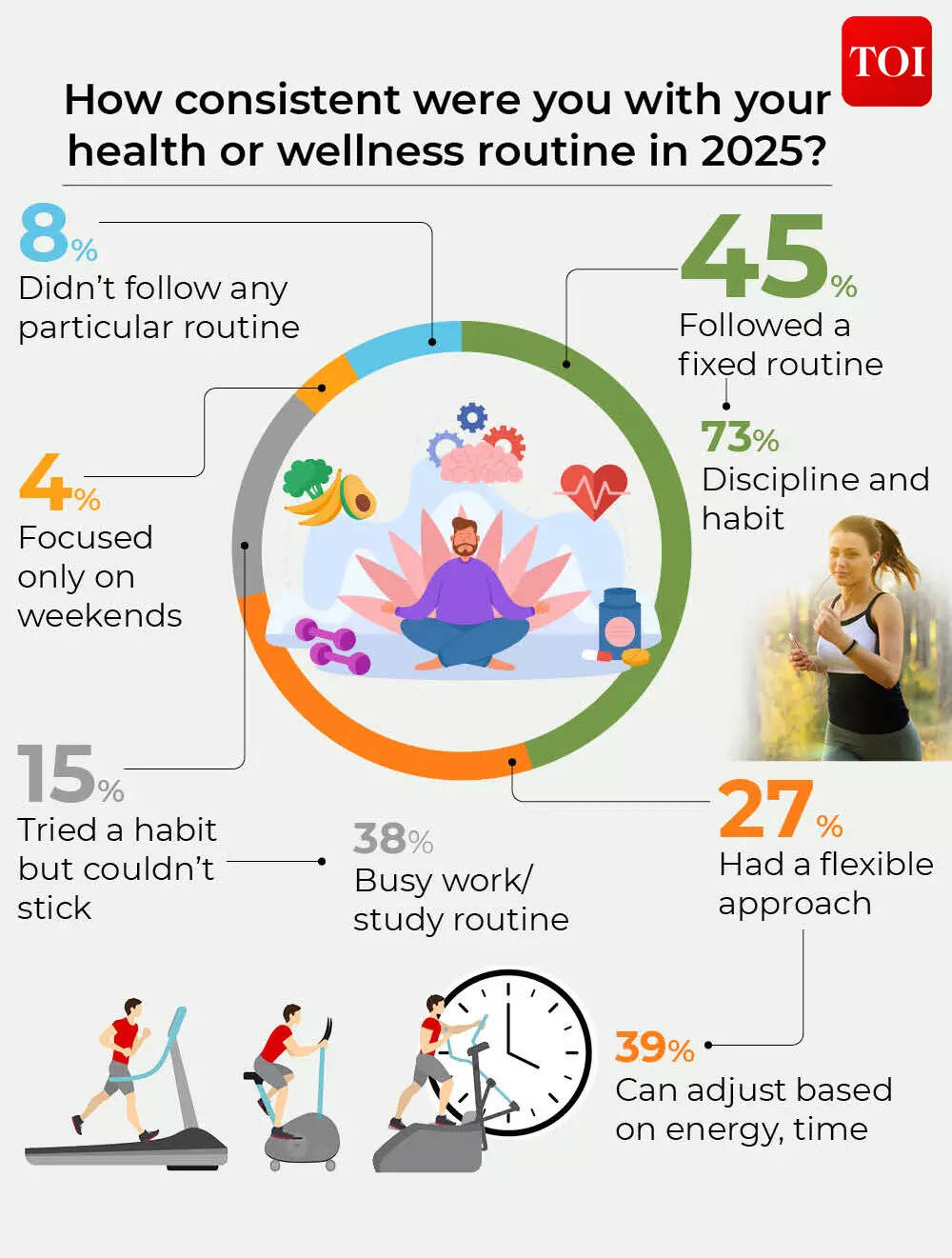
A smaller 8% didn’t follow any particular routine at all, often because of unpredictable schedules or fatigue.One of the most interesting insights from the infographic is what helped people stay consistent.A strong 73% of those who had a fixed routine credited discipline and habit for keeping them on track. Not motivation. Not inspiration. Habit. That’s a powerful reminder that waiting to “feel like it” doesn’t work—showing up does.This shift away from rigid plans toward realistic routines might be one of the healthiest trends of 2025.
So what kept people going?
Let’s talk about motivation, because that’s where things get really human.The biggest driver? Visible results, which motivated 40% of respondents. Seeing progress—whether it was weight loss, better stamina, improved mood, or even clearer skin—made people want to continue. A sense of achievement was reported by 69% of them. Finishing a workout, sticking to a routine, or simply not giving up felt good. Progress wasn’t always visible in the mirror, but it was felt emotionally.
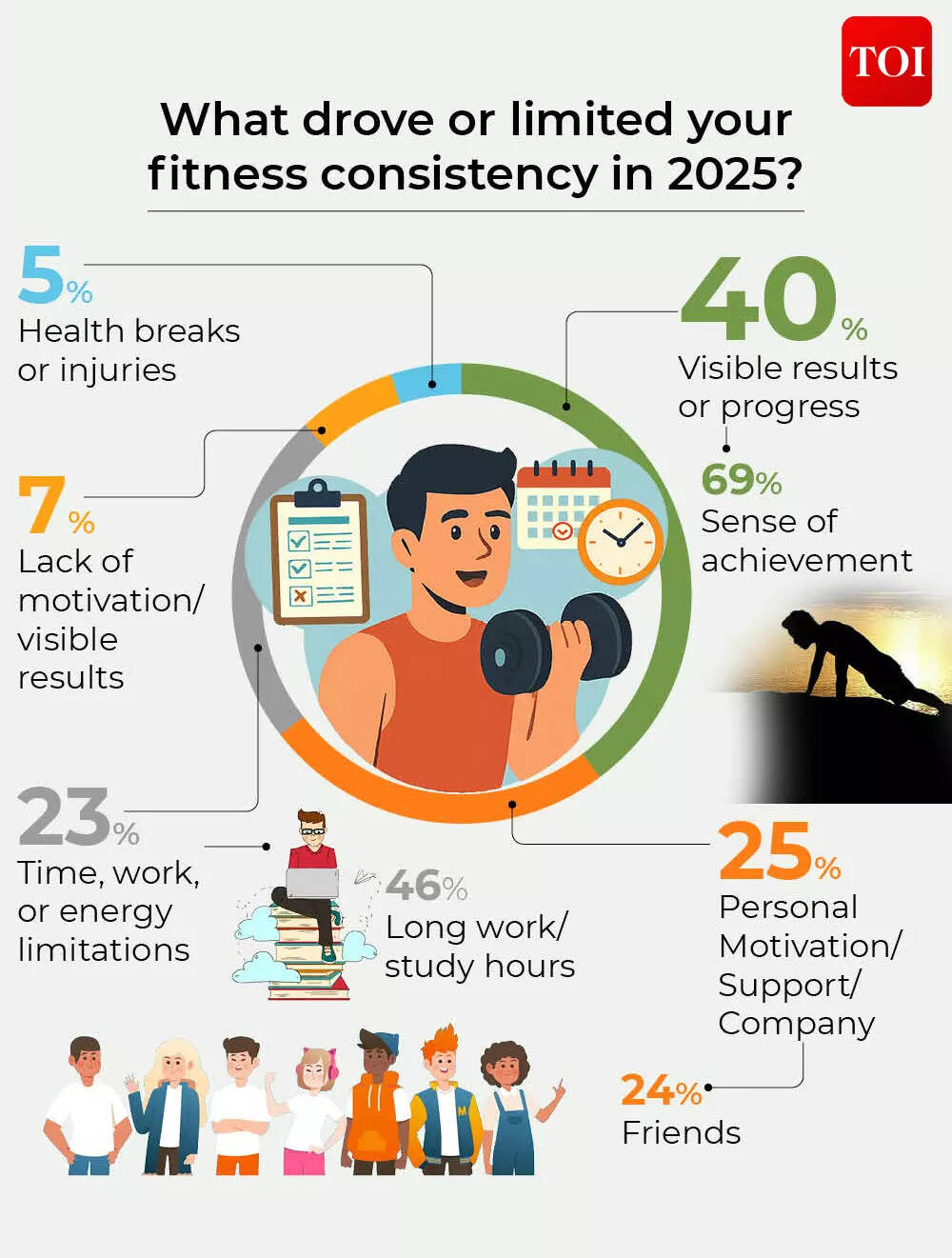
Support mattered too. 25% credited personal motivation or support systems, while 24% of them said friends helped them stay consistent. Having someone check in, work out with, or simply encourage you to make all the difference.
What got in the way? (because something always does)
Of course, it wasn’t all smooth sailing.The biggest obstacle? 23% struggled with time, work, or energy limitations, while 7% said lack of motivation or visible results made it hard to continue. Time or the lack of it remained the biggest challenge.Then there were unavoidable setbacks. 5% faced health breaks or injuries, reminding us that sometimes the body forces you to pause, no matter how motivated you are.
The bigger picture: What 2025 really changed
When you look at all this data together, one thing becomes clear: health in 2025 became more human.People stopped pretending they could do it all perfectly. They chose flexibility over guilt. Habit over hype. Progress over pressure.Health was no longer about dramatic transformations, it was about showing up when possible and forgiving yourself when you couldn’t.And maybe that’s the biggest takeaway of all: Indians in 2025 didn’t just prioritise health. They redefined it.Not as a destination.Not as a checklist.But as a journey, one routine, one choice, one honest attempt at a time.If that’s not progress, what is?
About the Author


