
On a nippy November evening, the large murals and sculptures on the lit-up façade of the eighth-century Kailasa temple in Ellora, the world’s largest human-made monolithic rock structure, come alive. Each mural narrates a story of the ancient Hindu, Buddhist and Jain traditions. Much as Delhi-based Scottish author-historian William Dalrymple does on the stage, set against the backdrop of these rock-cut figures.
He brings to life the entire era, connecting India to Java, with a side of the Southeast Asian historical perspective. It is followed by a musical recreation of the landmark 1967 UN General Assembly concert of Pandit Ravi Shankar and Yehudi Menuhin, performed by Pandit Shubhendra Rao and his Dutch cellist-wife Saskia Rao-de Haas.
What better way to observe the 80th year of the United Nations (UN) this year than with a spectacle at the Ellora rock-cut caves? The Ellora caves, along with Ajanta, were among the first Indian sites to get the UNESCO World Heritage site status way back in 1983. AIKYAM 2025 (aikyam in Sanskrit means oneness/unity) witnessed performances by international artists from seven countries and brought together ambassadors and diplomats from over 36 countries. The experience offered glimpses into local Maharashtrian cuisine, dance forms and centuries-old weaving traditions of Himroo fabric and Paithani sari.
Serving bespoke heritage
When Dr. Scott Robert Hearnden, an international researcher from Australia, who has been living in Delhi for the last four years, arrived in Chhatrapati Sambhajinagar (formerly Aurangabad) for the curated heritage tour last month, the changes were visible. His five-star hotel had a traditional welcome arranged for him. He walked into a live demonstration of traditional music where men and women clad in dhoti, kurta and nauvari (nine-yard saris) danced to the beat of dhol-tasha. The welcome drinks were local Maharashtrian specialities like solkadhi (a cooling drink). Awaiting him was a hamper with local specialities: goodies and an exquisite handcrafted metallic replica of the Ajanta dancing girl in Bidriwork, bright handwoven tablemats, and a Himroo silk-cotton shawl. “In the last 20 years that I have been coming to India, the experience has changed dramatically. There is an ability to have an immersive experience in India now. It will be helpful to have more information out into the world about what is available, and how people who are not from India can have that experience. We rely on our tour operators to curate experiences for us. Access to authentic experiences by ourselves is still a challenge,” he says.
Laavni dance as part of local cultural traditions at AIKYAM 2025.
| Photo Credit:
Special arrangement

Modaks as part of the focus on local cuisine at AIKYAM 2025.
| Photo Credit:
Special arrangement
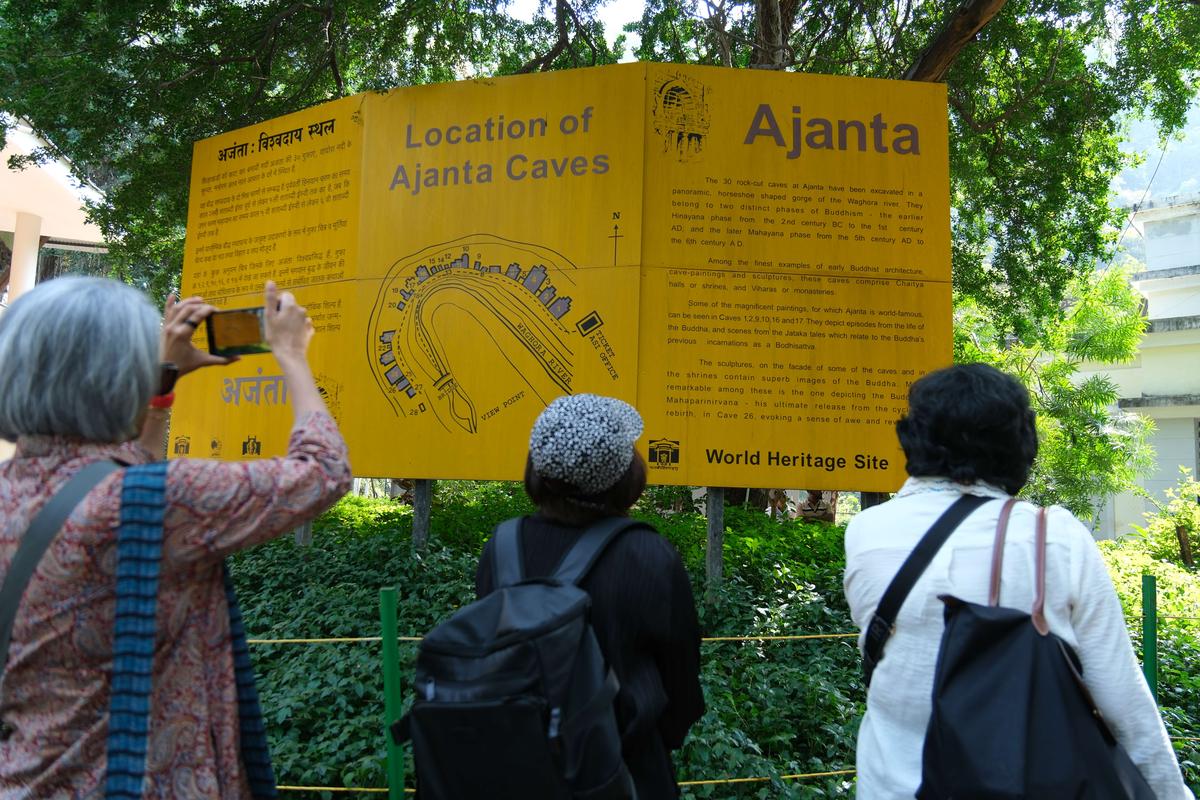
Heritage tour to Ajanta caves at AIKYAM 2025.
| Photo Credit:
Special arrangement
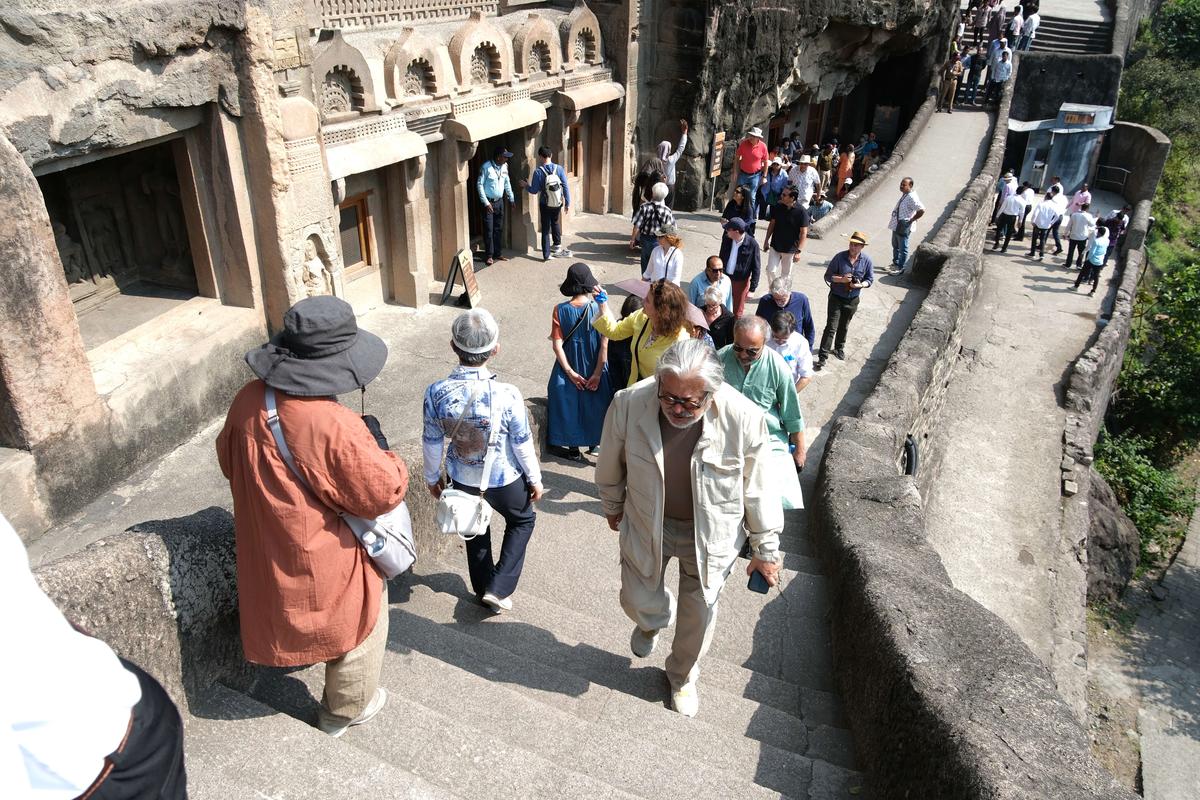
Heritage tour to Ajanta and Ellora caves at AIKYAM 2025.
| Photo Credit:
Special arrangement
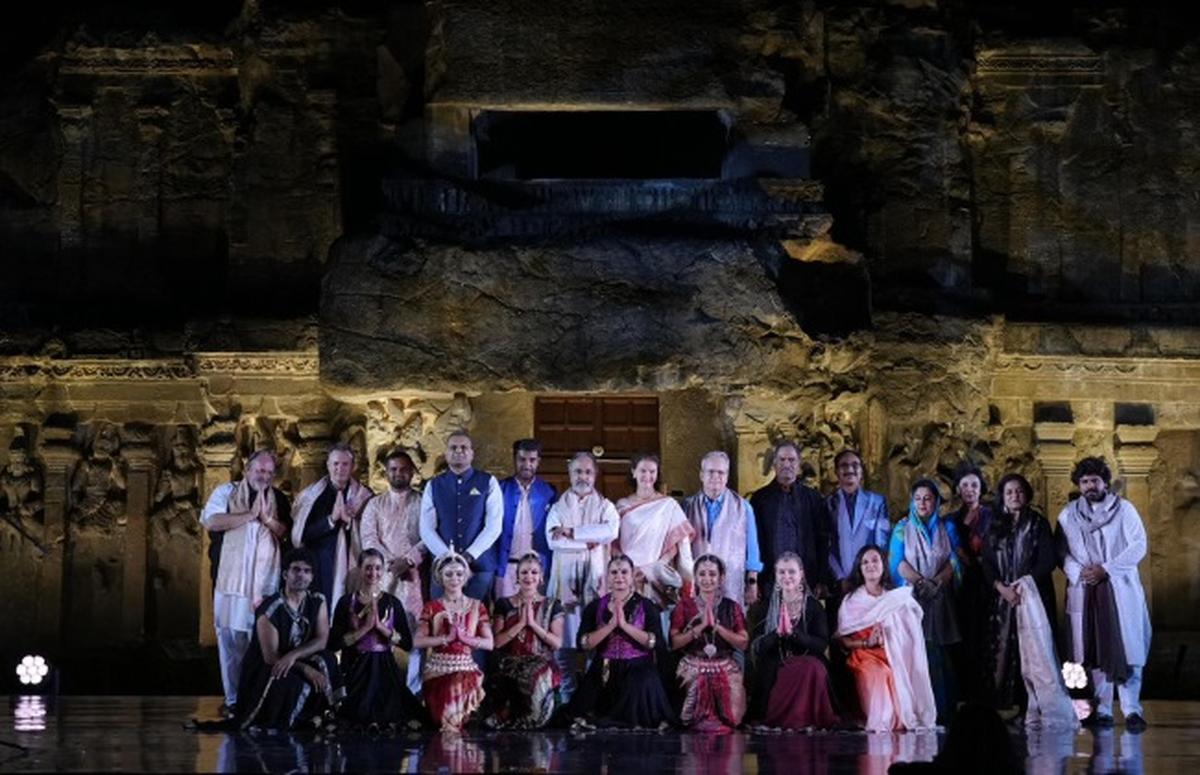
Diplomats, speakers, artists and performers at Ellora caves as part of AIKYAM 2025.
| Photo Credit:
Special arrangement
Global Tourism rankings published by the World Economic Forum, in their biennial Travel and Tourism Development Index (TTDI) 2024, places India at the 39th rank. Union Ministry of Tourism’s ‘India Tourism Data Compendium 2025’ ranks cultural resources at the ninth spot among India’s top-performing pillars for the year 2024. Tourism in India is no longer only about visiting historic sites. It is about bespoke, exclusively curated events and creating immersive experiences — by private players like Sopaan, which curated this event, AIKYAM 2025. The Delhi-based non-profit was founded in 2023 by Siddhaant Mohta and his former-diplomat mother Monica Mohta, to bring audiences to heritage sites.
Why Ajanta-Ellora doesn’t attract international tourists
While the Ajanta caves, built from the second century BCE to the sixth century CE, are a stunning example of the rock-cut Buddhist cave monuments, the Ellora caves consist of the Kailasa temple, a monolith with the distinction of being the world’s largest human-made monolithic structure, showcasing the incredible craftsmanship and religious harmony. Its massive basalt-cliff-cut monasteries and temples representing Hindu, Jain, and Buddhist faiths are a symbolic representation of religious co-existence and mutual influence in ancient Indian architecture.
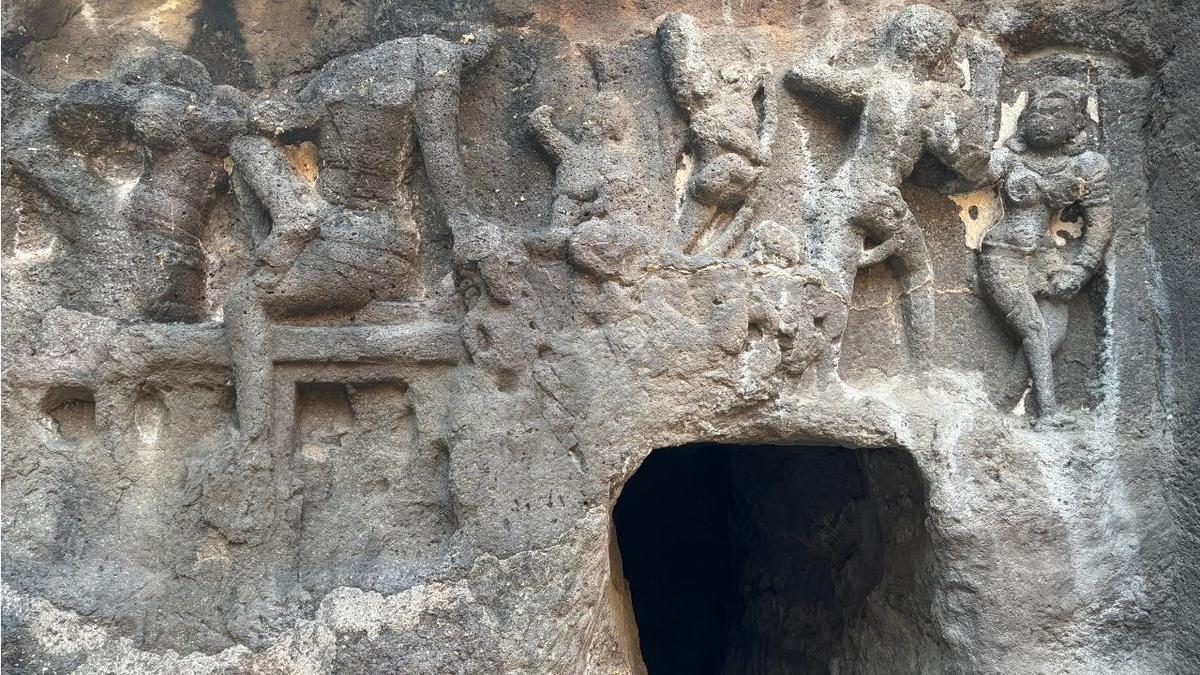
At the Ellora caves.
| Photo Credit:
Special arrangement
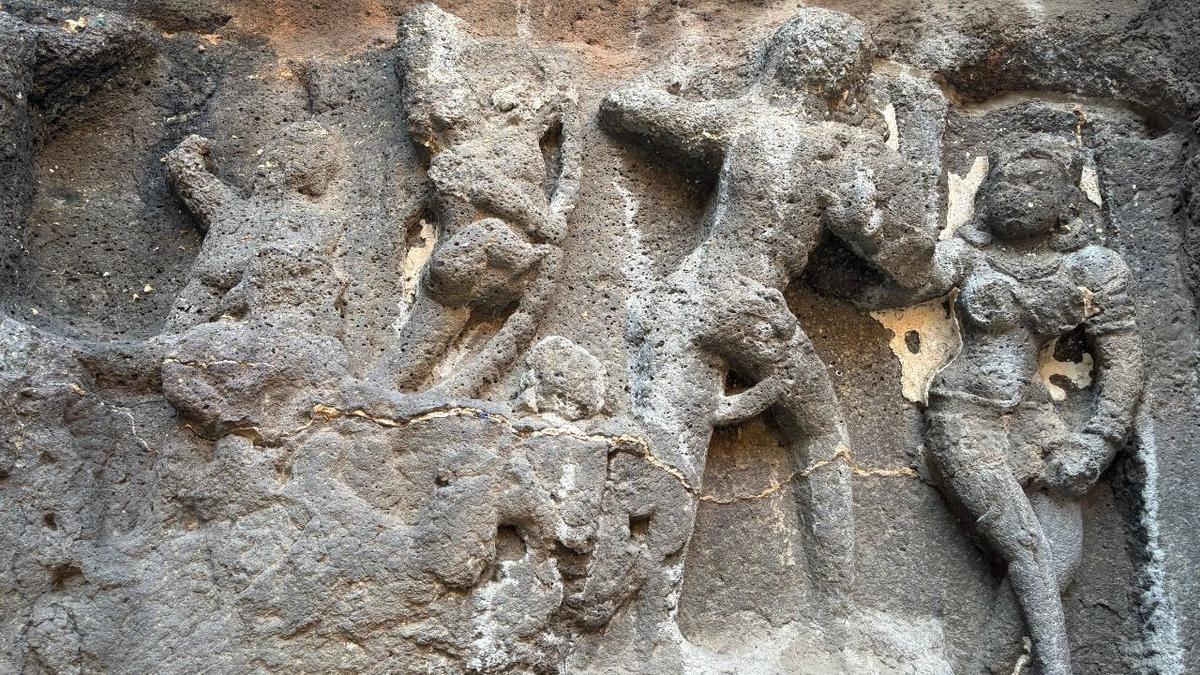
At the Ellora caves
| Photo Credit:
Special arrangement
Ellora caves are around 30 km, and Ajanta caves are around 100 km from the nearest city, Chhatrapati Sambhajinagar. While domestic tourists throng to the historic site, however, unlike the Taj Mahal, the Ajanta-Ellora caves hasn’t been able to draw much international attention. This is primarily because of the lack of robust infrastructure, non-availability of standard hotels in the monuments’ vicinity and logistical challenges such as no washrooms on the long journey by unmotorable roads.
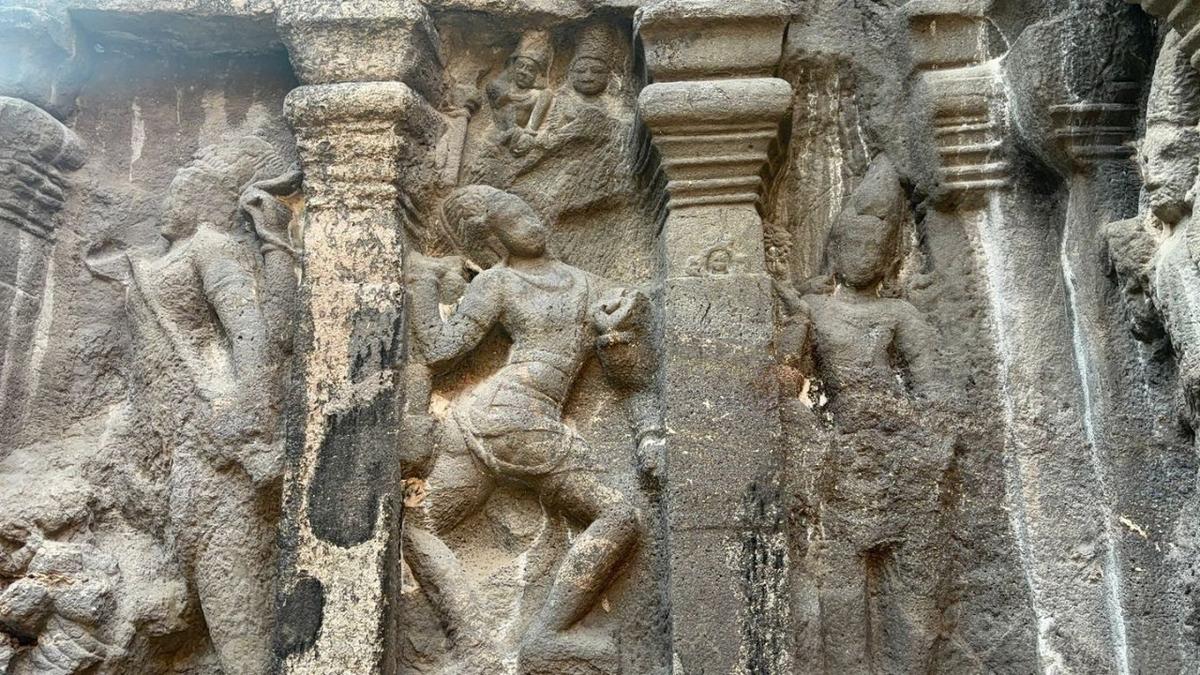
At the Ellora caves.
| Photo Credit:
Special arrangement
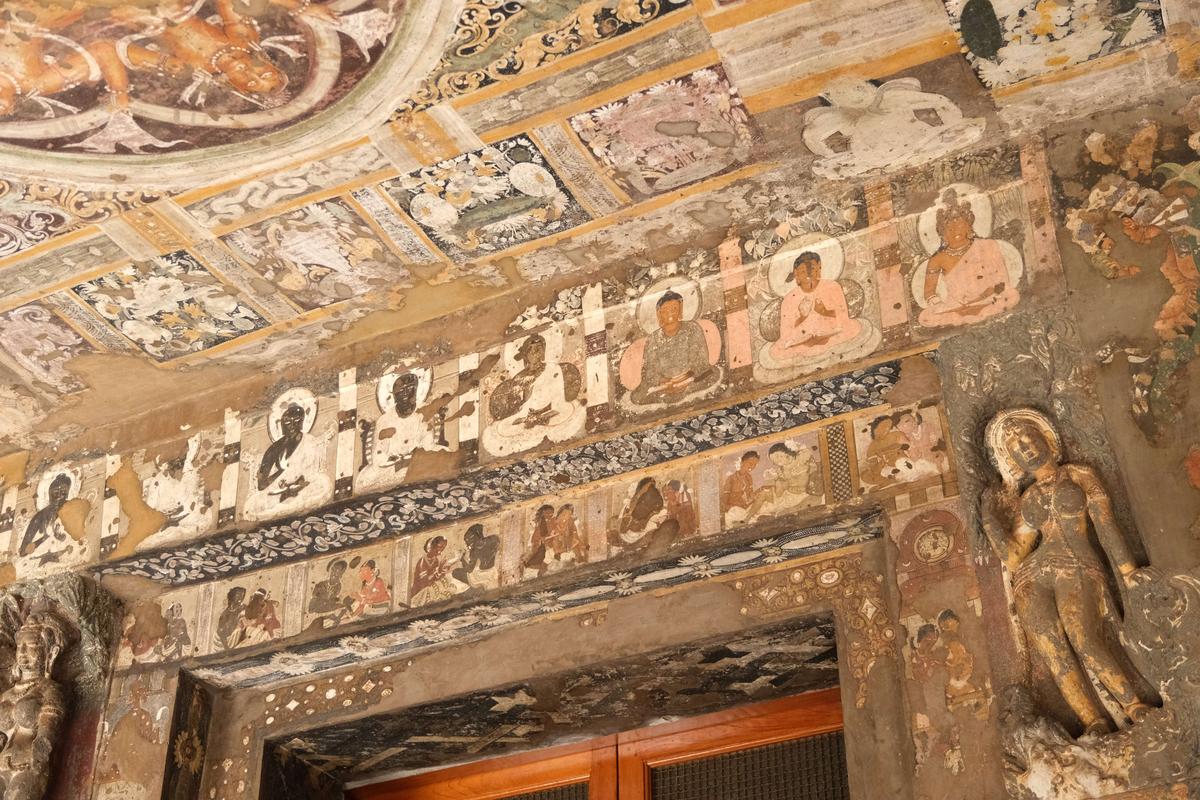
Murals and frescoes inside the Ajanta and Ellora caves.
| Photo Credit:
Special arrangement
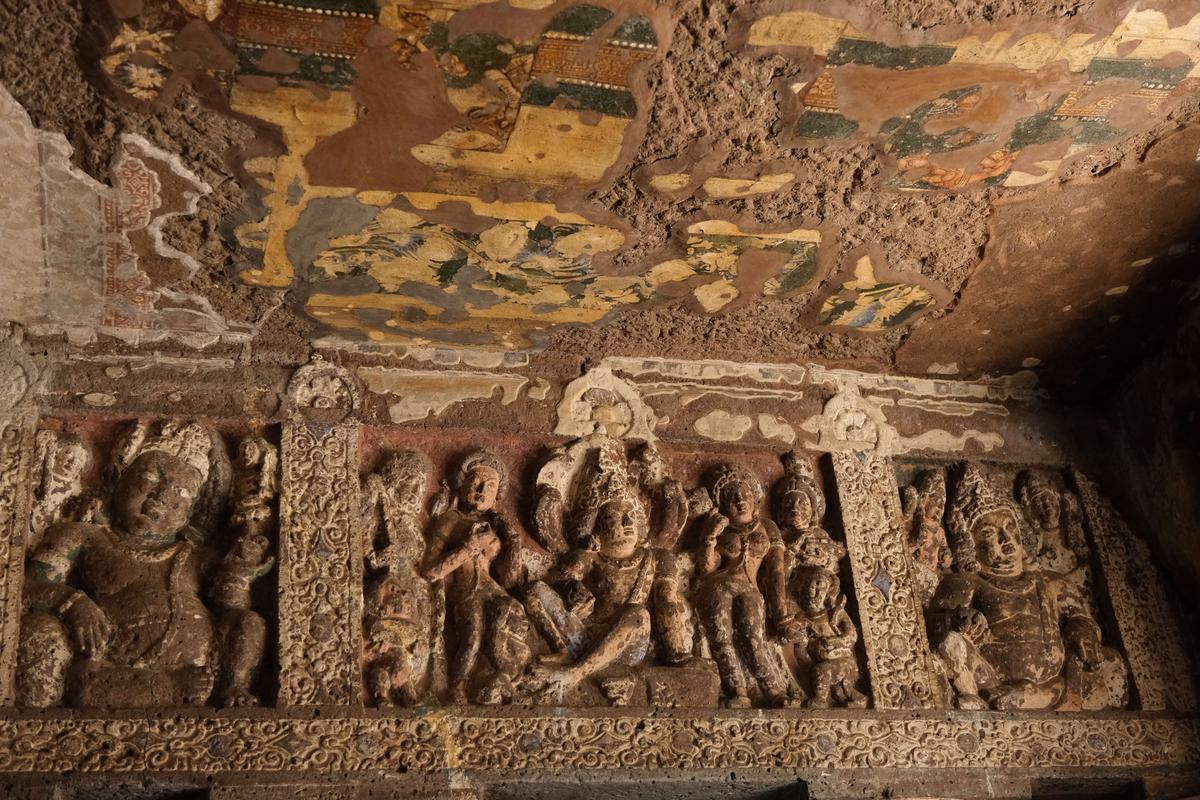
Murals and frescoes inside the Ajanta and Ellora caves.
| Photo Credit:
Special arrangement
Dalrymple says, “This is one of the most historically significant sites in South Asia, not just in India.” He emphasises how the region had an unbroken history of veneration for over 2000 years, and quips that with better infrastructure and promotion/publicity, the location has the potential to attract tourists from South Asia, West Asia, and other regions. “The caves of Ajanta, carved from the second century BCE, give an exclusive glimpse into the Buddhist culture. And yet, we do not see the international Buddhist tourists come here,” says Madhup Mohta, a former diplomat who is now associated with Sopaan.
And neither does it draw the Turks, who are interested in the Ottoman Empire, as the last Ottoman emperor’s empty tomb is situated there, quips Dalrymple. He says, “There are no boards, no signages, no paths to take you to some of the historic locations. Some of the sites are littered with waste.” And that the entire region has just as much potential for international tourism as Agra and Delhi.
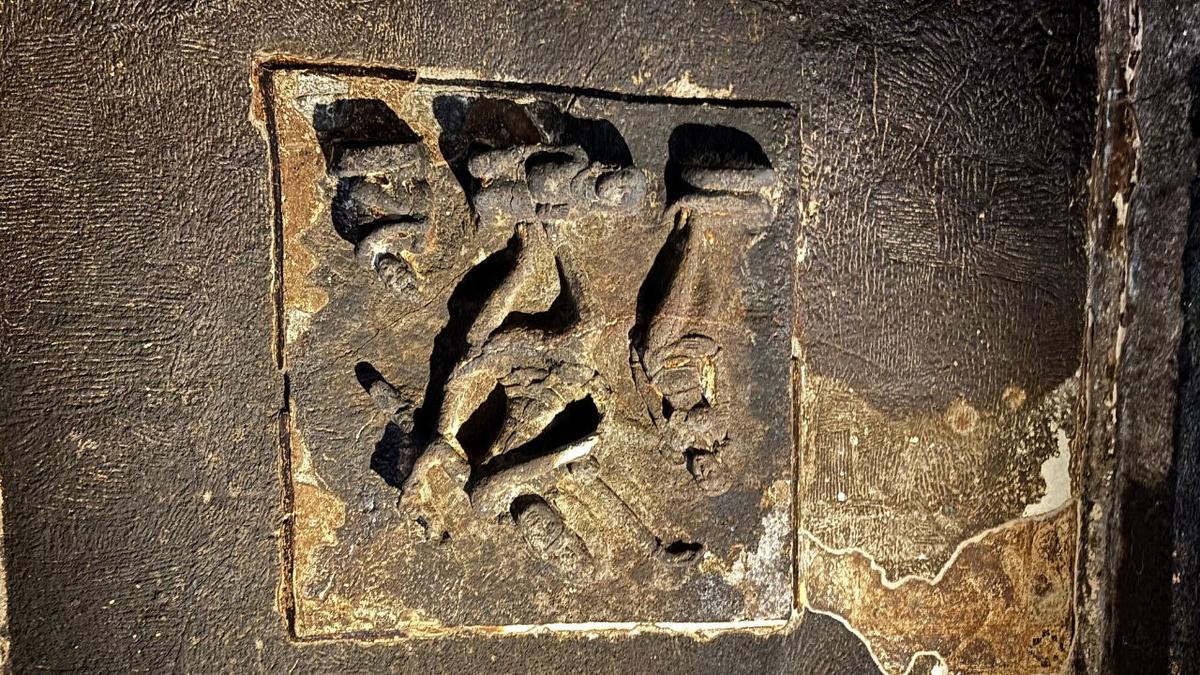
At the Ellora caves.
| Photo Credit:
Special arrangement
A syncretic ‘soft power’
Spain’s Ambassador to India, Juan Antonio Marc,h says, “What is 80 years of the UN, looking at the millennium of history behind us? For a culture like India, this is just a drop in the ocean of culture and beauty.” Taken in by the sites of historic significance and India’s natural beauty, he says, the country enjoys a unique position as a “cultural soft power”.
Tim Curtis, UNESCO representative and director for its Regional Office in New Delhi, says, “These caves and temples are one of humanity’s greatest engineering and architecture. They help define the global understanding of India’s heritage. Ajanta represents the pinnacle of architecture. It went on to influence the Far East, as far as Java, in ancient Asia. Ellora has astonished us through the scientific knowledge and prowess behind carving these cliffs. This remains unmatched in human history. It shows us the history of co-existence, reflecting an ethos of dialogue. These shared sacred spaces by Hinduism, Buddhism, Jainism, show an outstanding universal value.”
UN at 80: Ellora caves host global cultural celebration with artists from 7 nations
| Video Credit:
India Press
Curtis highlights the significance of the UNESCO World Heritage Convention (1972) in the protection of such heritage sites, calling it one of the most widely agreed-upon international treaties. Currently, 196 countries, including India, China, U.S., U.K., Australia and South Africa, are signatories to it. “The effort, while granting UNESCO World Heritage Site status, is to look for cultural and natural heritage sites of outstanding universal values. We look at the proposals not just in terms of the site’s significance, but also the plan in place for its conservation. Periodic reviews are held to check if the sites adhere to the standards for the protection of these sites,” he says.
Scope for cultural tourism
According to a TechNavio report, the cultural tourism market size is forecast to increase by $8.41 billion, between 2024 and 2029. Tourists globally are seeking unique, immersive experiences, a trend fuelled by technologies such as Augmented Reality and Virtual Reality in cultural tourism. This positions India as one of the leading destinations for culturally immersive tourism experiences, states the report, but what’s required are continuous efforts to deepen visitor engagement and uplift local communities through sustainable tourism practices.
These cave-temples show us what societies can achieve when they choose coexistence over exclusion, adds Curtis. “Humanity’s greatest achievement is collective collaboration,” he says, adding that the world heritage belonged to all of humanity, and protecting it was our collective responsibility.
Can immersive heritage events like AIKYAM 2025 begin to address the low foreigner-turnout? Dr. Mohta says, “Our effort was to highlight the place to bring it on the international tourism map.” As a first step, the government should focus more on the upkeep of these historic sites, which will help to market them better.
The writer was invited to AIKYAM 2025 by Sopaan.
vi**************@*********co.in
About the Author


