
Ras Al Khaimah, which translates to head of the tent, is a lesser-known adventure-leisure destination in the United Arab Emirates, steeped in heritage. RAK, as the locals call it, is where the desert, mountains and sea offer visitors adventure and slow tourism experiences. About 100 kilometres from Dubai international airport, RAK is the northernmost Emirate among the seven Emirates that form the UAE.
RAK, with its rustic setting and a population of around 4,00,000, makes for a quiet weekend getaway for residents of Dubai, Abu Dhabi, and Sharjah. Efforts are on, by the RAK Tourism Development Authority (RAKTDA), to step up international tourism, and the signs are visible. During the four-day visit, I spot tourists at every outing. RAK has received over 6,54,000 international tourists in the first half of 2025, a 6% increase compared to the same period in 2024.
A closer look at some of RAK’s major attractions:
Jebel Jais
Is it possible to be in two countries at once? We hike along a trail when Fadi Hachicho, founder of Adventurati Outdoor,pauses near a triangular milestone point and declares, “My right foot is in the UAE and my left, in Oman.” The markings on the stone confirmed his statement.
This is in the vicinity of Camp 1,770, the highest camp in RAK, at 1,770 feet above sea level. From that vantage spot, we take in views of the rocky Jebel Jais mountain that extends from the UAE to Oman.
Fact file
Getting there: RAK has its own international airport, and is also well connected from Dubai, Abu Dhabi and Sharjah airports.
Best time to visit: October to April
Other attractions: Al Jazira Al Hamra village, the RAK museum, Jais Sledder, Al Wadi Natural Reserve, Golf courses, Bear Grylls Explorers Camp
Places to stay: Several resorts dot the 64 kilometre-long beaches. We stayed at The Mövenpick Resort at Al Marjan Island, equipped with over 400 rooms, suites and sea-facing private villas.
Fadi organises hiking, trekking, and mountaineering trips for seasoned adventurers and leisure hikes for amateurs like us along the 94-kilometre hiking trails. While hiking, it is almost like having private access to the mountains.
Groups stay overnight at Camp 1,770 in makeshift tents. In addition, a cabin provides shelter during winter nights. The amenities are basic, encouraging participants to stay in tune with Nature. “This is camping, not glamping,” laughs Fadi, an advocate of slow tourism.
Campers can partake in yoga, sound healing, Wim Hof (Dutch extreme athlete and motivational speaker) breathwork method, and cooking sessions.
Locals supply food to the camp. We taste the sweet tea named Karak, served with dates and local desserts Luqaimat and Assidi or the Assidat Al-Boubar. We try the Luqaimat, a fried dumpling with a crunchy exterior that gets its sweetness when dipped in honey or date syrup, before sampling Assidi, a halwa-like preparation. Fadi asks us to guess the key ingredient. Even the foodies in the group fail to crack it. The humble pumpkin has lent itself to a mild, flavourful delicacy that had us reaching out for a second helping.

Jais Flight zipline
| Photo Credit:
Ras Al Khaimah Tourism Development Authority
Jebel Jais’ biggest attraction is the Jais Flight — the world’s longest zipline that runs 2.83 kilometres at 1,680 metres above sea level. Zipliners typically cover the distance in a little over two minutes, taking in views of the canyons while reaching speeds of up to 150 kilometres per hour. Unless one is extremely nervous of heights, this one is highly recommended. For those who may develop cold feet, like I did, there are viewing decks from which one can view the canyons. After the flight, stop by at 1484 by Puro, the highest restaurant in the UAE that serves Arabic and international cuisines.
Jazirah Aviation Club
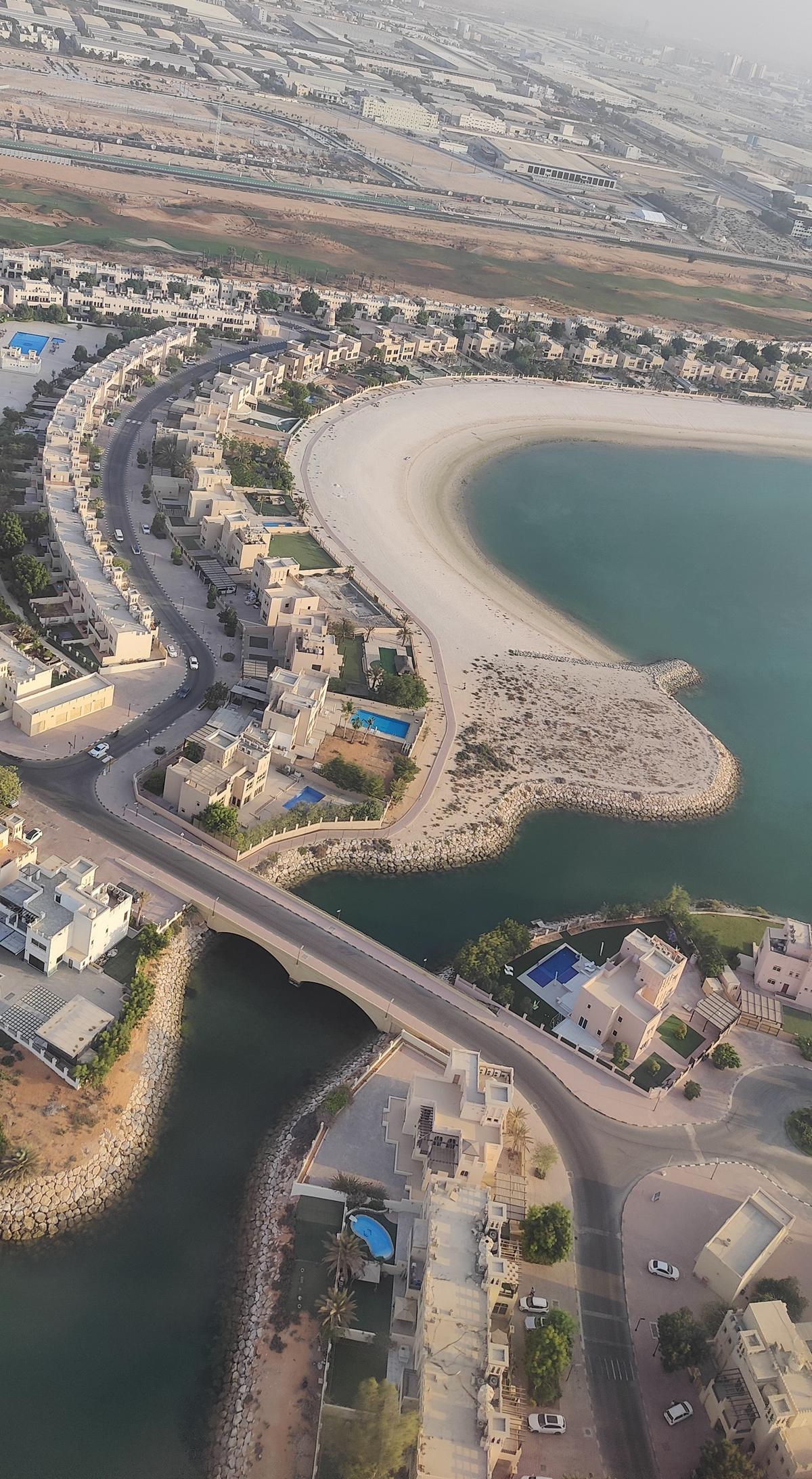
An aerial view of the Al Marjan island
| Photo Credit:
Sangeetha Devi
“To your right is Al Hamra, a beautiful seaside retreat in RAK,” says my pilot, when the two-seater light sport aircraft we are in soars comfortably above the man-made Al Marjan island. The bird’s eye view of the island against the setting sun is stunning, with turquoise-green waters contrasting beige-toned constructions and lush green mangroves.
A 30-minute ride is a great way to take in the landscapes, including the under-construction 70-storeyed Wynn casino, with an integrated resort, scheduled to launch in 2027.
I recommend this aircraft ride to even those who are wary of heights, for you will be safely strapped to your seat within the comfort of the aircraft and the expert pilot taking control.

About 15 minutes into the ride, the pilot asks if I want to steer the aircraft. Sensing my hesitation, he says encouragingly, “Try it.” I gently steer the control to the right, then left, pull the control towards me by barely an inch and the aircraft rises gently above. It is the most exciting and satisfying thing I have done in a long time.
Once back on ground, I get a certificate acknowledging my efforts. Icing on the cake!
Bassata desert village
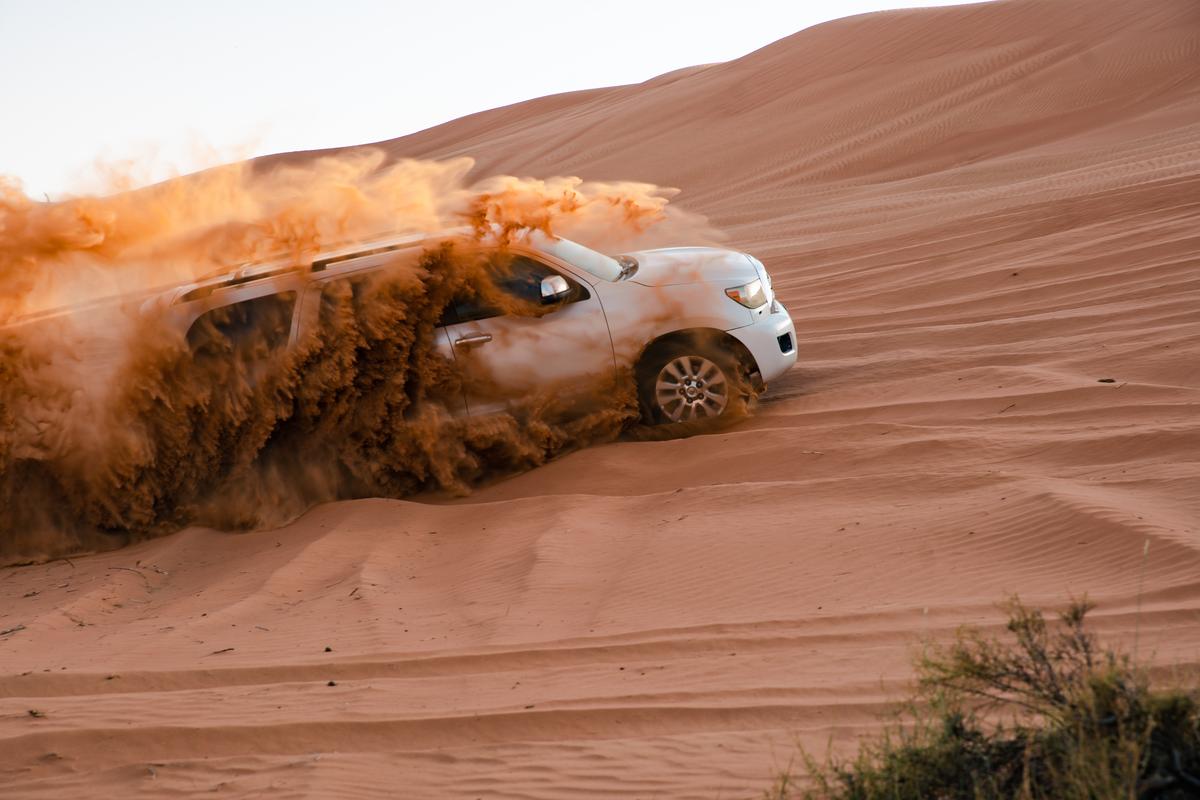
Dune bashing at Bassata desert village
| Photo Credit:
Ras Al Khaimah Tourism Development Authority
Driving through the winding roads towards Bassata village in the Al Wadi desert, a 1,235-acre protected reserve, it is common to find herds of camels along the roads. Roll down the windows and some of them seem to give a friendly nod, as though acquainted with tourists.
The hospitality in the village is representative of the culture of the indigenous Bedouin tribe. The Bedouins are pastoral nomads herding camels, sheep, goats, and living in tune with the desert ecosystem. The setting comes alive in the evenings. There are self-ride buggies for those who want to hit the dunes by themselves, or car safari rides led by experienced chauffeurs, which we chose.
Fasten your seat belts and get set for dune bashing. What began as an easy ride got exhilarating as it progressed, culminating in a picturesque setting of witnessing the sun nearly calling it a day, with the sands glistening in the golden hour.

Once dusk sets in, the village offers its guests an Arabic meal with a few international additions, tailored to cater to tourists. Colourful and rustic tents with low seating, shimmering in the light from the lanterns, also become the setting for cultural presentations — a traditional belly dance and a swirling Tanoura dance.
Dhayah Fort
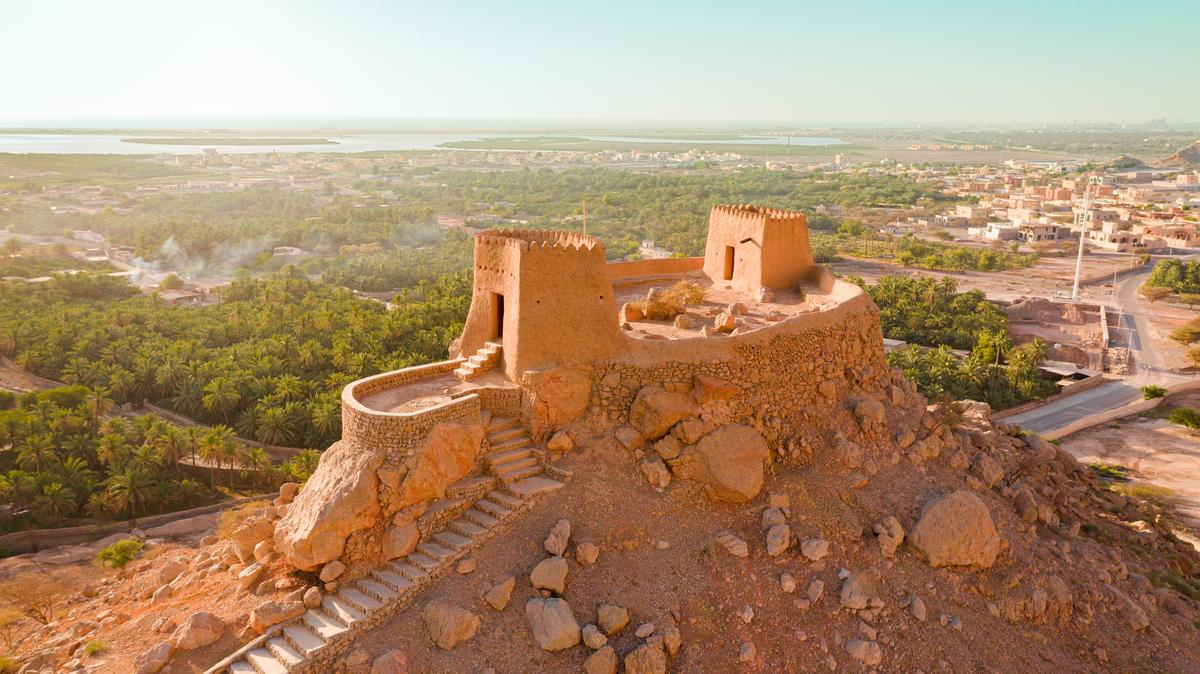
Dhayah Fort
| Photo Credit:
Ras Al Khaimah Tourism Development Authority
A tip: Get to Dhayah Fort in the early hours of the day, before it gets too warm, and hike up the 70-metre hill to reach the mud-brick fortress and its watchtower will not be daunting. Ascending the 239 steps, one is rewarded with views of datepalm gardens, the Al Marjan island, and the Jebel Jais mountains on the horizon. The Dhayah Fort is on the UNESCO World Heritage Tentative List.
During the hike, our guide doles out nuggets of history. The fort dates back to the Bronze Age (1600-1300 BC), and was restored in the 1990s. The twin-peak fortress was built in the 19th Century and the zagged pathway made it tough for the British to enter the fort during the 1819 battle between the British troops and the Qawasim tribes. “At first, the British arrived with small canons that could not reach this hilltop area. When they brought in a large cannon later, the local tribes had to surrender after just two shots were fired,” stated the guide.
At the base of the hill was a larger fort used by employees of the datepalm farm to shelter with their animals. The farm also had a watch tower for surveillance.
Suwaidi Pearl Farm
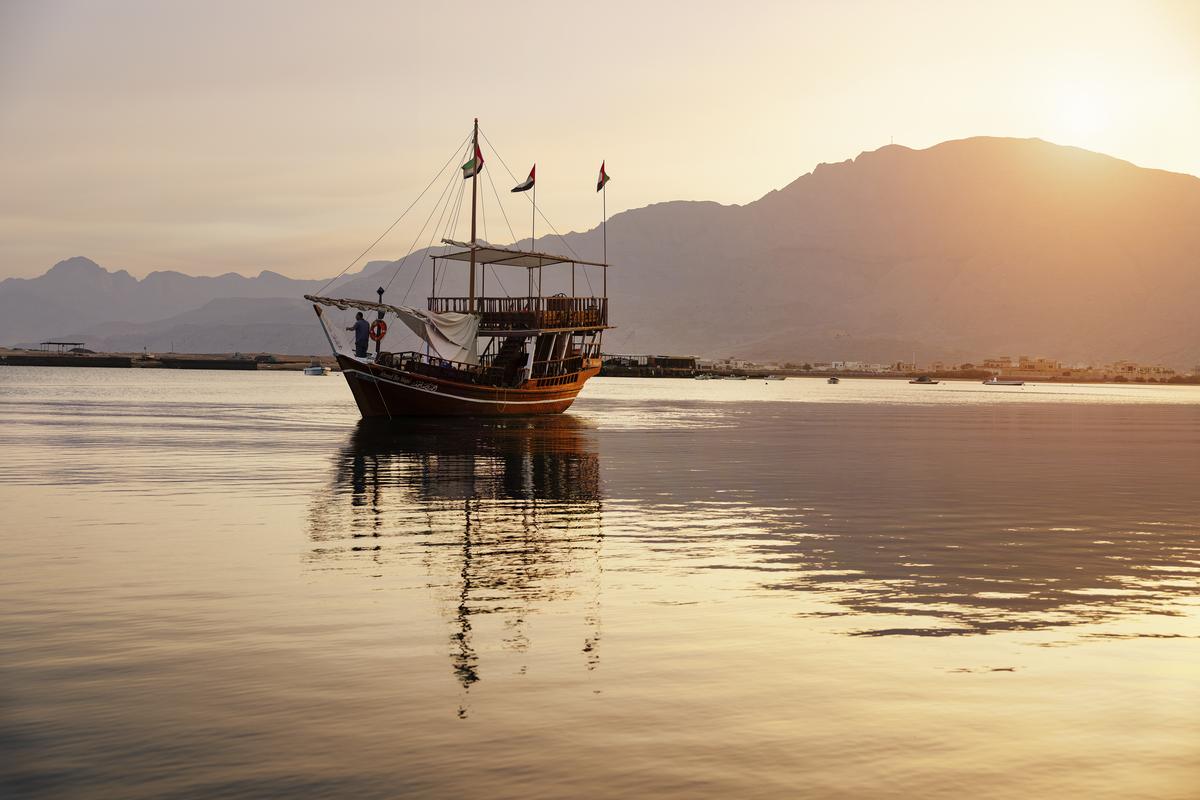
A traditional boat at Suwaidi Pearl Farm
| Photo Credit:
Ras Al Khaimah Tourism Development Authority
The summer months from May to August are best suited for the pearl season, as divers begin their day before sunrise, informs our guide as he gives us a brief history of pearl farming and diving. We are at Suwaidi Pearl Farm, atop a floating deck, after a 20-minute ferry ride from the harbour. Near the deck is Jalboot, a large boat that carried up to 30 sailors and was used for pearl diving up to 60 feet in the Arabian Gulf. We learn that the warm waters were conducive for pearls to grow and the shallow depth helped divers collect pearls using rustic equipment. Divers used tools such as a nose clip, a tough rope, and a stone for their diving pursuits.

The oysters, once grafted, are kept in the buoys on one side of the floating deck. We learn about the stages of oyster farming until the shells can be nudged open with precision scalpels. The chances of finding a natural pearl is rather slim, but historically the divers were on a quest for the most beautiful pearls.

Variety of pearls and a few native tools
| Photo Credit:
Sangeetha Devi
Suwaidi Pearls, in the fishing village of Al Ram at the foot of the Al Hajar mountains, is a reminder of a traditional practice. Established by pearl trader and diver Abdulla Rashed Al Suwaidi in 2004, this is the only pearl village in the UAE and has preserved the tools used for pearl diving and trade, including Indian coins from the 14th Century. This pearling region, formerly named Julfar (the pearl in Arabic) was a nerve centre of pearl trade in the Al Jazirah and Al Hamra region.
(The writer visited Ras Al Khaimah on invitation by Ras Al Khaimah Tourism Development Authority)
About the Author


