
Good food needs no drama or backstory to entice the eater. And yet, when doli ki roti was served to me for lunch by Sherry Mehta, hails from Shimla and is an authority on Himachali and Punjabi cooking at Kanak, Trident Hyderabad, I found myself curious. Without context, it looked very much like a puri that was part of ‘A culinary tale of unchronicled Punjab.’
Sheen sajji by Sherry Mehta
| Photo Credit:
Special Arrangement
“No, it’s not a puri. Break a piece, taste it, then let’s talk,” says Sherry.
I did—and the doli ki roti surprised me. Simply put, it is a thoughtful hybrid of a bhatura and a dal puri. Unlike a bhatura, doli ki roti is made with wheat flour that undergoes a 24-hour fermentation. It is stuffed with roasted, coarsely ground yellow moong dal, rolled out to puri size, and fried in oil. The result is soft and slightly stretchy, never chewy, with the moong dal adding an occasional bite.
“These rotis were made for the bride’s journey from her mother’s home to her sasural in the olden days in the region of Multan i,” Sherry explains. “The fermented dough ensured the food wouldn’t spoil, while the moong filling provided protein. The name ‘doli ki roti’ literally means bread for the palanquin.”
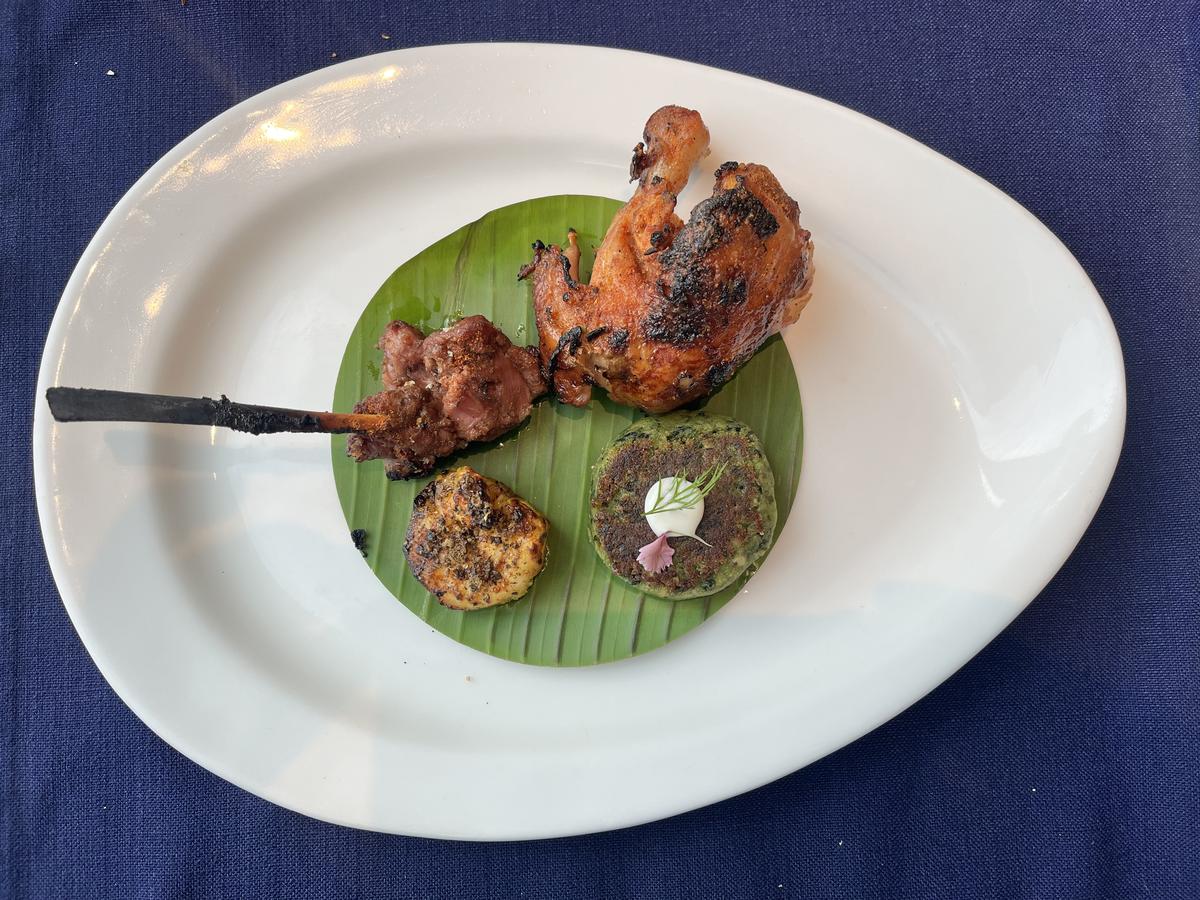
Some of the starters by Sherry Mehta
| Photo Credit:
Prabalika M Borah
Next came the Peshawari naan, gently sweet and stuffed with mawa. After these two breads, there was little temptation to reach for something as plain as the kesari ki paronthi.
What stood out was the menu Sherry had put together — one that foregrounded lesser-known gems from the region like a mixed vegetable kadhi, green tomato butter chicken, Lahori tadka daal, panjratni daal, pani phal ke kofte and so on). The starters included babugoshe ka shorba (a pear-based soup), parat ki paneer (paneer stuffed with prunes), bathuwa aur nyoje ke kebab (tikkis made with bathua greens and pine nuts), sheen sajji (whole meat slow-roasted over coal), and bhang jeeri jheenga (prawns cooked with hemp seeds).
“There are two parts to this menu,” says Sherry. “One comes from research and the digging up of old recipes. The other, dishes made with green leafy vegetables and pulses, is my way of breaking the mindset that Punjabi food is only about paneer and butter masala.”
The bathuwa aur nyoje ke kebab, for instance, highlights an overlooked use of bathua (which grows as a weed during winter season and consumed as leafy vegetable). Punjabi cuisine is often reduced to familiar pairings like sarson ka saag and makki ki roti, but, as Sherry points out, “we also eat bathuwe ka paratha and bathuwe ka raita.”
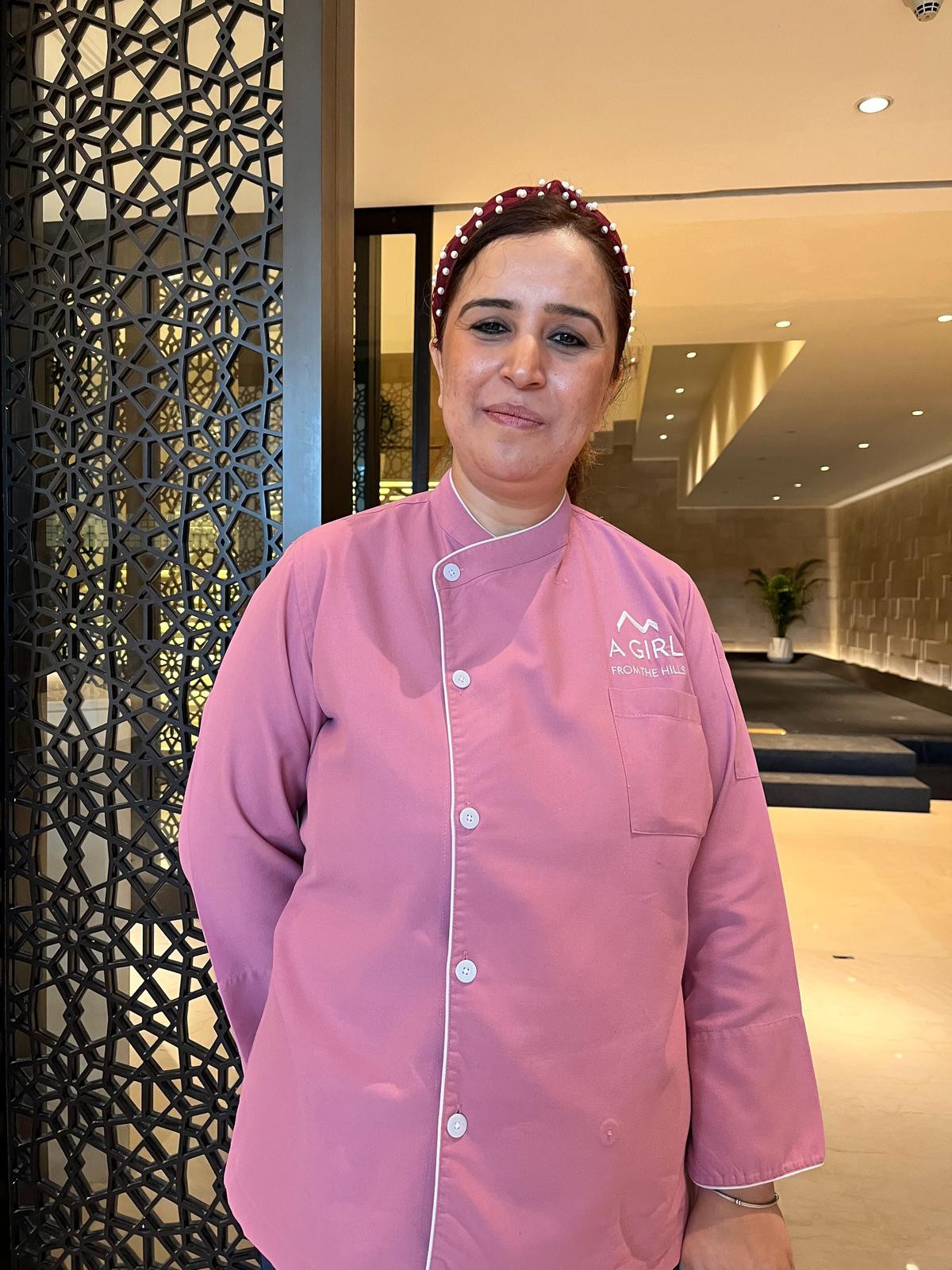
Sherry Mehta
| Photo Credit:
Prabalika M Borah
Surprisingly, the starters were devoid of the usual curd-and-spice marinades. The batyr ka shorba (peppery quail soup), for instance, relied solely on pepper for heat. The sheen sajji — marinated with nothing more than salt and pepper — proved that flavour often lies in restraint and simplicity. The bathuwa aur nyoje ke kebab, meanwhile, leaves you guessing its ingredients.
So how does this food differ from what is commonly commercialised as Punjabi cuisine? Sherry explains, “We’ve been made to believe that Punjabi food is all about ghee, paneer and butter chicken. As a result, many everyday dishes and seasonal greens have been ignored. I also make butter chicken—mine is green because I use green tomatoes. Kebabs and curries aren’t always prepared with curd-based gravies.”
Staying with the idea of seasonality, Sherry served two dips — one made with green shallots, the other with radish and sesame. Dessert followed in the form of panjiri ice cream, kali gajar ka halwa, and seb ki phirni.
The fest at Kanak, Trident Hyderabad is on till January 17 (lunch and dinner )
Published – January 13, 2026 01:59 pm IST
About the Author


