
It is bright daylight after three days of relentless downpour in the quiet, far-flung town of Nagato, in the Yamaguchi Prefecture of western Japan. The sun came just right in time to shed light on one of Japan’s most delicate and dangerous cuisines. At Choshu Nagato Fishery, the water drums shimmer with dozens of balloon-like, seemingly harmless fish with spotted skin. But, could you believe a fish so tiny could carry a toxin powerful enough to kill a human?
“Do you want to see the fangs of the fugu fish?” a worker at the farm asks, instantly piquing my curiosity. Later, he explains that fugu have strong, sharp, beak-like teeth that they use in the wild to crush shellfish and crustaceans. In the confined space of aquaculture tanks, these teeth become a problem. Hence, they are clipped — usually early in their life cycle — delicately by hand. And once these small baby fugu reach approximately 1 kilogram — the ideal weight for culinary use — they are sent to certified restaurants and licensed chefs.
Japan’s fugu, or pufferfish, is perhaps the country’s most notorious delicacy. Improperly prepared, fugu can be toxic, even fatal, which is why only licensed chefs, rigorously trained over the years, are allowed to serve it. And well, that is exactly why you can safely eat pufferfish only in Japan. The liver and ovaries of this fish contain tetrodotoxin, which is about 850 times stronger than potassium cyanide. The tetrodotoxin is enough to bring on an agonising death within an hour of being consumed. And well, there is no known antidote for this. Yet.
Fancy a fugu thali?
I am at Kiraku, a restaurant in Nagato, built in traditional Japanese style — low-lying tables, tatami mats underfoot, shoji sliding doors — that let in soft light, and a calm, minimalist aesthetic. Known for its fugu and seafood delicacies, I find myself staring down at what looks suspiciously like a pufferfish thali. Some pieces are fried to a crisp golden crunch, others delicately boiled, and a few cleverly disguised in a salad. I realise it is a display of every way the fish can be tamed, cooked, and coaxed into something edible. I stare at it a little too long, weighing my options: can I have it? will I be okay? And perhaps the most important one — how do I even begin?
For all such matters and more, being part of a group tour helps. When you are sitting there, chopsticks hovering in mild panic, a discreet glance at someone else’s plate can be a quiet reassurance. Chiharu Ohata, a Japanese local and the regional manager of APAC Communications at booking.com, studied my confused face with a knowing smile. Patiently, she guides me through the ritual of how to eat fugu properly. “Take the sashimi,” she says, demonstrating with effortless grace, “dip it lightly in the ponzu. Then, pair it with green onions, grated daikon, and a touch of chilli.” I take a deep breath, willing my curiosity to overcome the gnawing anxiety at the back of my mind. I follow, mimicking her movements.
Baby pufferfish
| Photo Credit:
SPECIAL ARRANGEMENT
The first bite catches me off guard. It is soft, almost like biting into silk with an oceanic sweetness to the taste. Then the ponzu cuts through, sharp and citrusy. The daikon follows with its clean crunch, the chilli nudges it back, and suddenly it all makes sense. It is fresh, light, and delicate, with a subtle sweetness that becomes more pronounced as you chew. Somewhere in that perfect balance of taste and texture, the true beauty of fugu comes through. And in that moment, I understand why generations of chefs and locals risked so much to prepare this delicacy.
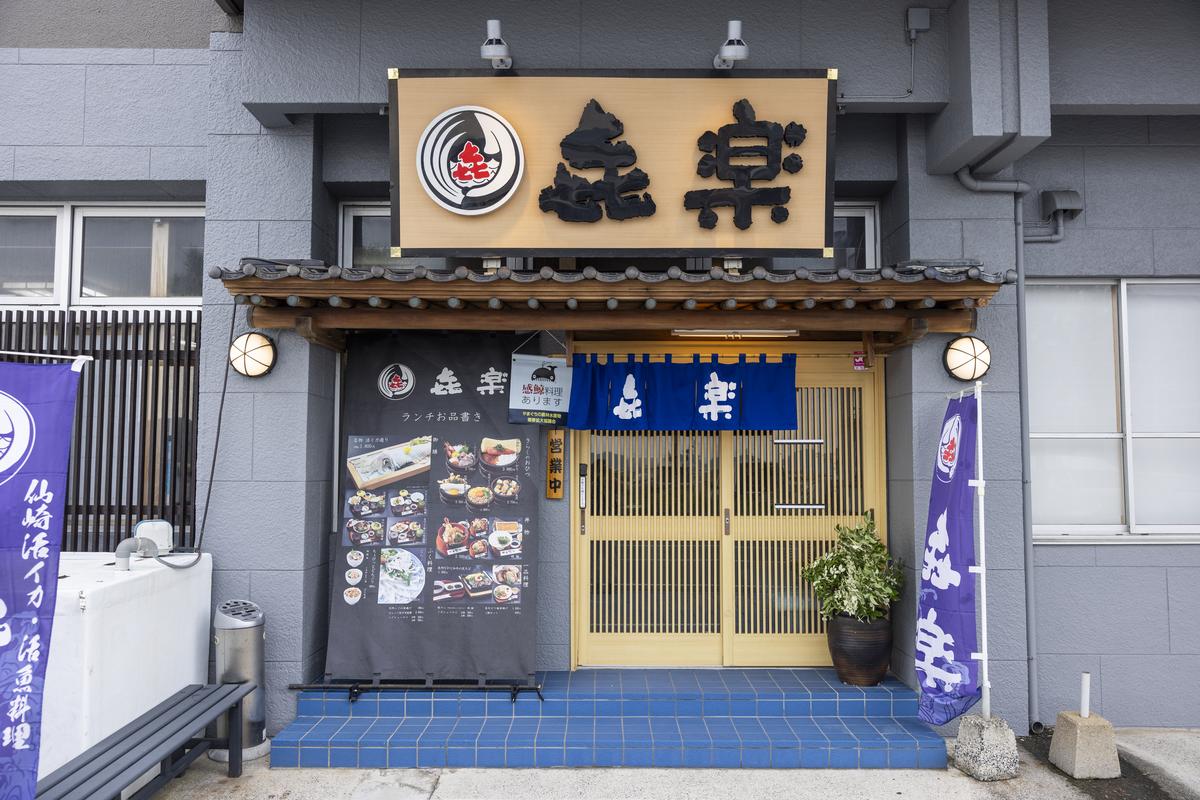
Kiraku, a restaurant specialising in fugu
| Photo Credit:
SPECIAL ARRANGEMENT
The dishes included karaage, a deep-fried preparation where the crispy, golden exterior contrasts beautifully with the tender, delicate flesh of the fish. Then there is lightly boiled fugu skin — gelatinous, translucent, and surprisingly refreshing. But if you want to experience the true artistry of fugu fine dining, it is the fugu sashimi you must go for. This dish also lets the chef’s craftsmanship truly shine. Using a special knife reserved solely for this purpose, the raw fugu is sliced so thinly you can see the intricate pattern of the plate beneath it.
Despite the rigorous and time-consuming preparation, locals speak of fugu with fondness. Yusuke Shiraishi, president of Kiraku Ltd., which operates the fishery, is also a second-generation chef and owner of Kiraku restaurant. He had by now swapped his business suit for crisp chef’s whites to take us through that pufferfish-filled lunch. He explains via a translator that because consuming fugu’s toxins can be fatal, handling the fish requires a special licence. In Japan, it is the chefs who remove these poisonous parts, who typically spend two to three years apprenticing under a master to perfect the craft. The test even includes a written exam, apart from a practical preparation test. Only those who pass the official exam are legally permitted to prepare and serve fugu.
For specialised fugu chefs, preparing these dishes is almost ceremonial. The fugu-hiki, the dedicated knife for slicing pufferfish, is a thing of beauty: wooden-handled, narrow-bladed, and hand-forged by master swordsmiths. These knives are never used for anything other than fugu and are often kept in their ornate boxes.
But despite all this — the precision, the training, the danger — why would anyone go to such lengths for a fish? Ohata laughs, saying, “It’s so delicious we simply cannot give it up. The flavour is unlike anything else.” Yet beyond the taste, fugu carries a legacy that stretches back to the days of ancient Japanese folklore.
The history of fugu eating
Later on that fugu food tour, I learn that the people of Japan have been eating fugu for centuries. Archaeological evidence of fugu bones dates to the Jōmon period (14,000 and 300 BCE) and reveals that this tradition dates back more than 2,300 years. It was nearly lost in the late 1500s, when numerous fatal poisonings during military campaigns led to a nationwide ban. Yet fugu managed to rise above its deadly reputation.
In the late 1880s, after a severe winter that brought an extreme shortage of other fish, the ban on fugu fish saw a temporary lift. Even Japan’s first Prime Minister, Hirobumi Ito, was so impressed by fugu and its flavour that he overturned the ban. This revival paved the way for fugu to become a cherished wintertime delicacy — and now, a year-round culinary tradition.
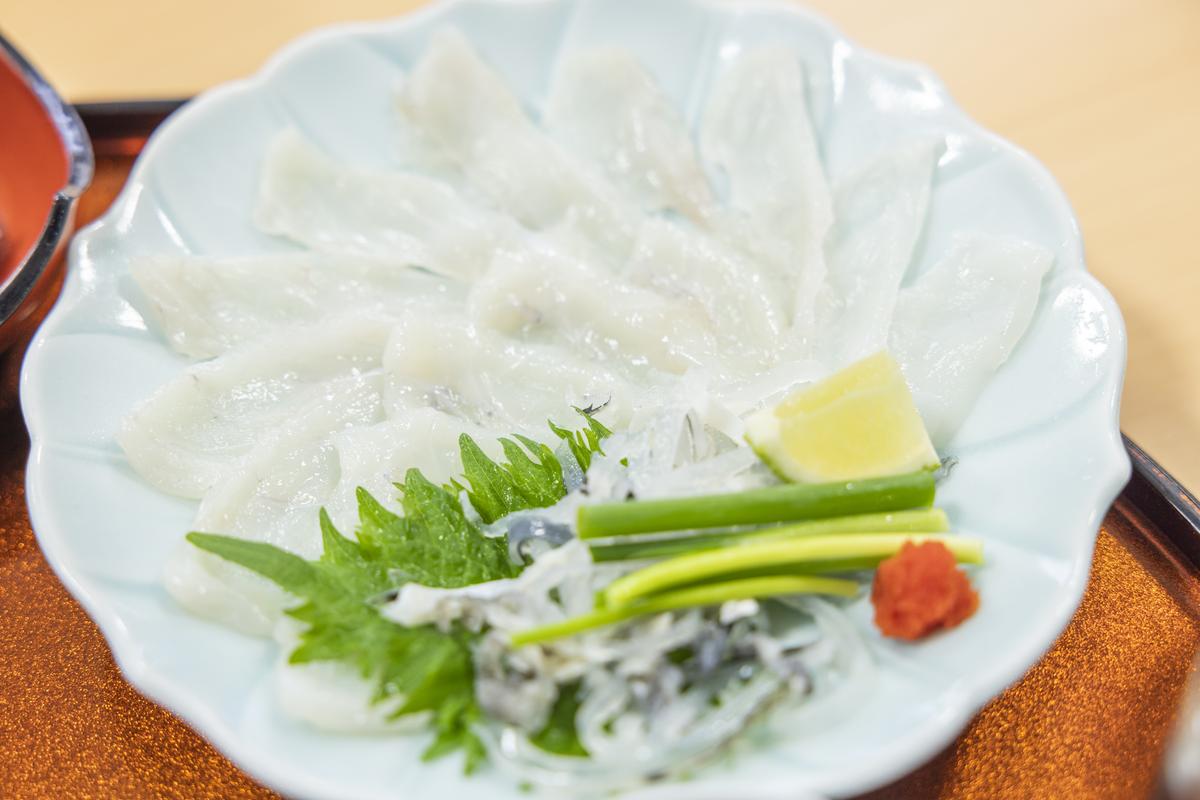
Fugu shashimi
| Photo Credit:
SPECIAL ARRANGEMENT
There are roughly 120 varieties of fugu worldwide, about 50 of which are found in Japan, and of those, only 22 are edible. Like any other prized seafood, each pufferfish has its ranking, grade, and quality, but torafugu (tiger pufferfish) is considered the most popular and most flavourful of them all. Presently, 90% of the fugu consumed is farm-raised, often in ponds fed with onsen (hot spring) water.
With its deep history and exclusive preparation, people have long been drawn to this fish as an exotic delicacy. Today, it fuels a thriving industry devoted to its culinary potential and a luxurious one, with a full-course fugu meal costing from 20,000 to 30,000 yen. The restaurants that serve it are among the finest, some with Michelin-starred chefs and diners are more than willing to pay a hefty price for the reassurance offered by the chef’s fugu licence. And it’s a show in some restaurants to see!
Where to have fugu in Japan
According to travel aggregator booking.com, Tokyo, Kyushu, Kyoto, and Osaka are among the most popular destinations to enjoy fugu in local restaurants or cosy izakayas. Tokyo’s Fugu Club miyawaki Bettei, Ningyocho Kimi, Usukifugu Yamadaya Marunouchi, while Osaka’s Michelin-starred Takoyasu, Kitahachi, and Fuguyoshi Ikeda are quite the popular ones.
While most tourists flock to Tokyo or Osaka, I would recommend culinary travellers head west to experience fugu culture at its roots. Shimonoseki, in Yamaguchi Prefecture, is celebrated as the heart of fugu cuisine, with a dining tradition that spans centuries. This small town also houses the inn-restaurant Shunpanro, which is the nation’s first officially licensed fugu establishment. In cities like Nagato and Shimonoseki, the number of restaurants may be fewer. Still, they remain hubs for fresh fugu and other seafood treasures like anglerfish liver, creamy sea urchin, and live squid prepared.
There is something about fugu that stays with you — the flavour lingers, and even now, I still dream of that sashimi
About the Author


