
Debrigarh Wildlife Sanctuary is a convergence of conservation, community participation, and history. Once affected by deforestation and poaching, the sanctuary has emerged as a model for modern conservation, where local communities play a central role in protecting wildlife and restoring balance to the ecosystem.
After a two hour drive through towns, crossing the coal and ore mining areas of Sambalpur (giving me Mad Max: Fury Road feels), the sights outside begin to change. We finally reach the dyke, an arm of the Hirakud Dam stretching 25 kilometres, and the view is cinematic. On one side lie the wetlands, their rippling waters glistening in the mid-morning sun; on the other, the forest sways to the rhythm of the wind.
Jeep Safari inside
| Photo Credit:
Special Arrangement
For a moment, I am tempted to stop — to absorb this balance of stillness and movement. But I have journey ahead, so I roll down the windows, switch off the air-conditioning and revel in the howling wind.— Nature’s own soundtrack for the car ride.
Debrigarh sits quietly between the Hirakud Dam and its vast reservoir, spread across 347 square kilometres of forest. Upon arrival, guests are welcomed by local tribal women of the Gond community, their voices rising in a warm urol, followed by a glass of chilled masala shikanji.
The camp is managed by local communities involved with ecotourism. Like many wildlife sanctuaries across India, Debrigarh offers a handful of stay options within the sanctuary. What sets it apart is its model of community-driven ecotourism—managed and maintained by members of local eco development committees, ensuring that conservation and livelihood go hand in hand.
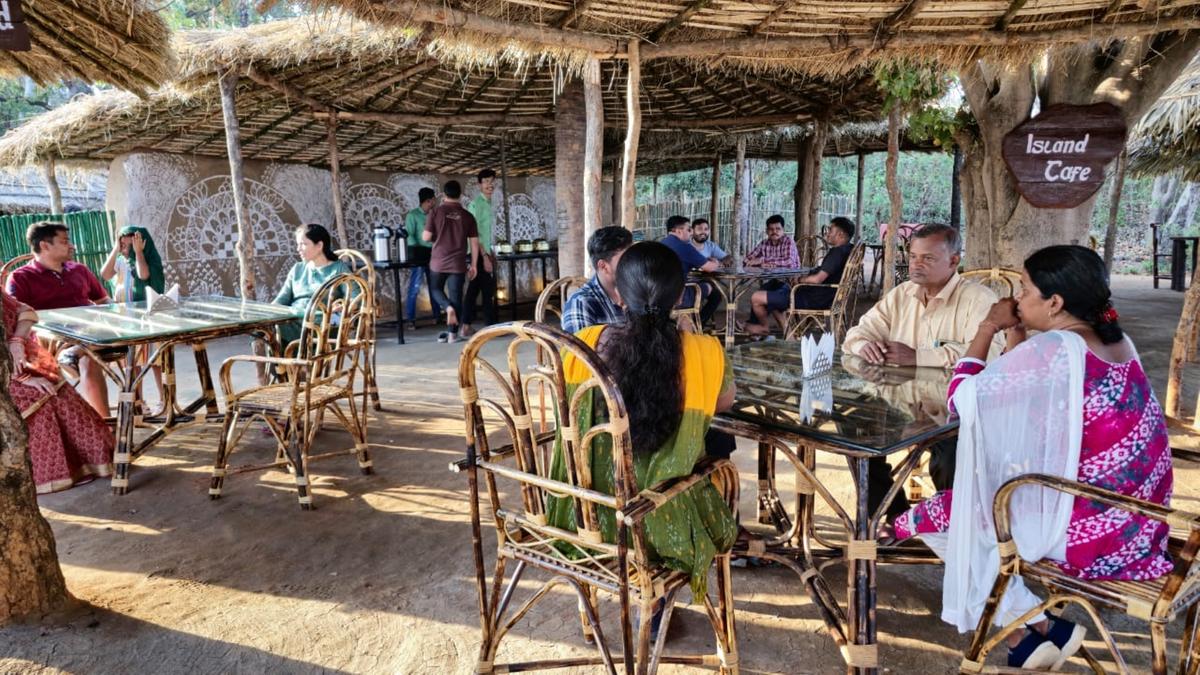
Bat Island cafe
| Photo Credit:
Special Arrangement
Situated on the banks of the Hirakud Reservoir, this camp features 20 air-conditioned rooms across three categories: seven cottage rooms, eight Bison Block rooms, and six luxury star-gazing rooms. Everything — from design and masonry to woodwork — is by local masons and carpenters. I stay at Bayu — an air-conditioned, double-bedded cottage ideal for families. It is not luxury in the five-star sense, but it is comfortable, clean, and thoughtfully maintained.
Sights and sounds
In the late afternoon, I take a boat ride through the creek to Bat Island, where the sanctuary staff and locals have set up high tea. We lounge on charpoys, strolled along the island’s edge, or simply watch the sun descend and the moon rise. I catch the crackle of something frying in oil — the unmistakable aroma of fresh fish. The menu is simple and satisfying: crisp mach bhaja (fish fry) for non-vegetarians and hot pakoras for vegetarians. The fish, small and locally caught, are marinated in salt and turmeric, then deep-fried to golden perfection.

The staff also pull out tins of jhal muri, serving it in paper cones. A couple of cups of tea later, a few guests stepped out to admire the night sky. As we eat, we star gaze: with no city lights to compete with, constellations shine bright. Dinner too is simple but tasty: masala mushroom curry, odiya dal (dalma) and chicken curry, all cooked by the team of the Forest Department.
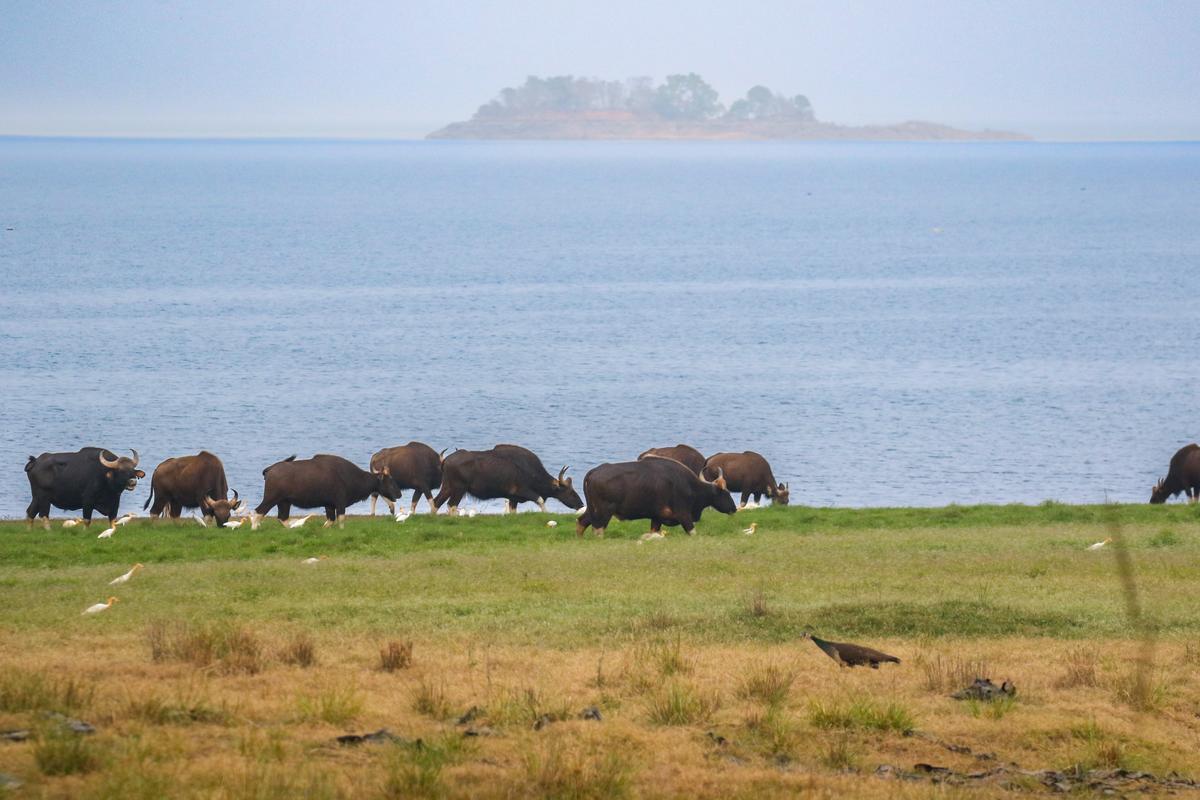
Herd of Bison
| Photo Credit:
Special Arrangement
I wake up early the next day to walk, accompanied by peahens and geese. With no mobile network at Debrigarh, nature becomes your only connection. What stands out are the anthills — some nearly six feet tall. No two look alike, their rampart-like structures giving them a sculptural beauty. I head towards the lake where yoga enthusiasts are deep in their morning routine and bask in the soft winter sun.
Like most wildlife sanctuaries, Debrigarh has a fleet of safari jeeps, driven and managed by forest staff who are trained locals from the tribes that live here. The seven-kilometre drive to enter the safari area tests my back: but on the bright side, we spot sambar deer, Indian bison, peacocks, and wild boars. The dry deciduous forest is also home to an array of migratory birds.
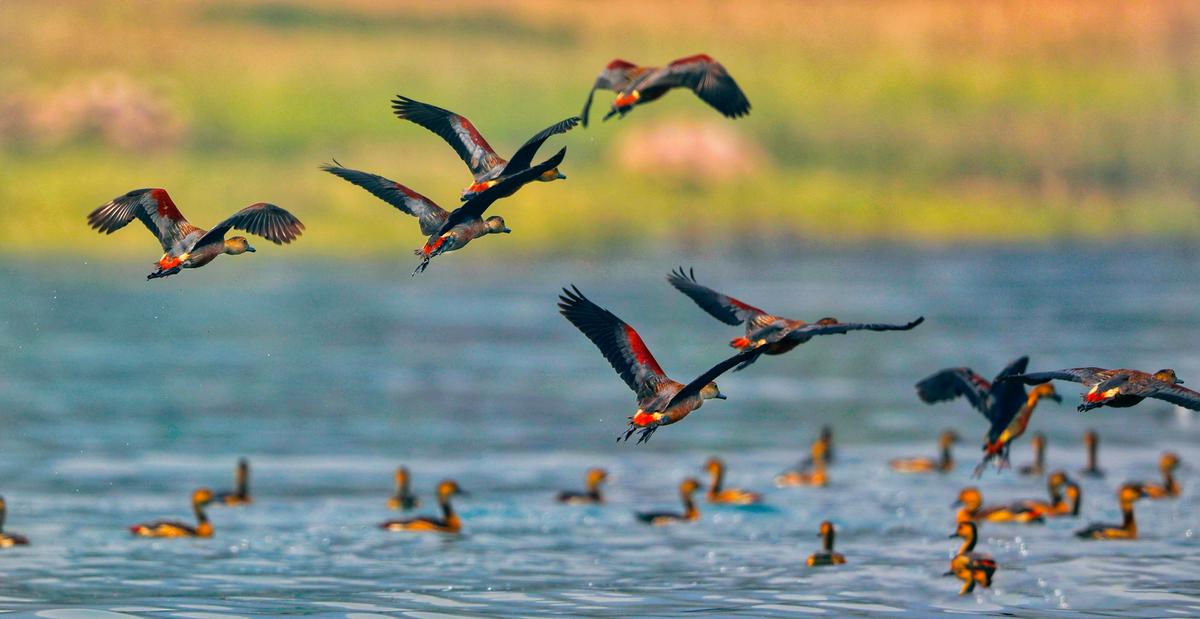
Birds inside the sanctuary
| Photo Credit:
Special Arrangement
Forest officer Anshu Pragyan Das says that Debrigarh is also home to the four-horned antelope or chousingha, an endangered species. She adds, “The sanctuary supports more than 40 species of mammals, 234 species of birds, 41 species of reptiles, 12 amphibians, 42 fishes, 39 odonates, and 85 butterflies. It also has significant populations of leopards, bison, and chousingha. During the monsoon, visitors can also witness beautiful waterfalls.”
The safari includes a short stop at a watchtower, where we are served tea and snacks — an interlude to take in the vast, green expanse. Debrigarh, in many ways, reminds you that wilderness need not be far-flung to feel otherworldly. Sometimes, all it takes is a drive, a quiet island, and the hum of the wind to remind you how still the world can be
Accommodation ranges from ₹3095 to ₹5571 per night. Booking can be done through odishatourism.gov.in Facility of day trips are also available.
(The writer was in Debrigarh on invitation of Policy Watch India Foundation)
Published – December 09, 2025 02:56 pm IST
About the Author


