
Delhi has been particularly difficult to live in, of late. We are now in the thick of winter and the air still moves past your face with an insidious something it shouldn’t be carrying. Each morning, the same grey insistence of pulverising smoke pressed against my throat made the privileged indulgence of an exit feel practical. The urge to escape to somewhere close, somewhere uncomplicated and somewhere my lungs could remember why they exist, had never been stronger.
The mountains were the obvious thought, and go-to getaways like Nainital, Bhimtal and the like, felt like the natural detour for city-dwellers who craved a lake-side view with fewer people in the frame. Both also fell neatly into the pattern of a Delhi escape, with a brisk five to six hour drive and the promise of cooler air. Yet the closer I drew to them, the more it felt as if the city had followed us uphill. The roads thickened with traffic, and the usually languid alpine promenades looked oddly crowded. Everyone seemed to have the same idea. Even the breeze had a faint drag to it that made me check my chest out of reflex. The hills were still beautiful, though the quiet seemed to arrive in sporadic intervals.
A few extra bends ahead, a third, lesser-thought-of lake town beckoned, as if it had been waiting for the road to empty out first. The forest deepened, and the air picked up a temperate clarity that sharpened the edges of everything around me. High in these Kumaon foothills, nestled at around 4,000 ft above sea level, Naukuchiatal or the “nine-cornered lake”, came into view. It is the deepest lake in the Nainital region. Locals say its nine-corners were created through deep penance, and legend has it that sighting all nine corners at once would lead to enlightenment. You hear versions of the story in different parts of the valley, and the region carries this folklore without any theatricality, which is the defining charm of the place.
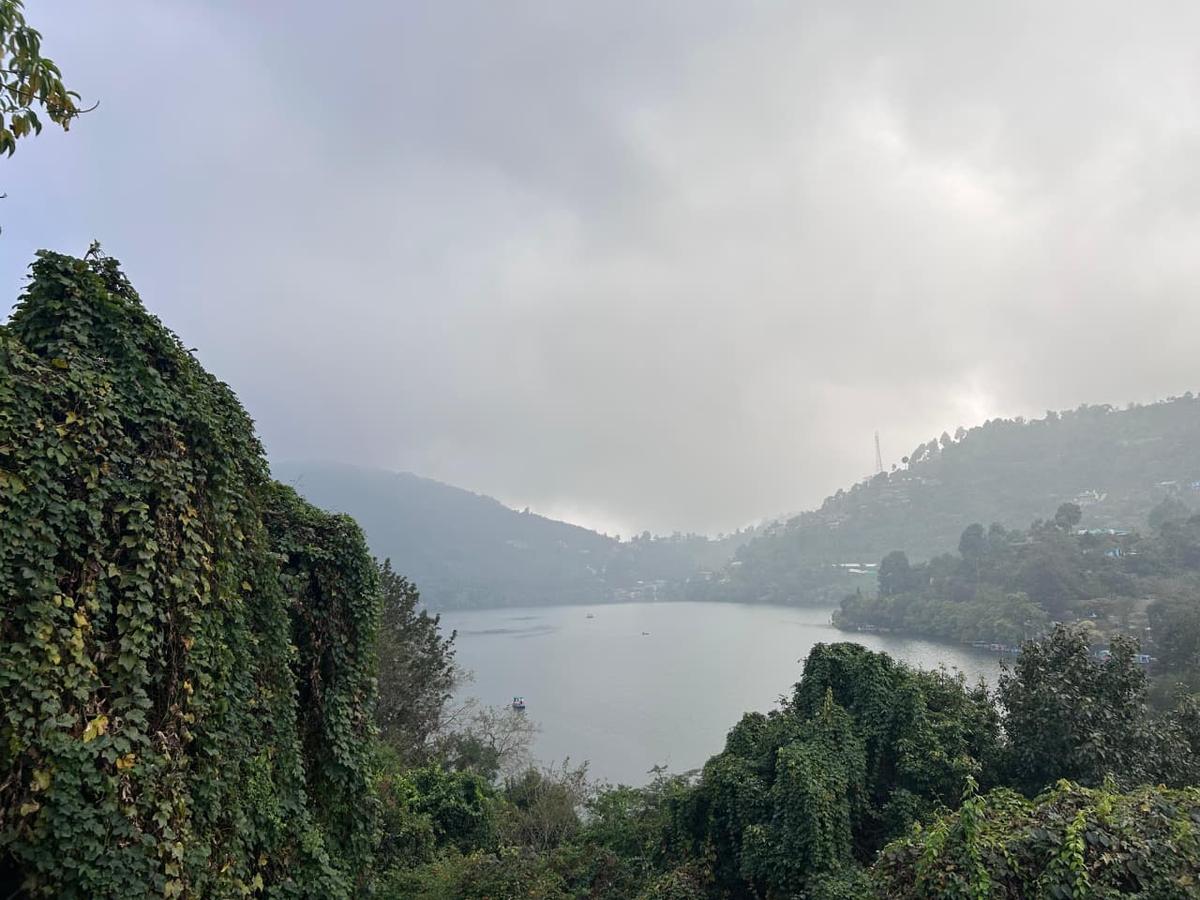
A view of the Naukuchiatal lake
| Photo Credit:
Samiksha Singh
Perched above the lake, Naukuchia House is the only proper hotel in the area, though nothing about it feels intrusive. It’s designed in a Palladian architectural idiom, but its clean lines and graceful proportions echo the soothing geometry of the lake below, and the forest beyond. There are 42 rooms, ranging from garden-facing alcoves to premium lake-view rooms and executive suites. Each space is warm yet spacious, the service is discreet, intuitive and makes you feel welcomed into a carefully tended home.

One of the strongest strands of the experience here is wellness grounded in Nature. As Sanjeev Kumar, general manager, put it, “We honour the mystique through rituals like forest bathing, yoga and sound healing, letting folklore shape the soul of the experience, while modern hospitality shapes its ease.” The restaurant and dining patio — named ‘Ija’, after the Kumaoni word for mother — is built on a hyperlocal philosophy. Produce, herbs and foraged items are sourced within a 20-mile radius, and the menu shifts with the seasons. “Sourcing hyperlocal ingredients requires deep partnerships with farmers, artisans, and foragers,” Kumar explained.
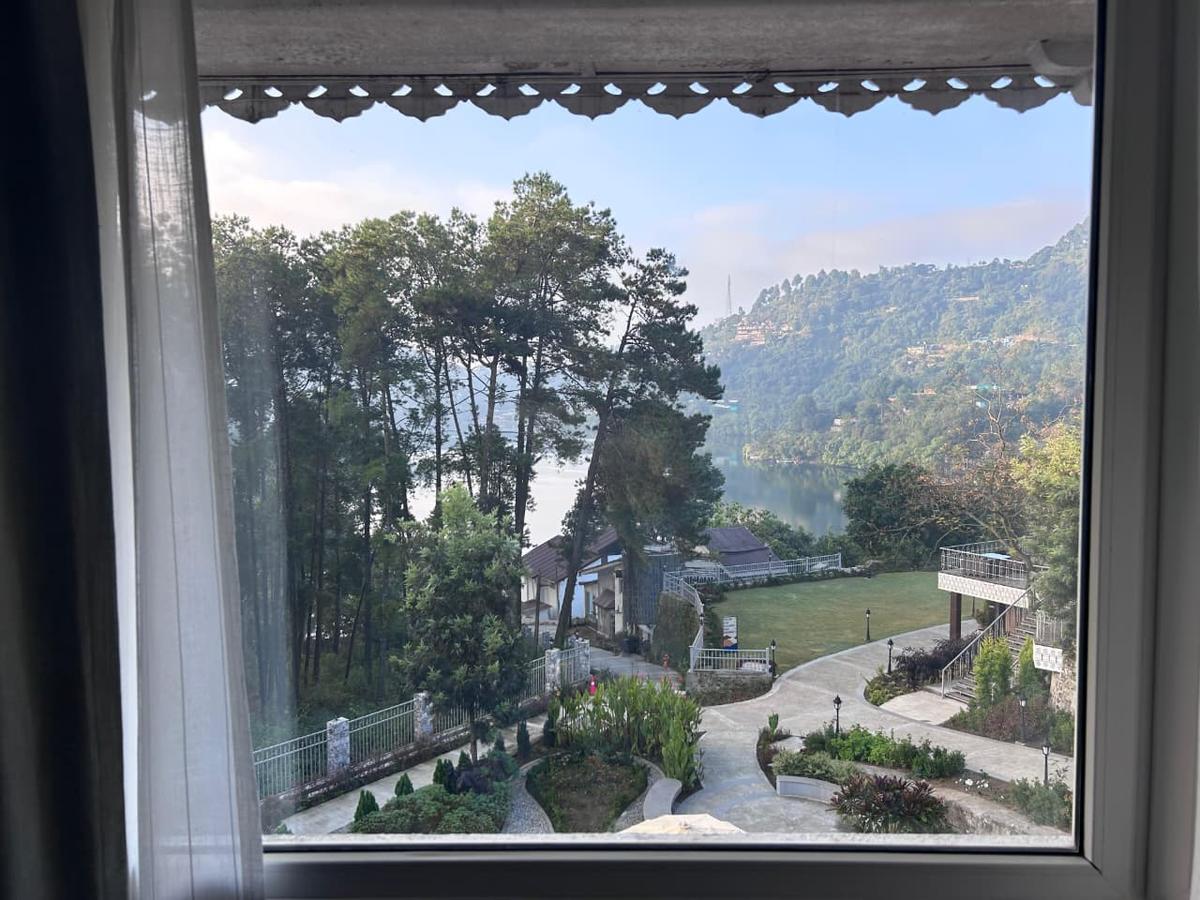
A view of the lake from a room at Naukuchia House
| Photo Credit:
Samiksha Singh
Stepping outside the property dissolved the faint boundary between estate and forest. It was easy to see why wellness in this valley felt native. The air sat clean on my skin, the soundscape steady, and the water clear enough that the lake’s nine corners seemed believable even if I couldn’t spot them.
The bowl of green around the lake seemed to hold the water in a careful grip, letting very little spill into the world beyond. The shoreline is rocky in places, and the scree sloped gently into the lake. The lake is fed by underwater springs, giving its waters a perennial clarity and a slow-motion stillness. Walking here shifted my sense of scale. The hills are modest in height but varied in relief, so every few minutes I gained or lost perspective. The air carried a mix of pine resin, cool moisture, and earth. Birdlife was abundant; migratory species visit in winter, and locals often spoke of kingfishers and barbets darting over the water.
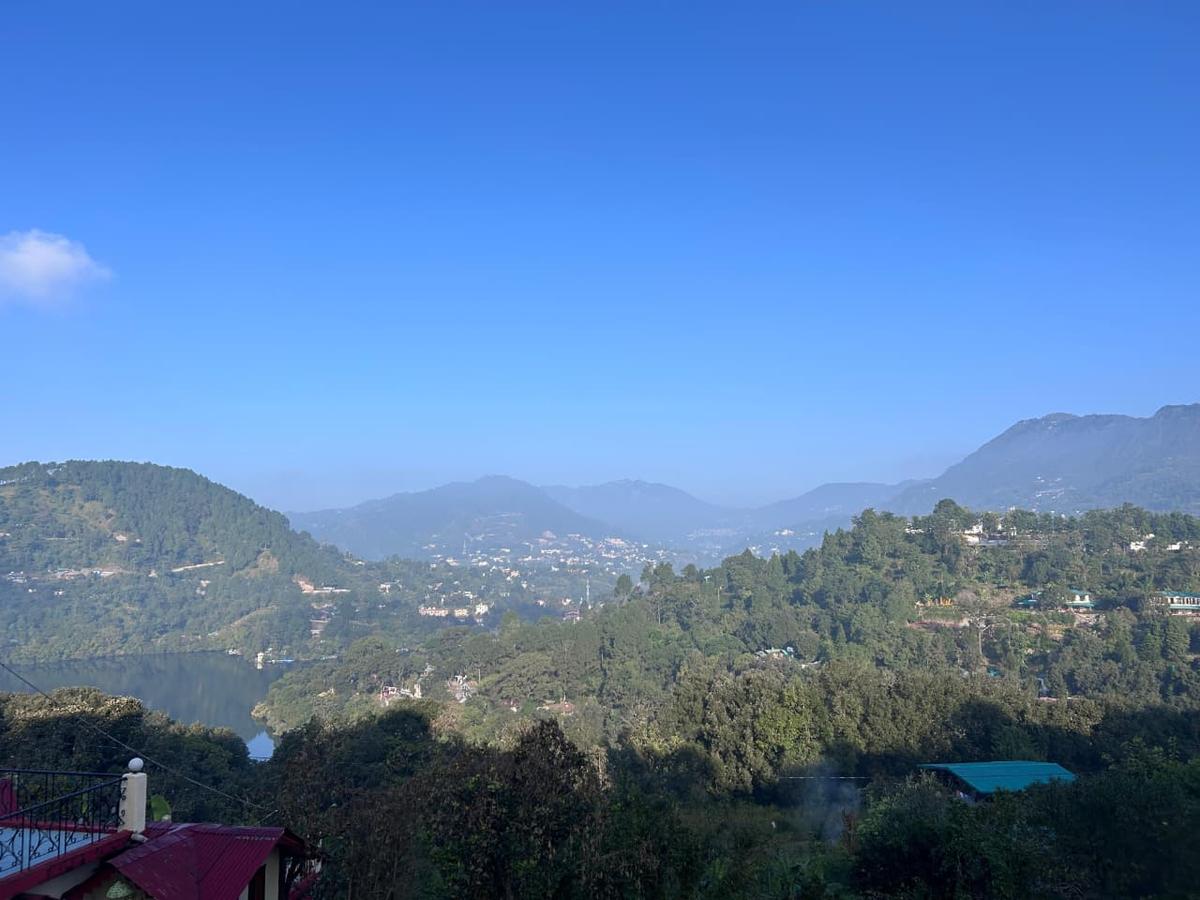
A view of the valley from Naukuchiatal
| Photo Credit:
Samiksha Singh
Walking in the adjoining fir-pine forests, the ground felt soft underfoot, layered with needles and leaves. Sunlight filtered in latticework, and the air smelt of something primordial. These trails sloped gently, opening up to ridgelines or tucked glades where you might rest, listen to the forest, or sit in silence. Kumar emphasised that every experience here was “curated to reflect the essence of Kumaon.”
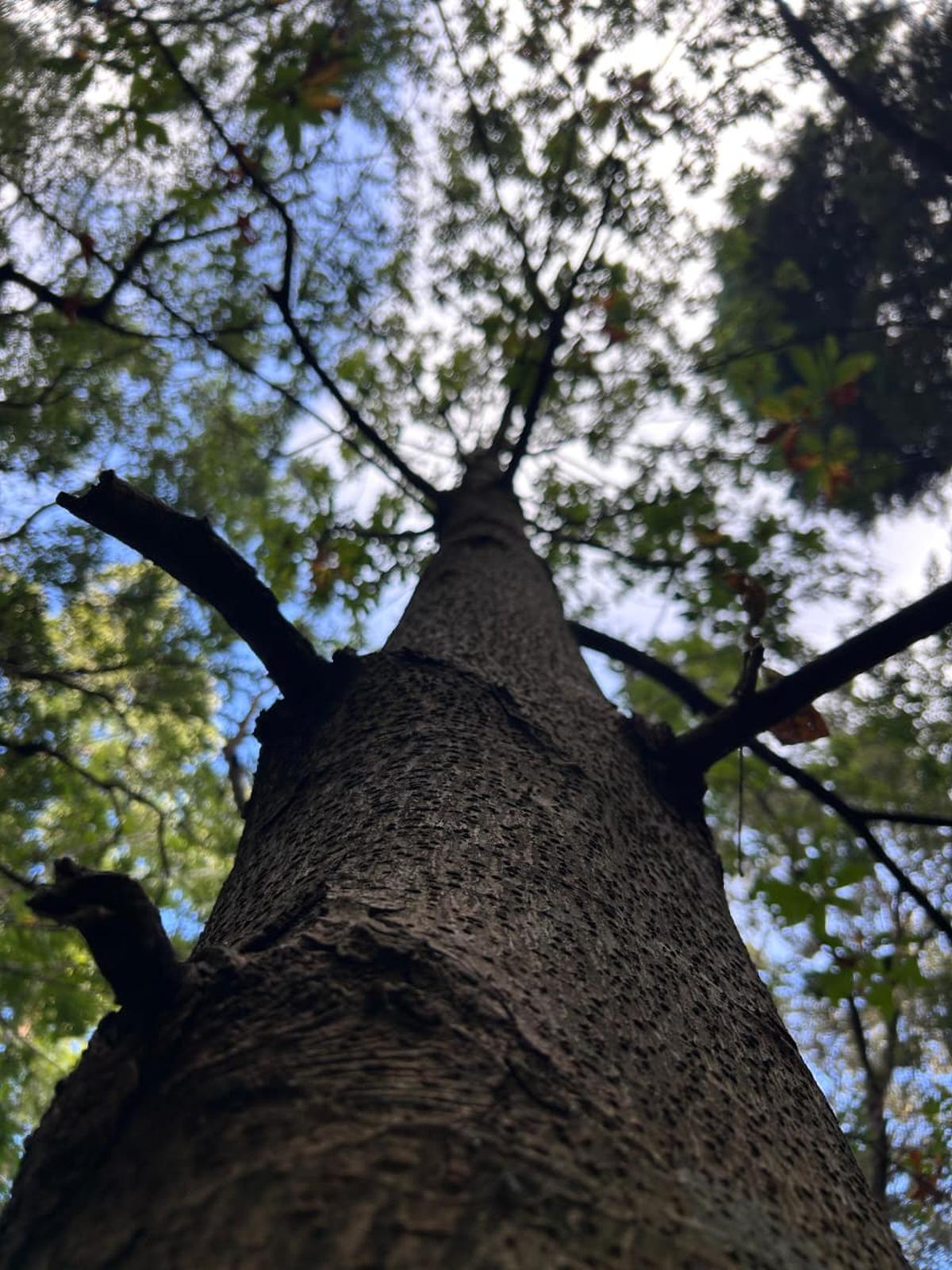
The oak tree I embraced during the forest bathing experience
| Photo Credit:
Ayaan Paul Chowdhury
One of the most unforgettable moments during my stay here came from the forest-bathing ritual, when I leaned into a towering pine and felt a slow wave of calm flood through me — 10 minutes of closing my eyes, breathing in crisp air and moss, and letting the world fall away. The ground beneath me was a tapestry of lichens and ferns, delicate shrubs and saplings, all painted in layered greens that felt mildly delirious in their richness. On the Ghanta Devi trail, as dusk settled, fog curled through wildflowers and giant spider-webs draped across pine canopies; the slope softened until a lookout opened up, cliffside, and grey mist stood guard around the valley below. It was tactile in its mystery as the damp bark under my palms, the hush of needles underfoot and the softness of petals trembled in the breeze. Later, paddling in a small boat across the lake itself, the sun filtered through mist, scattering light into silver motes on the water, each ripple catching diamonds.
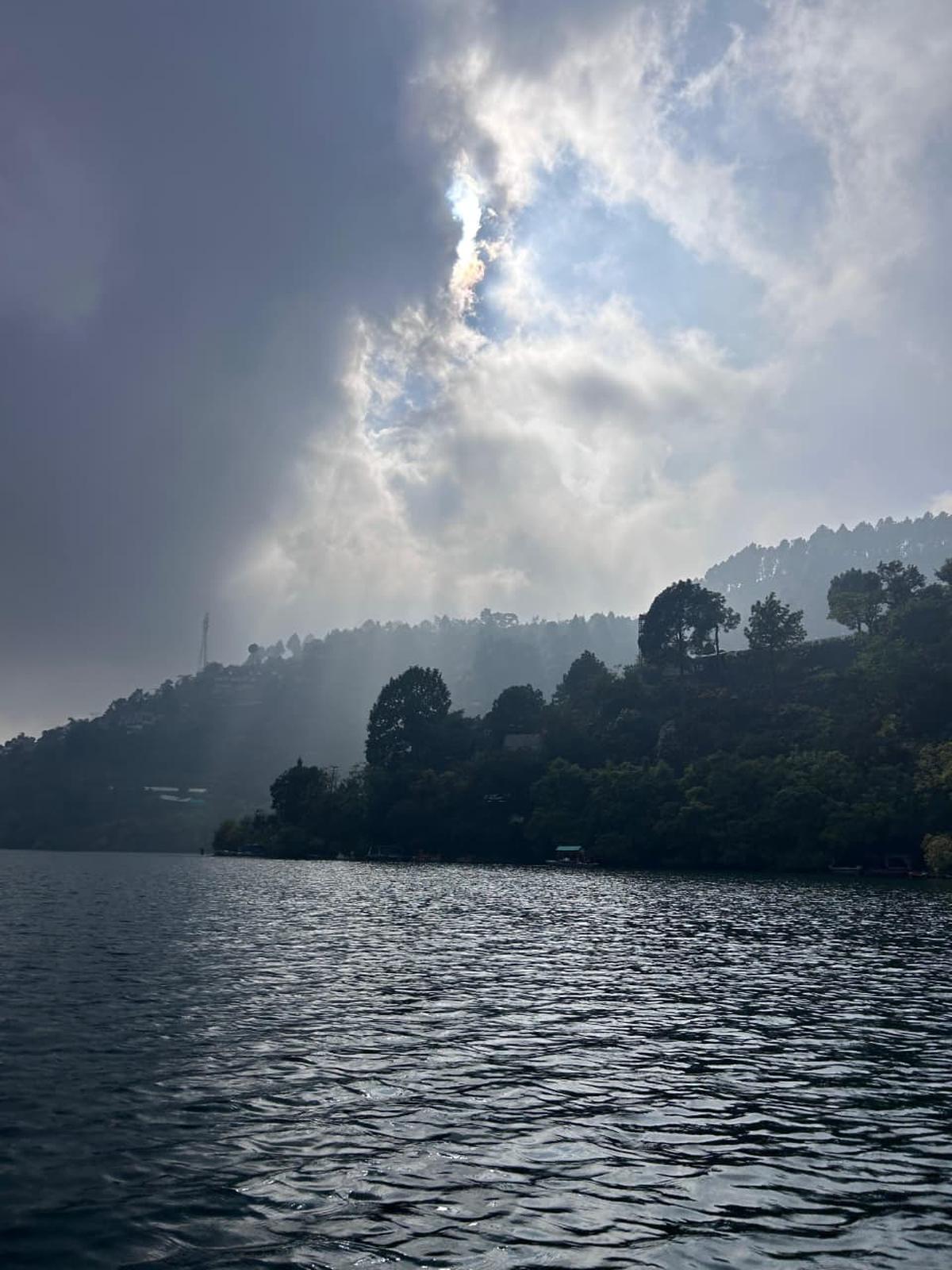
Paddling across the Naukuchiatal lake
| Photo Credit:
Samiksha Singh
All these scenes carried an odd familiarity. They reminded me of those early Twin Peaks moments when Dale Cooper first drives through David Lynch’s fictional small town, noting the serenity of the Douglas firs and the gentleness of the people who live among them. That sense of community is one of the town’s greatest gifts for Cooper — a “way of living I thought had vanished from this earth” — and in Naukuchiatal, I felt that same softness in the way Nature, tradition, and modern living overlapped without discord.

It was also clear that preserving this atmosphere was a priority. “The greatest challenge is ensuring that its soul remains untouched by over commercialisation,” Kumar said. He added that one of their fears was “unchecked development or insensitive tourism could erode the very qualities that make Naukuchia House special”. Future plans follow the same direction. “In the coming months, we will be introducing experiences that are even more rooted in the land, including curated Nature-binding rituals, expanded forest trails, and village interactions,” he said.
After months of breathing in Delhi’s noxious fumes, the simple act of standing by Naukuchiatal felt like a balm. My time here was a return to slower shapes and ancient impulses. In the indescribable calm of around this furtive lake town, I think I might just have discovered something close to what Cooper had been fawning over in Twin Peaks after all.
Better yet, as the late, great David Lynch puts it, “an ocean of pure vibrant consciousness”.
This writer was in Naukuchiatal at the invitation of Naukuchia House
Published – January 06, 2026 09:11 pm IST
About the Author


