Eleanor Roosevelt is one of the most significant women of the twentieth century, not only because of her role as the First Lady of the United States, but also because of how she used that role as a platform for moral leadership. Eleanor was born in 1884 into a very influential, although emotionally difficult, family. Her childhood was filled with loss, insecurity, and self-doubt. It was one of those elements of her childhood that have given her such empathy for others and have made her so sensitive to people who feel as though they are not being heard or who feel as though they are being marginalised.As First Lady from 1933 to 1945, Eleanor Roosevelt redefined expectations. She was far more than a ceremonial presence beside President Franklin D. Roosevelt. She travelled extensively, spoke directly to ordinary citizens, held press conferences, and wrote a widely read daily newspaper column, My Day. Through these efforts, she became a bridge between the government and the people, particularly women, minorities, and the poor. Her willingness to speak openly about social injustice, economic hardship, and human dignity made her one of the most respected public voices of her time.Beyond her years in the White House, Eleanor Roosevelt’s work continued to leave a lasting mark. As a delegate to the United Nations, she played a crucial role in drafting the Universal Declaration of Human Rights, firmly believing that freedom, equality and dignity were universal rights, not privileges. Her philosophy of life centered on moral courage, personal responsibility and continuous growth. She believed that individuals had a duty not only to live meaningful lives but also to contribute to the betterment of society.
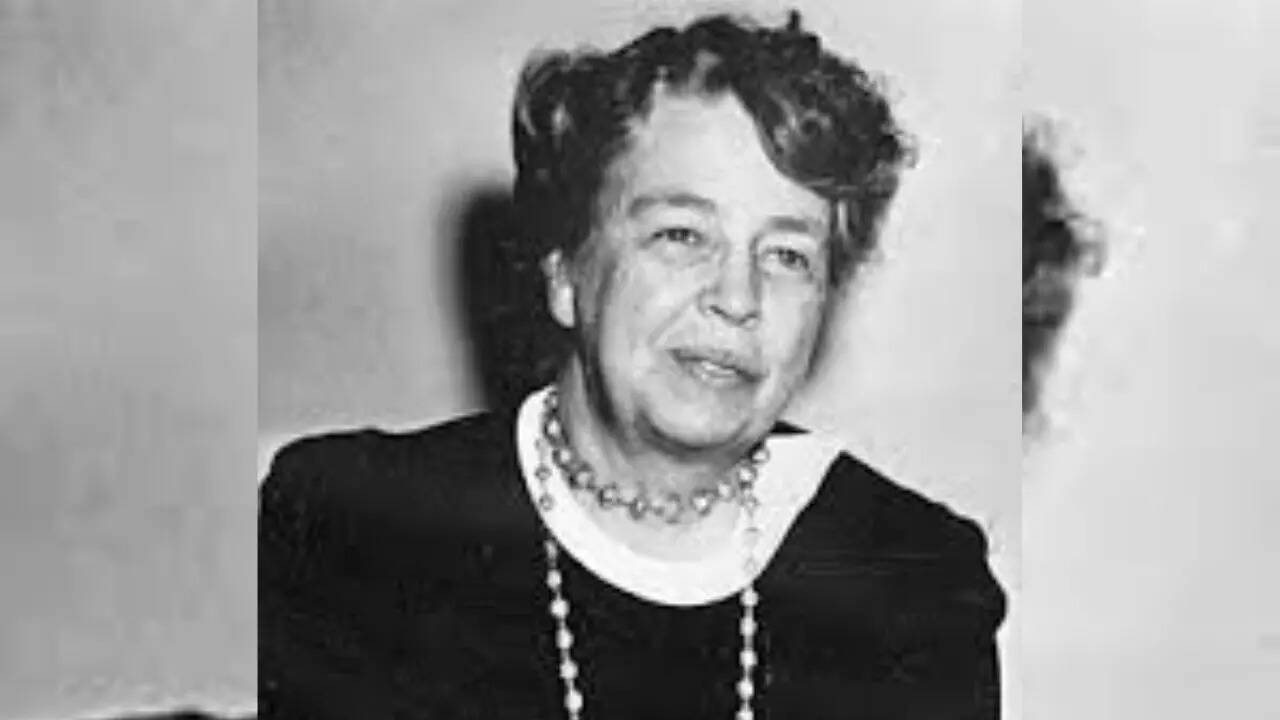
Image Credit: Wikipedia
The quote, “The purpose of life is to live it, to taste experience to the utmost, to reach out eagerly and without fear for newer and richer experience,” is widely attributed to Eleanor Roosevelt and reflects her deeply personal worldview.
Meaning of the quote
Essentially, this quote stresses that life is not meant to be lived through suffering or from a distance. To “live it” means to experience both the good and the bad with an open heart. Eleanor Roosevelt believed that life itself is the best teacher and that living a shallow life means avoiding risk through fear. Eleanor Roosevelt believed that growth occurs when one moves past the boundaries of the known and lets life mold them.The word “without fear” is particularly potent. Eleanor Roosevelt knew fear firsthand: fear of failure, fear of rejection, fear of change. But she also knew that fear must never be allowed to set the limits of one’s life. Stretching out eagerly toward new experiences takes courage, curiosity, and humility. It takes people to accept uncertainty as a necessary part of becoming wiser and more compassionate. In this way, the quote is both an invitation and a challenge, to choose engagement over comfort and curiosity over fear.The relevance of Eleanor Roosevelt’s words is that they convey a universal human struggle, the struggle between safety and growth. Eleanor Roosevelt’s life is proof that meaning is found not in avoiding the struggle, but in facing life with openness and determination.
About the Author