
It is 11:30 at night. Dinner was done hours ago, but the stomach starts to growl again. This is not rare occasion. Many people today report feeling hungry at times that do not match their routine. It feels confusing, even frustrating.Doctors say this is not always about food. The body sends hunger signals for many reasons, and those signals often reflect deeper patterns in sleep, stress, and metabolism. Understanding these patterns can help decode what the body is trying to say, and how to respond without harming long-term health.
The body clock that controls appetite
The human body runs on a natural rhythm, often called the circadian clock. It controls when one feels awake, sleepy, and even hungry. When this rhythm shifts, hunger patterns shift too.Late nights, irregular work hours, and excessive screen time can disturb this internal clock. As a result, hunger hormones begin to act at unusual times.A study by the US National Institutes of Health (NIH) found that circadian misalignment can increase appetite and alter metabolism.This explains why someone who sleeps late often feels hungry at midnight, even after a full meal.
It is not always hunger, sometimes it is hormones
Hunger is strongly linked to hormones like ghrelin and leptin. Ghrelin signals hunger, while leptin signals fullness. When sleep is poor or stress is high, this balance gets disrupted.Dr Rakesh Pandit explains it clearly, “Irregular hunger at hours is often your body’s way of telling you that something is not right. It’s not about being hungry for food. Late-night hunger or unexpected hunger can be linked to a disrupted body clock, not sleeping well, hormones like cortisol, or changing blood sugar levels.”When cortisol, the stress hormone, rises, it can push the body to crave quick energy, usually in the form of sugar or salt.

It is not always about needing food. Regular meals, better sleep, hydration, and mindful eating can help restore natural hunger patterns.
The sugar trap: Why cravings feel urgent
Many people notice that odd-hour hunger often comes with cravings. It is rarely for fruits or simple meals. It is usually for chips, sweets, or processed snacks.This happens because of blood sugar fluctuations. When meals are skipped or high-sugar foods are consumed, blood sugar rises quickly and then crashes. That crash sends a strong hunger signal.The Centers for Disease Control and Prevention (CDC) highlights how unstable blood sugar can trigger repeated hunger and cravings.This cycle can repeat daily, creating a pattern of late-night or mid-afternoon hunger.
Dehydration, boredom, and the illusion of hunger
Not all hunger is real hunger. Sometimes, the body is simply thirsty. Mild dehydration often feels like a need to eat.At other times, the mind plays a role. Boredom, stress, or anxiety can trigger what is known as emotional hunger. It feels real, but it is driven by mood rather than need.Dr Pandit adds, “Skipping meals, eating too much sugar, or not drinking enough water can also make you think you’re hungry when you’re not. Sometimes feeling anxious or bored can make you think you’re hungry.”This is why many people snack more when they are stressed or scrolling late at night.
When odd hunger may signal a deeper issue
Occasional late-night hunger is normal. But when it becomes frequent, especially with strong cravings, it may point to underlying issues.Dr Pandit warns, “If you always get hungry at hours, especially for sweet or salty foods, it might mean that your body is not handling sugar well or has other health issues.”Conditions such as insulin resistance, sleep disorders, or chronic stress can all show up through unusual hunger signals. Ignoring these signs may delay early diagnosis.
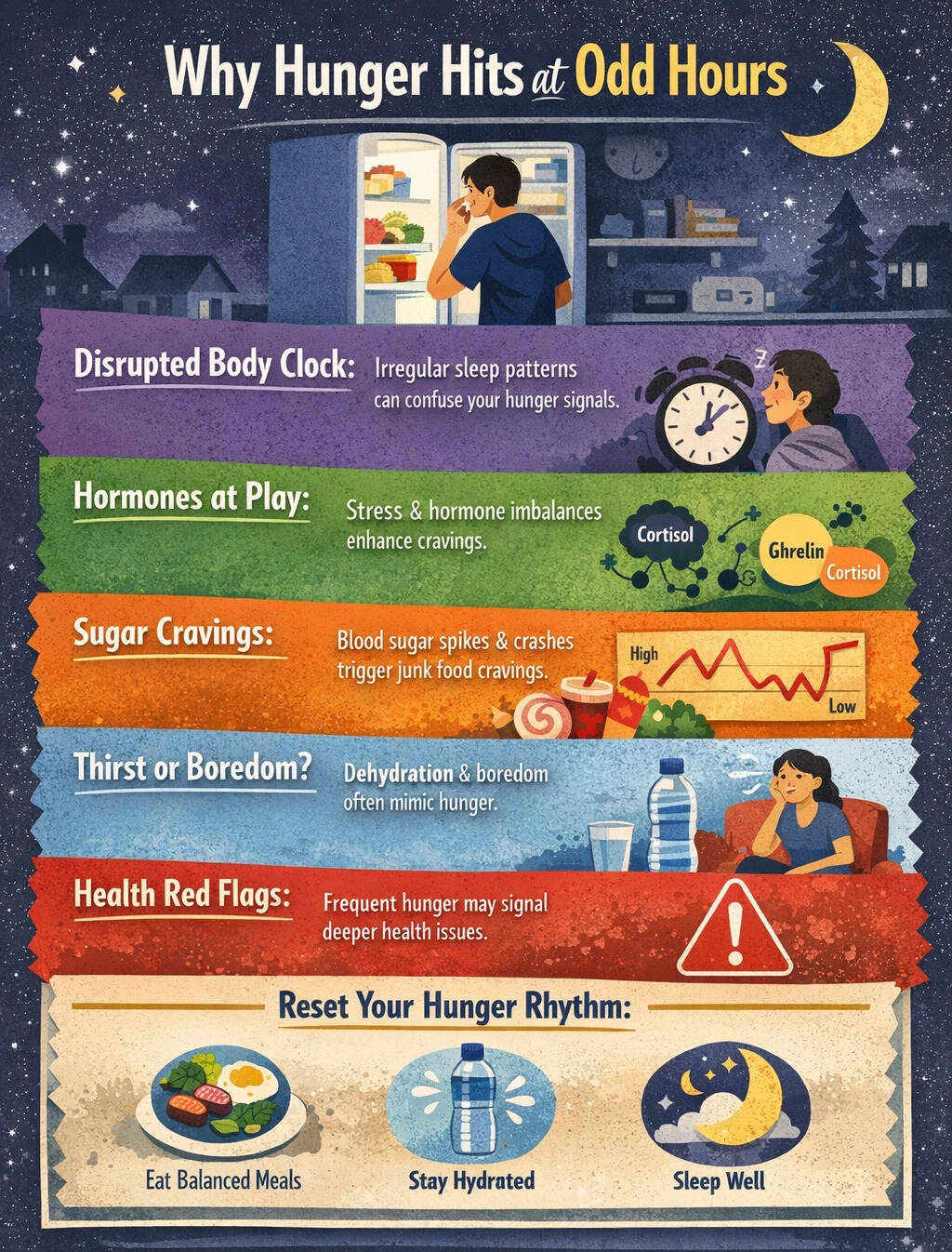
Persistent or intense hunger may require medical attention.
How to reset your hunger rhythm
The good news is that hunger patterns can be corrected with small, consistent changes.Start with regular meals. Eating at fixed times trains the body to expect food at the right hours. Include protein and fiber in each meal, as they keep you full for longer.Hydration matters more than most people think. Drinking enough water through the day can prevent false hunger signals.Sleep is equally critical. A consistent sleep schedule helps restore hormone balance and reduces late-night cravings.As Dr Pandit advises, “Eating meals on time, having a diet with enough protein and fiber, drinking enough water, and sleeping well can help control hunger.”
Listening to your body, not fighting it
Hunger is not the enemy. It is a signal. The key is to understand whether that signal is coming from real need, emotional triggers, or a disrupted routine.That balance still holds true. The body rarely sends signals without a reason. The challenge is learning to read them correctly.Odd-hour hunger is linked to disrupted sleep, hormonal imbalance, unstable blood sugar, or emotional triggers. It is not always about needing food. Regular meals, better sleep, hydration, and mindful eating can help restore natural hunger patterns. Persistent or intense hunger may require medical attention.Medical experts consultedThis article includes expert inputs shared with TOI Health by:Dr Rakesh Pandit, Senior Consultant & HOD, Internal Medicine, Aakash Healthcare.Inputs were used to explain why sudden hunger at unusual hours occurs, what these patterns indicate about overall health, and why consulting an expert is important to understand and manage the underlying causes effectively.
About the Author


