
Stress rarely stays in one place. It moves quietly through the body, linking systems that seem separate but work as one. The heart and the brain are a perfect example. One reacts, the other responds. One struggles, the other compensates. This daily exchange often goes unnoticed, yet it shapes how the body feels, thinks, and survives.A rushed morning, a tense meeting, poor sleep, or even constant scrolling can trigger the same internal alarm. The body does not distinguish between emotional and physical stress. It simply reacts. And when it does, both the brain and the heart are pulled into the same loop.
The silent conversation between brain and heart
The brain and heart are always in conversation. Signals travel through nerves, hormones, and blood vessels. Every thought, emotion, or reaction sends instructions to the heart. In return, the heart’s condition influences how the brain functions.Dr G Vivek, Consultant – Cardiology, Manipal Hospital Kanakapura Road, explains it clearly, “The brain and the heart are two vital organs for the normal functioning of the body, and both are deeply interconnected. Diseases affecting one can accelerate or worsen the functioning of the other.”This connection is not occasional. It happens every second. A sudden fear increases heart rate. A calm moment slows it down. Over time, these small exchanges build a larger impact.
Why stress feels the same in both organs
The body relies on a built-in system called the “fight or flight” response. It prepares the body to act fast in stressful situations. But in modern life, this response gets triggered too often.As Dr Vivek notes, “Our body has a ‘fight or flight’ response triggered by the sympathetic nervous system. When it gets activated, there may be an increase in heart rate and blood pressure, causing increased stress on the heart. This also stresses the brain by elevating blood pressure and associated complications.”So, a stressful thought is not just “in the mind.” It becomes physical. The heart beats faster. Blood pressure rises. The brain stays alert. When this repeats daily, both organs stay under constant strain.
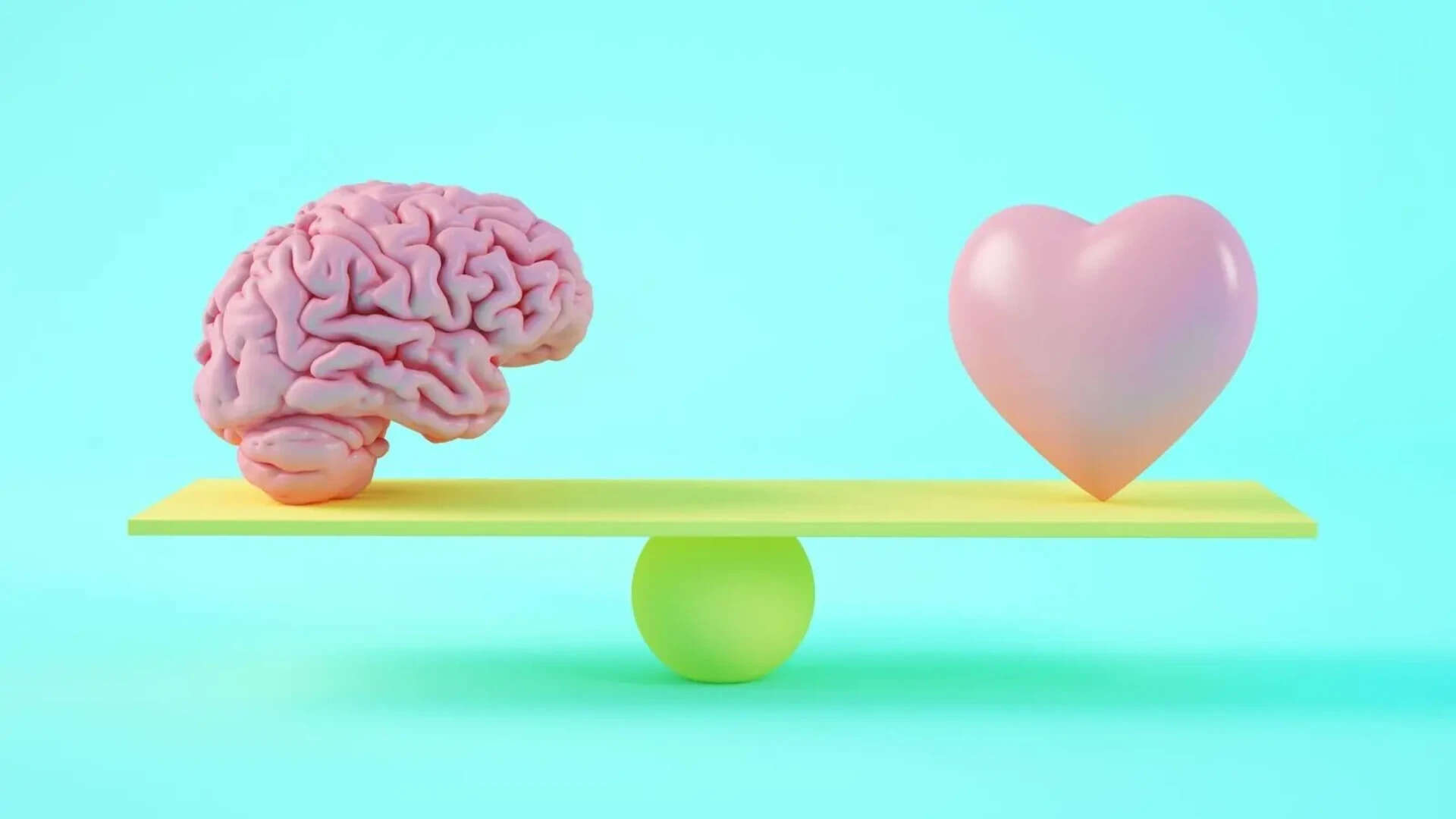
High blood pressure, emotional strain, and poor lifestyle habits create a continuous loop of stress between them.
Blood pressure: the shared burden
The vascular system connects everything. Blood carries oxygen and nutrients from the heart to the brain and back. When blood pressure rises, this entire system feels the pressure.Dr Vivek highlights this risk, “The vascular system extends throughout the entire body, with the heart pumping oxygenated blood to the brain and all other organs to sustain life. Therefore, whenever blood pressure rises, the risk of a patient developing a stroke increases significantly.”High blood pressure does not just strain the heart. It damages blood vessels in the brain. Over time, this increases the risk of stroke, memory issues, and cognitive decline.A report by the World Health Organization (WHO) also notes that uncontrolled hypertension is a leading cause of both heart disease and stroke.
When the brain shocks the heart
The connection works both ways. A sudden emotional or neurological event can directly affect the heart.Dr Vivek explains, “Whenever a person suffers a stroke, the sympathetic nervous system becomes overactivated, which can trigger a condition called broken heart syndrome or stress cardiomyopathy, traditionally called Takotsubo cardiomyopathy.”This means intense stress or shock can weaken the heart temporarily. It mimics a heart attack, even when there is no blockage. The brain’s reaction alone is enough to disturb heart function.Research supported by the National Institutes of Health (NIH) has also explored how emotional stress can trigger cardiac events.
Hidden risks people often miss
Many people assume heart disease and brain disorders develop separately. In reality, they often share the same roots.Dr Vivek adds, “Patients with pre-existing heart diseases also have a significantly increased incidence of nervous system disorders. A weakened heart tends to produce clots in its chambers, which can travel to the brain, eyes, and various organs, potentially inducing a stroke.”This is where the danger becomes silent. A small clot formed in the heart can travel to the brain without warning. The first sign may be sudden weakness, blurred vision, or loss of speech.These are not isolated events. They are part of the same chain.
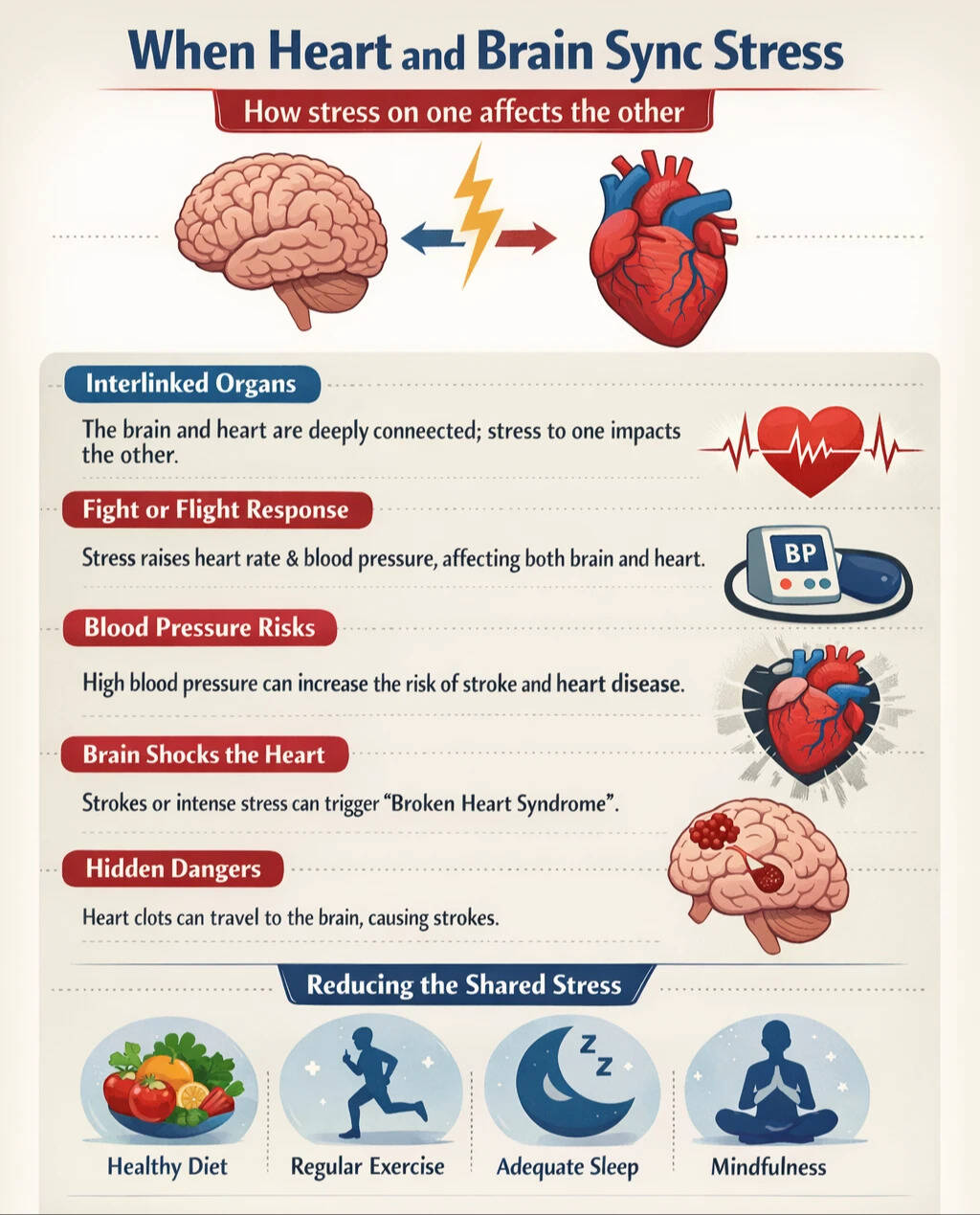
Understanding this connection helps prevent serious conditions like stroke, heart disease, and stress-induced cardiac issues. Small lifestyle changes can reduce this shared burden and protect long-term health.
Daily habits that quietly increase the load
The body does not need a major illness to feel stressed. Daily habits play a powerful role.
- Lack of sleep keeps the brain in a state of alertness. The heart does not get enough rest.
- High-salt or processed food raises blood pressure.
- Constant screen exposure increases anxiety and mental fatigue.
- Physical inactivity weakens both circulation and mental resilience.
Over time, these patterns create a steady pressure on both organs. The body adapts, but only up to a point.
What actually helps reduce the shared stress
Relief does not come from one big change. It builds through small, consistent actions.Dr Vivek suggests a simple approach, “Yes, we definitely can reduce the burden through a well-rounded diet and sufficient sleep, as they can lower blood pressure, which in turn eases the load on the heart. Since cardiovascular problems can impact both the heart and the brain, a healthy lifestyle is a must. Regular exercise and mindfulness techniques are also effective at reducing anxiety and blood pressure, keeping the vascular system in good health.”Movement improves blood flow. Sleep resets the brain. Mindfulness calms the nervous system. Together, they reduce the constant “alert mode” the body stays in.Medical experts consultedThis article includes expert inputs shared with TOI Health by:Dr G Vivek, Consultant – Cardiology, Manipal Hospital Kanakapura Road.Inputs were used to explain how daily stress simultaneously impacts both the brain and heart, how closely they influence each other, and why managing this connection is essential for overall health.
About the Author


