
As Malayalis who have spent over a decade in China, my wife and I recently undertook a journey that felt like a rediscovery of history, culture, and unexpected kinship — deep in the heart of Xinjiang, a province far west in China. The National Day holiday in early October is when millions of people travel across the country. For us, it was the perfect moment to explore this part of China, and it surprised us and felt strangely familiar at the same time.
Our adventure begins with a 6-hour, 45-minute flight from Shanghai to Kashgar — longer than flying from Kochi to Dubai! It reiterates to us the immense scale of China.
Stepping into Kashgar is like walking into a living fairytale. This ancient Silk Road hub pulses with energy. The Old City’s labyrinthine alleys are filled with the aroma of naan bread and lamb kebabs, the sound of enchanting traditional Uyghur music, and the sight of Uyghur families dancing with a joy that is infectious. The warmth and kindness of the Uyghur people are immediately apparent, with shopkeepers offering cheerful smiles and helpful directions.
Food stalls in the alleys of Kashgar.
| Photo Credit:
Suresh Varma
Shared cultural ties
We discover a beautiful bridge to home in the most unexpected way: the enduring love for Indian cinema. Children run up to us, gleefully humming the music of ‘Aankhen Khuli’ (Mohabbatein, 2000) — their words a mix of Hindi and their own tongue, but with perfect melody. We cheerfully field questions about Shah Rukh Khan. In that moment, thousands of miles from home, we feel a familiar connection.
This warmth extends beyond the marketplace. A minor logistical note for future foreign travellers: while using a self-driven car, we find that fuel stations require a Chinese ID card. But this potential inconvenience becomes a testament to the local character. On multiple occasions, eager and helpful residents step forward to swipe their own IDs for us, allowing us to then buy the fuel. It is a simple act of kindness that we will not forget.
A special permit allows for a breathtaking four-hour drive along the Karakoram Highway to the stunning Karakul Lake. Nestled at 3,500 meters in the Pamir range, the lake’s turquoise waters reflect the majestic, glacier-crowned peak of Muztagh Ata, the “Father of Ice Mountains”. Standing there, with the borders of six nations nearby, is a humbling experience, highlighting Xinjiang’s unique position at a crossroads of continents.
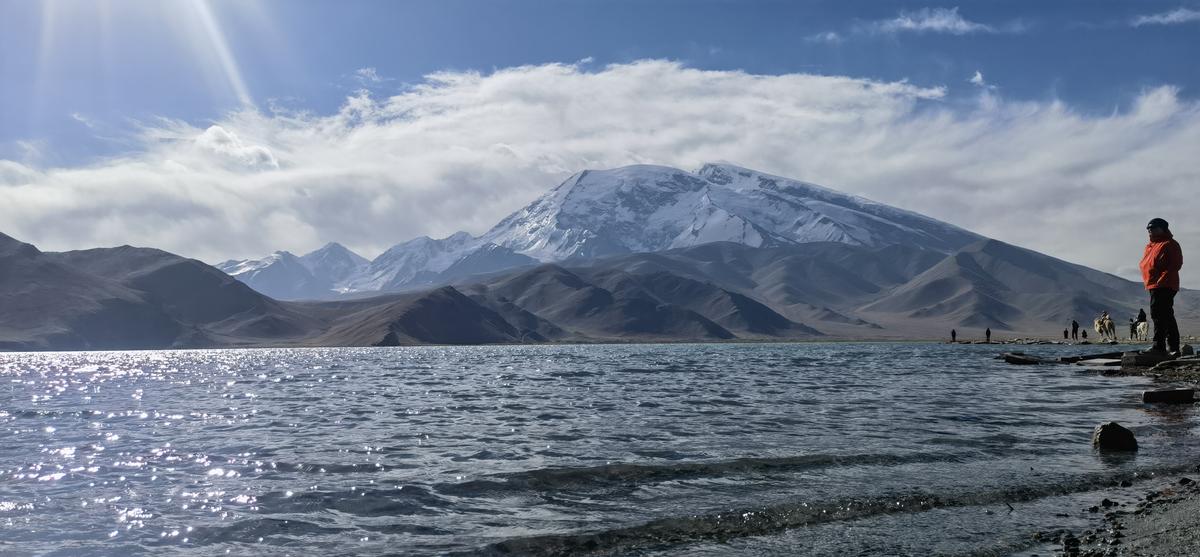
The Karakul Lake with Muztagh Ata in the background.
| Photo Credit:
Suresh Varma
One interesting moment for us is to discover that the Chinese name of Kashgar is Kashi, bearing a resemblance to Kashi (present-day Varanasi), one of India’s ancient holy cities. This shared nomenclature, linking two great centres of civilisation and faith, feels like a silent nod to the deep, historical bonds our cultures have shared for millennia. This connection feels even more personal when we are warmly greeted not as “Yin’du” (the Chinese word for Indian) but as “Hindustani”, a name that echoes from a shared history and brings an immediate, heartwarming smile to our faces. It reminds us that cultural memory travels farther than borders.
Memories of home
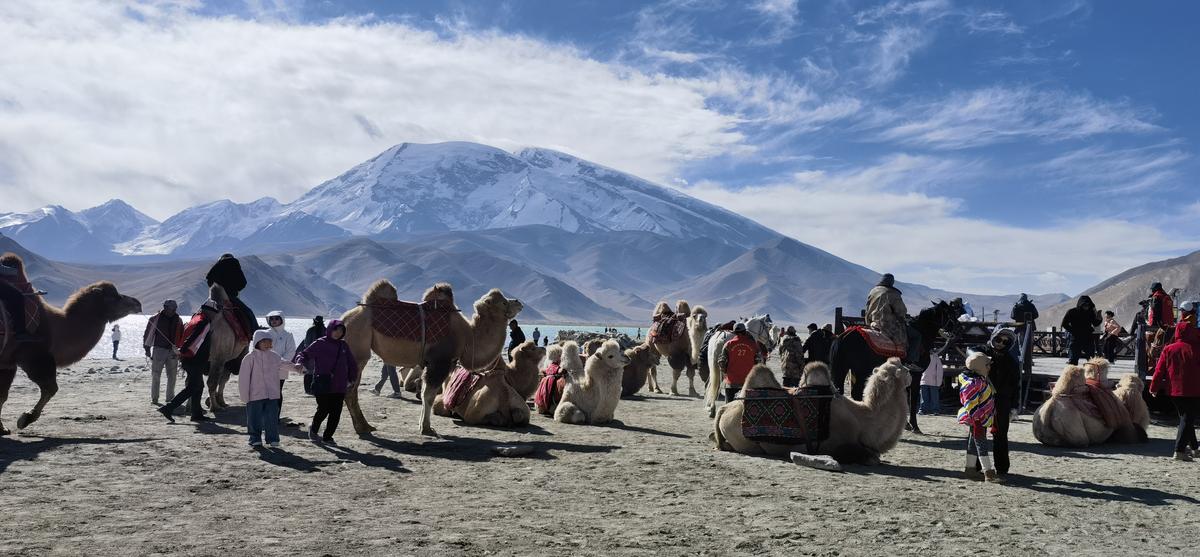
Along the The Karakul Lake
| Photo Credit:
Suresh Varma
We delay our flight just to experience Kashgar’s legendary Sunday Livestock Market — a vibrant, dusty spectacle of animals, handshake deals. The scale is enormous, a vibrant, dusty panorama of cattle, sheep, camels, and donkeys, the air thick with the sounds of animals and bargaining. The entrance itself is a lively fair, a riot of colours with stalls selling handicrafts, dry fruits, and sizzling food. It is here, surprisingly, that we find the most delicious fish barbecue we’ve ever tasted. The scale and energy of the place is a world away from the supermarkets of Shanghai
From there, we fly into Urumqi, the capital city of Xinjiang. The Xinjiang International Grand Bazaar situated there is a marvel of commerce and culture, a vibrant tapestry of sights and sounds. The very word “bazaar” is familiar, and the bustling atmosphere feels strangely like home.
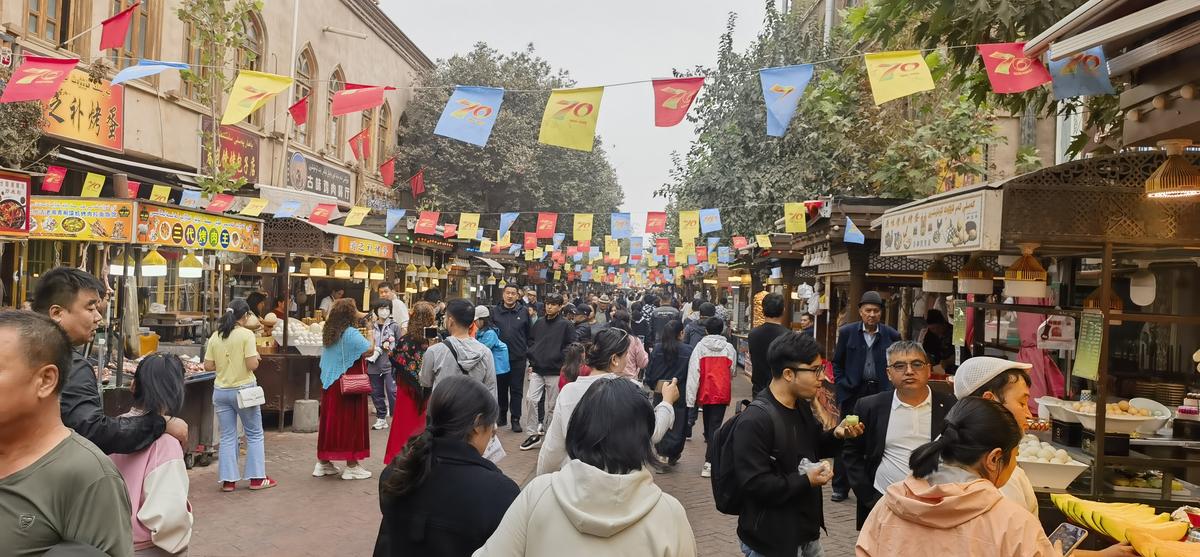
The ancient town of Kashgarh (Kashi)
| Photo Credit:
Suresh Varma
This is followed by a long drive to the serene Heavenly Lake (Tianchi), a UNESCO World Heritage Site nestled 1,980 meters high in the mountains. The jade-coloured waters, cradled by the snow-capped, 5,445-metre Bogda Peak, create a picture of pure tranquillity. Learning that it is a sacred site for local Kazakh and Mongolian communities adds a deep spiritual layer to its breathtaking beauty.
Our journey through time continues at the ruins of the Qocho Uygur kingdom, where the remains of a 9th-century Buddhist temple speak of the region’s rich, layered history. The contrast is complete at the Turpan Flaming Mountains, immortalised in the classic novel Journey to the West, which fictionalises the Tang monk Xuanzang’s pilgrimage to India
Xinjiang is more than epic landscapes; it’s a living museum of cultural confluence. It’s a place where history whispers from ancient walls, and the hospitality of its people creates memories that last a lifetime. For anybody with a spirit of adventure, it is a destination that truly opens our eyes to the world.
The writer is a sourcing and supply chain consultant based in Jiangsu, China.
Published – December 24, 2025 09:42 am IST
About the Author


