
I did not expect to lock eyes with a living goddess in Nepal.
But Kathmandu pulsates with prayer, ritual and surprises, despite its reputation as a party stop en route to the mountains. On Everest Day, as climbers and summit counts dominate the conversation, it feels like a good time to look away from the mountain straining under record crowds, and struggling to survive its own popularity. Instead, I settle in Kathmandu to explore the richness of the valleys below.
Trekkers at Mount Everest
| Photo Credit:
fotoVoyager
From Thamel, boisterous with nightclubs, hiking stores and fit climbers in ‘Annapoorna Base Camp’ T-shirts, I head to historic Durbar Square, weaving between believers, TikTokers and tourists.
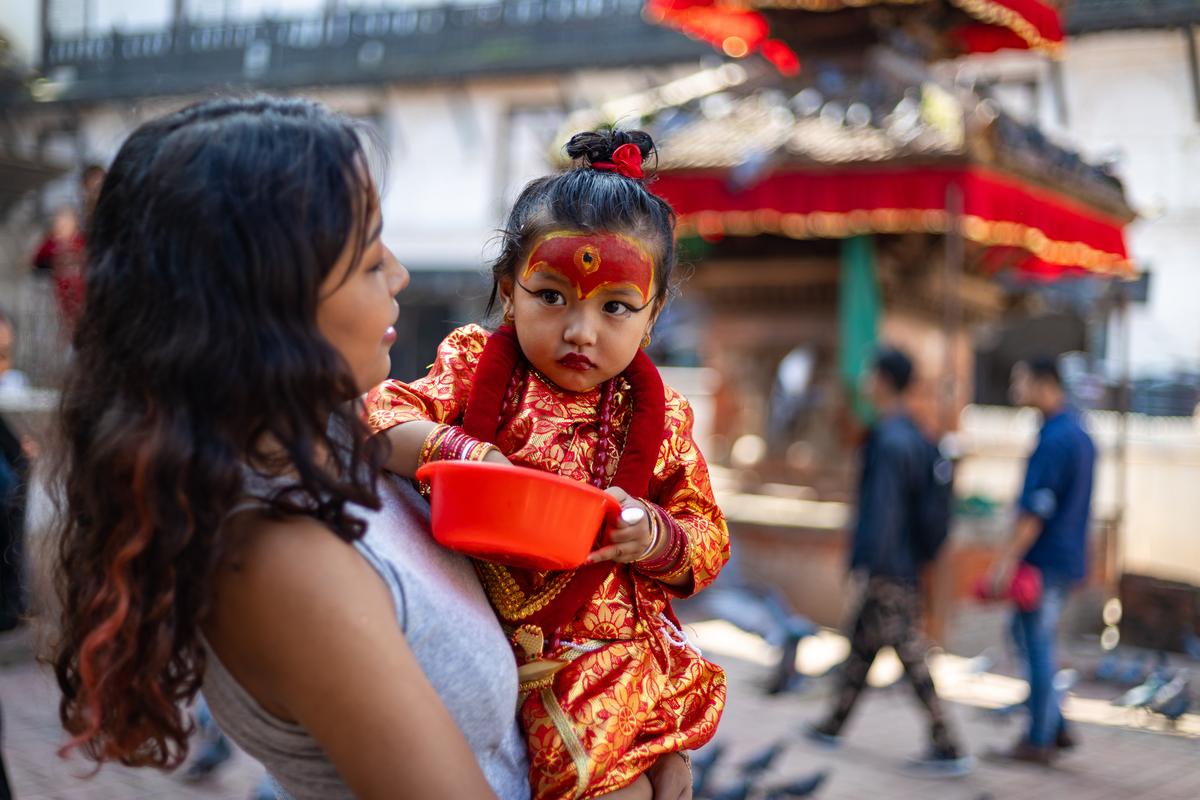
A little girl dressed as Kumari God feeding the pigeons at Kathmandu Durbar Square during Indra Jatra Festival
| Photo Credit:
Siraj Ahmad
Following a patient queue, equal parts prayerful and curious, I enter Kumari Ghar and look up at three intricately carved wooden windows. A hush falls when she appears in the central window, a four-year-old draped in deep red and gold, her kohl-rimmed eyes fixed on the crowds below. The spell breaks when she steps away, and the influencers move in for their reels, despite a handwritten notice saying ‘No TikTok’ on the wall.
A pause after 73 years of climbing Mount Everest?
On Everest Day, which marks Sir Edmund Hillary and Sherpa Tenzing Norgay’s first ascent on May 29, 1953, the mountain is once again in the headlines, with Nepal recording one of its busiest climbing seasons yet. As news and photographs spread on overcrowding, queues in the death zone and the inevitable environmental strain caused by the growing number of climbers, this is a good time to take the world’s highest mountain off collective bucket lists, and explore the rest of Nepal instead.
For travellers who have always dreamt of seeing the iconic mountain there are flights like Buddha Air’s ‘Everest Experience’ where you take off from Kathmandu, and catch a glimpse of 20 of the highest peaks to the East of Nepal starting from the Langtang Lirung to Mt. Everest in the East, all in under an hour.
As I step out, a young band of Nepalis in faded jeans and leather jackets choreograph a dance reel, while beside them devotees bow their heads to a fierce, ancient Kaal Bhairav shrine carved out of stone.
In Nepal, the sacred remains woven into everyday life.
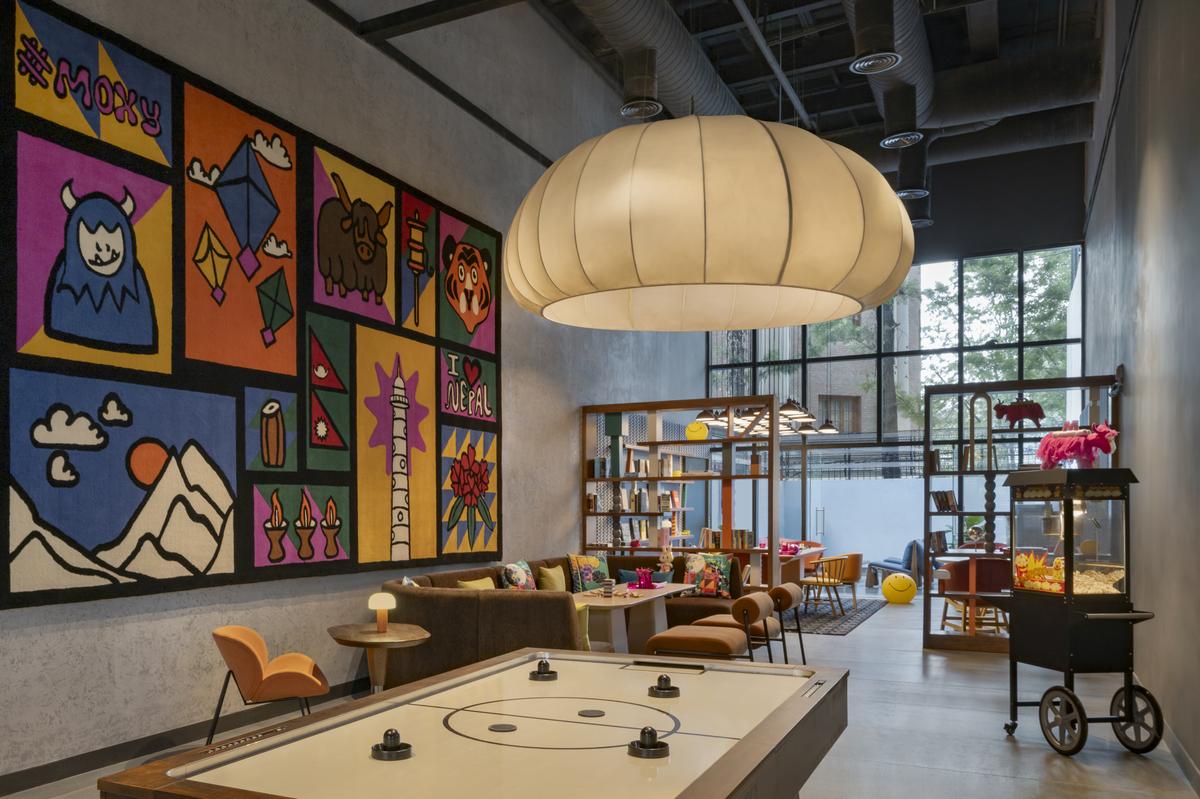
The lobby, which thuds with music all through the day and night, offers a bar that can fuel you with coffee, smoothies or cocktails,
| Photo Credit:
AMIT MEHRA
A country in transition
I am in Kathmandu for the launch of Moxy, a hotel opening that offers a glimpse into a country in transition.
Nepal has drawn curious visitors for decades, including thousands of hippies who gathered at Kathamandu’s ‘Freak Street’ seeking spirituality, travel and counterculture in the 1960s and 70s. I quickly understand why, as I first explore the modern city’s chic Himalayan Java cafes, designer boutiques and nightclubs, then discover Patan’s hidden courtyard shrines, learn about Bhaktapur’s tantric goddesses in an old antique store and sit pillion behind a speedy woman InDrive biker on a highway in the pouring rain to explore Barahi Ajima Shakti Peeth.
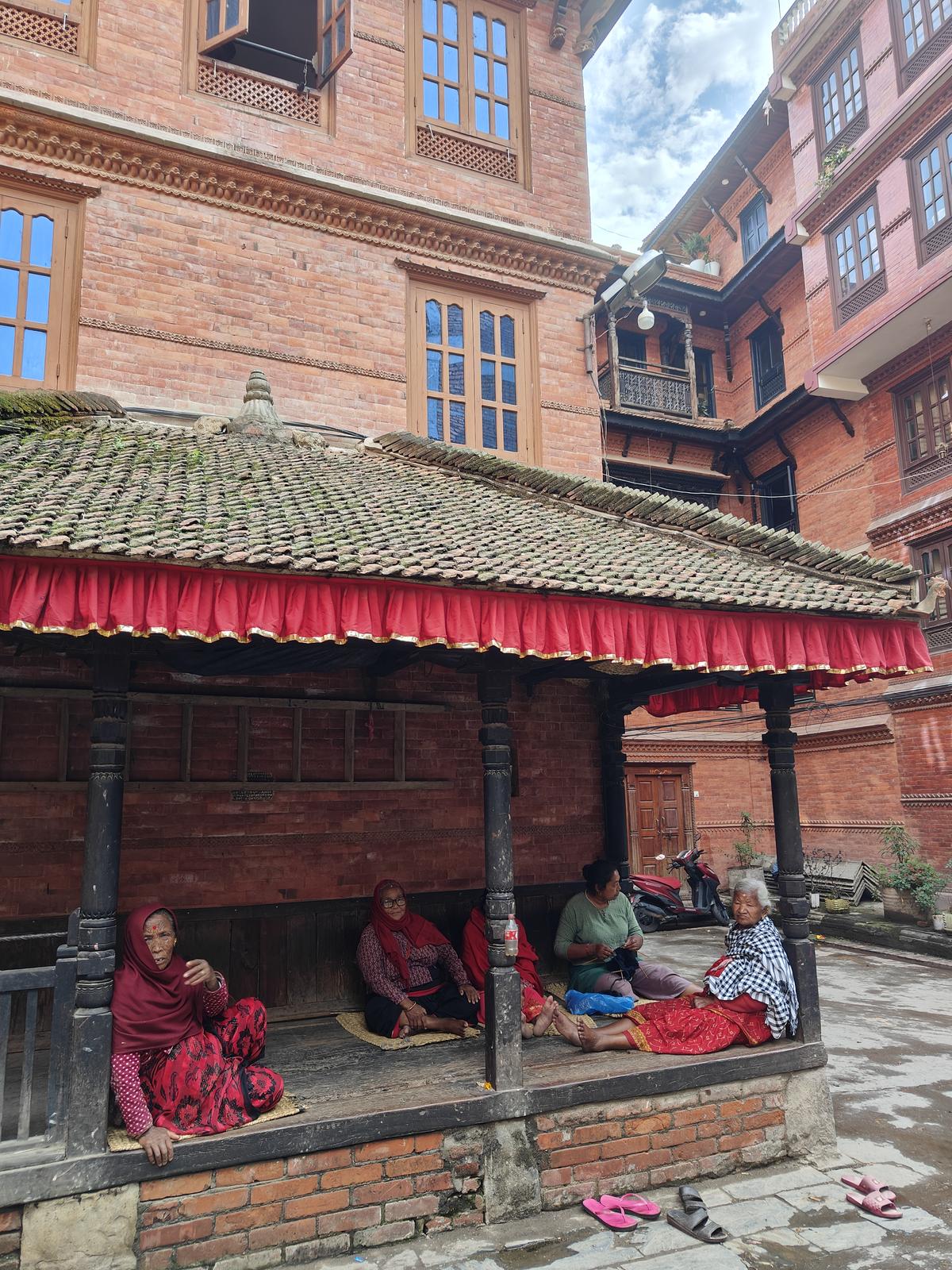
A falcha, one of the many century old communal rest platforms thoughtfully set across Nepal
| Photo Credit:
Shonali Muthalaly
We wait for the downpour to slow down at a falcha, one of the many century old communal rest platforms thoughtfully set across Nepal, where elderly locals now gather to knit and gossip. In a cinematic drizzle, we finally enter the temple, dedicated to one of the eight powerful goddesses believed to protect Bhaktapur where cultural advocate and historian Rushel Shilpakar shows me the city plan, drawn like a mandala, on his iPad before we set out on a four-hour walk though the town, pausing only for juju dhau, sweet, creamy yoghurt made with rich buffalo milk and set in clay pots.
Check into Moxy Kathmandu
Moxy Hotels in Kathmandu aims to connect travellers with the city, instead of just cocooning them. When you check into the hotel set in Durbarmarg, set close to the action of Thamel, the desk will provide you with cocktails, suggestions for hikes and VIP passes to some of the city’s top nightclubs, including moody Purple Haze with high energy local bands, Nova (which calls itself Asia’s biggest nightclub) and the Supperclub boasting ‘dim sum and disco’.
The lobby, which thuds with music all through the day and night, offers a bar that can fuel you with coffee, smoothies or cocktails, and offer an oversized stuffed teddy bear if you feel like company that doubles up as a cushion. The relaxed communal spaces encourage travellers to connect, offering the charm and energy of backpacker hostels, but in a luxe setting. There are 101 guestrooms, which are compact but well designed to maximize space, rooms are quiet, beds are comfortable and if you get lucky, there will be a comfortingly pink, woollen yak at your bedside table.
La Hacienda highlights Latin American food curated by Mexican Chef Martin Hernandez Lopez. But my favourite space is the rooftop bar where you can get a glass of wine, fiery Nepali Choila, with buff tempered in mustard oil and Timur, then served with crunchy beaten rice, and a spectacular view.
I wander through Bhaktapur and Patan’s alleys, watching tailors, hawkers and vegetable vendors work from century-old buildings, framed by museum quality wood carvings and artwork. Moxy Kathmandu unconsciously echoes this theme, with its Labubu-rimmed mirror for #FitChecks,and ‘Yoxy,’ a massive paper mache yak in the lobby made by local artists and covered in Devanagari script, set beside prayer flags and Buddhist symbols.
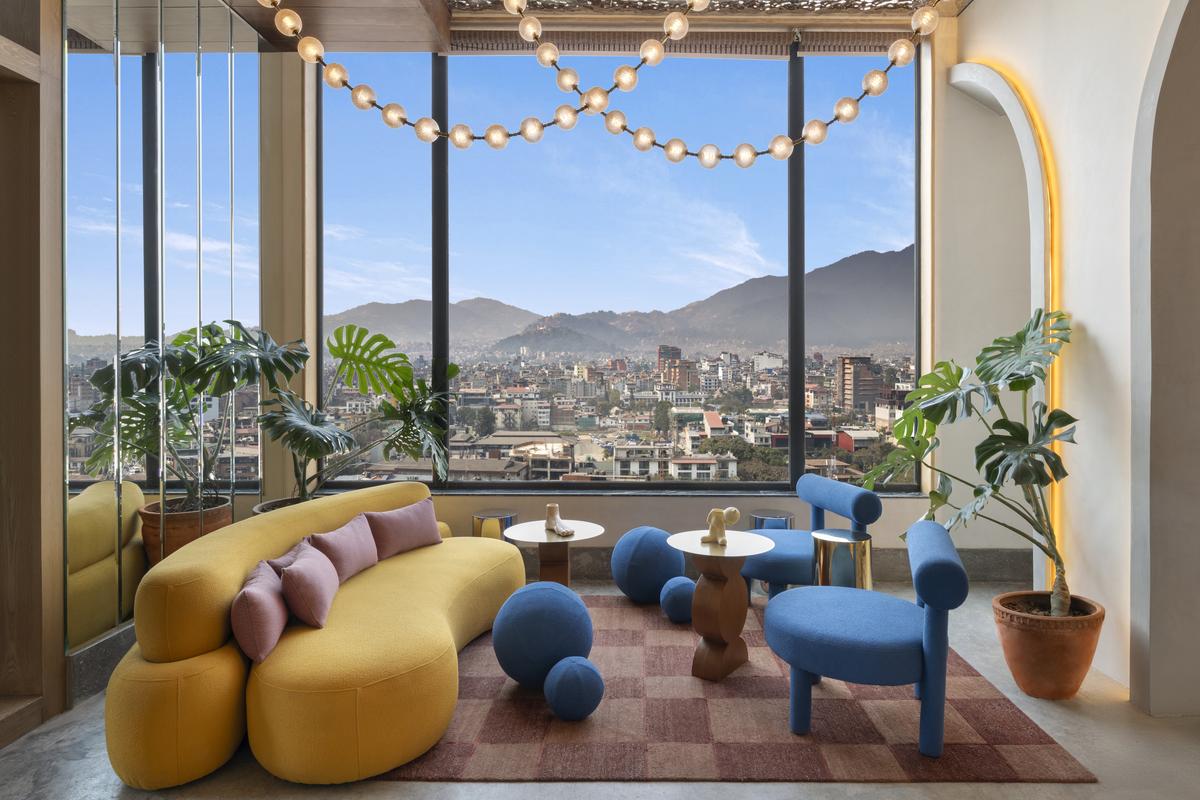
La Hacienda highlights Latin American food curated by Mexican Chef Martin Hernandez Lopez
| Photo Credit:
Special Arrangement
The hotel’s planned launch in October 2025 was paused when Nepal’s Gen Z protests broke out in early September. The youth-led protests, which escalated rapidly, reshaped Nepal’s politics, and slowed down tourism. Subarna Thapa, affectionately hailed as ‘Captain’ at Moxy Kathmandu says they finally did a soft launch in December, at an occupancy of about 22%.
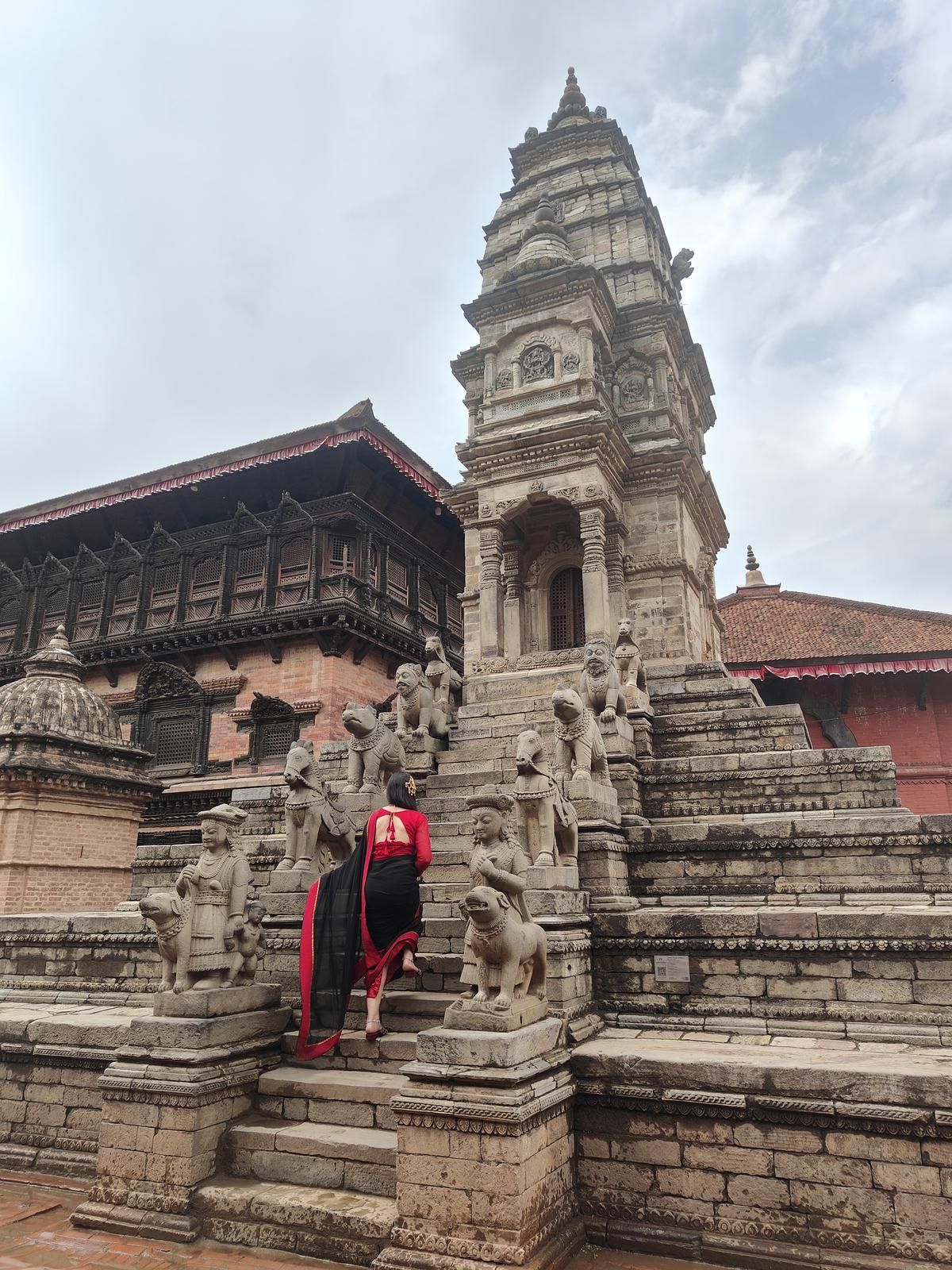
Bhaktapur Durbar Square is former royal palace complex, which housed the Malla kings of Nepal from the 14th to 15th century
| Photo Credit:
Shonali Muthalaly
Despite tensions in West Asia affecting air travel this year, Subarna says there has been a steady rise in tourists since then, with April seeing 55% occupancy at the hotel, buoyed by the general sense of hope in the country as former rapper and mayor, Balendra Shah, popularly known as Balen, took over as the country’s youngest Prime Minister.
The Balen effect
The optimism is evident at Moxy’s launch party, vibrant with Kathmandu’s glamorous creative set, who play beer pong and take Polaroids by the pool, bobbing with blow-up pink flamingoes as the DJ plays Baby Shark. Digital creator Parakram Rana talks about how the country “now has a golden opportunity to make a difference,” adding that “Young people are now more politically aware, and eager to participate”.
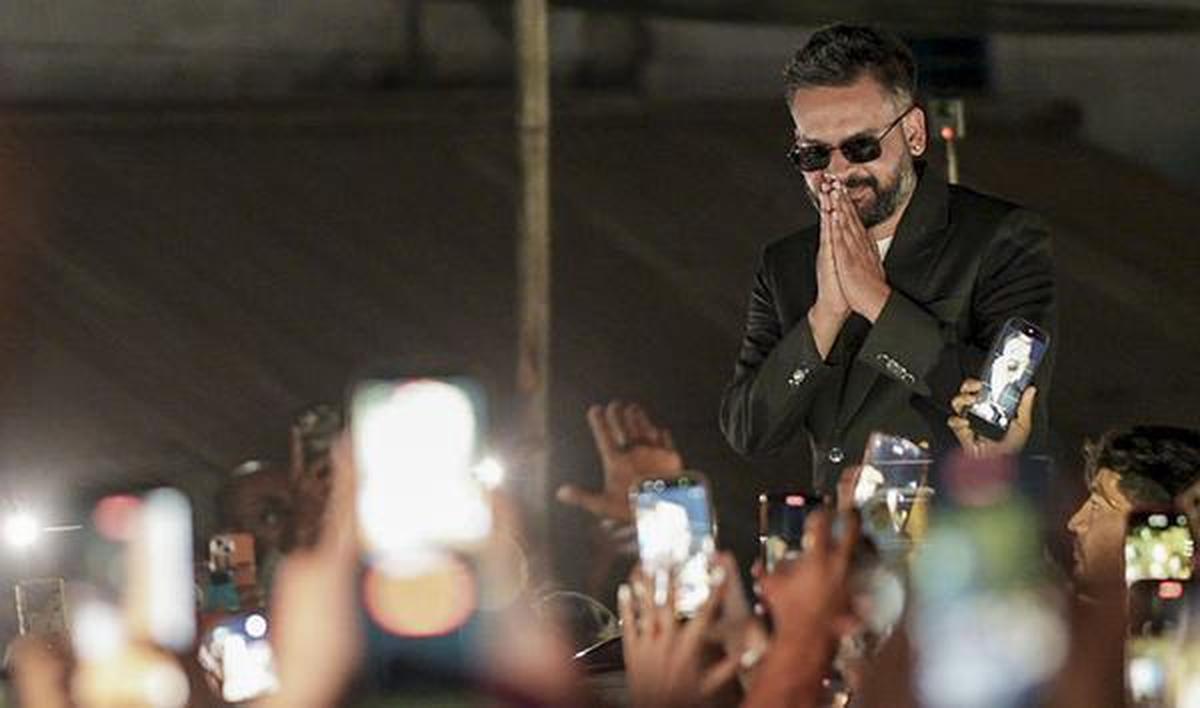
Balendra Shah
| Photo Credit:
PTI
The next morning, on a scenic hike up to Nagi Gompa, a Buddhist monastery swathed in wildflowers, our guide Prashan Poudyal echoes this idea, while helping us put together a playlist of Balen’s greatest hits. (’Queue up Balidan’ on systemic corruption and fan favourite ‘Aam Nepali Buwaa’ about working class struggles on your Spotify playlist). “The prime minister is my age,” he smiles, “We finally have someone who thinks young.”
The Moxy crew, along with multiple other hotels and stakeholders are hoping this translates to more tourists spending time in Kathmandu, as well as neighbouring Patan and Bhaktapur, all UNESCO heritage sites. Explaining how there is much more to Nepal than hiking, Sunil Sharma, officiating director – Nepal Tourism Board says the country has the potential to be a destination for safaris with Chitwan, as well as wellness and weddings. “Look at the border towns from West Bengal, as infrastructure improves so does tourism. That stretch is full of hotels now,” he says, adding that they expect more global brands to open in Nepal this year.
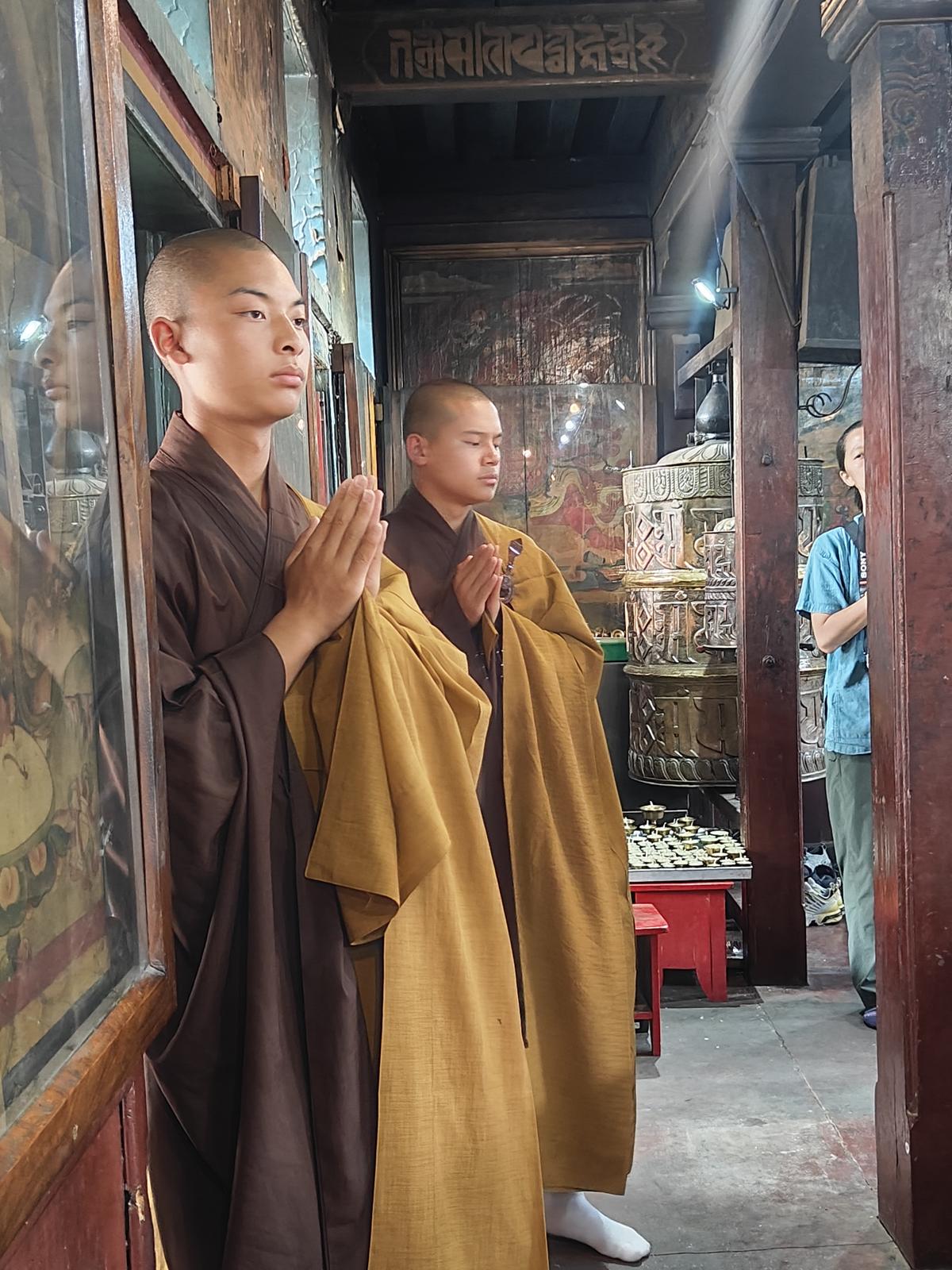
Monks at the 12th Century Hiranya Varna Mahavihar in Patan
| Photo Credit:
Shonali Muthalaly
Fortunately, what makes Nepal so special is so ingrained in the fabric of everyday life that it is unlikely to change. In Patan, I wake up in the mornings and head out for freshly fried sel rotis, crunchy fried dough made with rice flour, then sit barefoot and cross legged among chanting monks at the statuesque 12th Century Hiranya Varna Mahavihar.
A homecoming
At night, I join Rabin Gurung at Bitters & Co, a stylish cocktail bar in Kathmandu that highlights local ingredients like sea buckthorn, fermented leafy greens and pleasantly numbing Timur peppers. Under a surprisingly lush indoor tree which the bar hugs, reminiscent of the community falchas, we snack on crunchy, spicy Wai Wai sadeko and knock back Titora shooters, made with dry fruit hog plum, both offering an addictive ‘chatpata’ kick of complex sweet, sour and salty flavours.
Explaining why he returned to Nepal, after years in Hong Kong, Rabin says, “This is home. We have a living goddess. We have heritage. If you want to see harmony in chaos come to Nepal. There is magic here.”
And now, there is optimism too.
About the Author


