There is a familiar shift that arrives with peak summer. Meals feel heavier, cravings dull down, and sometimes even favourite foods lose their appeal. It is easy to brush it off as “just the heat.” In many cases, that instinct is right. The body adjusts in subtle ways to cope with rising temperatures.But the same change can also whisper something deeper. Appetite is not just about food. It is a signal system. When it changes, the body is often trying to say something, either adapting, or asking for attention.
The body slows hunger to beat the heat
Dr Rahul Mathur, Department of Internal Medicine, CK Birla Hospitals Jaipur, explains it simply, “Hot weather naturally affects the body’s hunger signals. During summer, the body works harder to maintain its temperature through sweating and heat dissipation, and this can suppress appetite.”The body is constantly balancing heat. Sweat, blood flow, and cooling mechanisms take priority. Digestion, which generates internal heat, quietly moves down the list.There is also a practical shift. People tend to move less during extreme heat. Lower activity means lower energy demand. Hunger adjusts accordingly.A study by the National Institute of Nutrition notes seasonal variations in food intake across Indian populations, especially during hotter months.Another global review by the World Health Organization highlights how heat stress impacts metabolism and hydration patterns.These are not dramatic changes. They are quiet, built-in survival responses.

Lighter foods and reduced hunger are normal responses. However, persistent loss of appetite, especially with symptoms like fatigue or dehydration, can signal underlying health concerns.
Why lighter foods suddenly feel right
Summer does something interesting to cravings. Heavy, oily meals begin to feel overwhelming, while fruits, curd, and buttermilk suddenly feel satisfying.Dr Mathur notes, “Another reason is that in summer, the body often ‘prefers’ lighter, water-rich foods such as fruits, curd, buttermilk, and salads over heavy, oily meals. This is a normal adaptive response.”This is not just preference. It is physiology.Water-rich foods cool the body, hydrate it, and digest faster. They also prevent the sluggish, bloated feeling that often follows heavy meals in hot weather.Dehydration plays a role too. Even mild fluid loss can blunt hunger signals. The body confuses thirst and fullness, leaving a person feeling oddly uninterested in food.
When a normal dip turns into a warning
A short dip in appetite is common. But when does it stop being harmless?Dr Mathur explains, “However, loss of appetite can be a warning sign when it is persistent, severe, or associated with other symptoms.”Those symptoms matter. They include fatigue, nausea, dizziness, fever, loose motions, or reduced urine output. These signs may point to dehydration, heat exhaustion, infection, or electrolyte imbalance.Another red flag is time.If appetite stays low for more than five to seven days, it deserves attention.Certain groups need extra caution. Older adults, children, and people with chronic illnesses can decline quickly with poor intake.“In simple terms,” he adds, “mild appetite changes in summer can be normal, but persistent appetite loss with weakness or warning symptoms deserves medical evaluation.”The body rarely shuts down hunger without reason. When it does, it is worth listening.
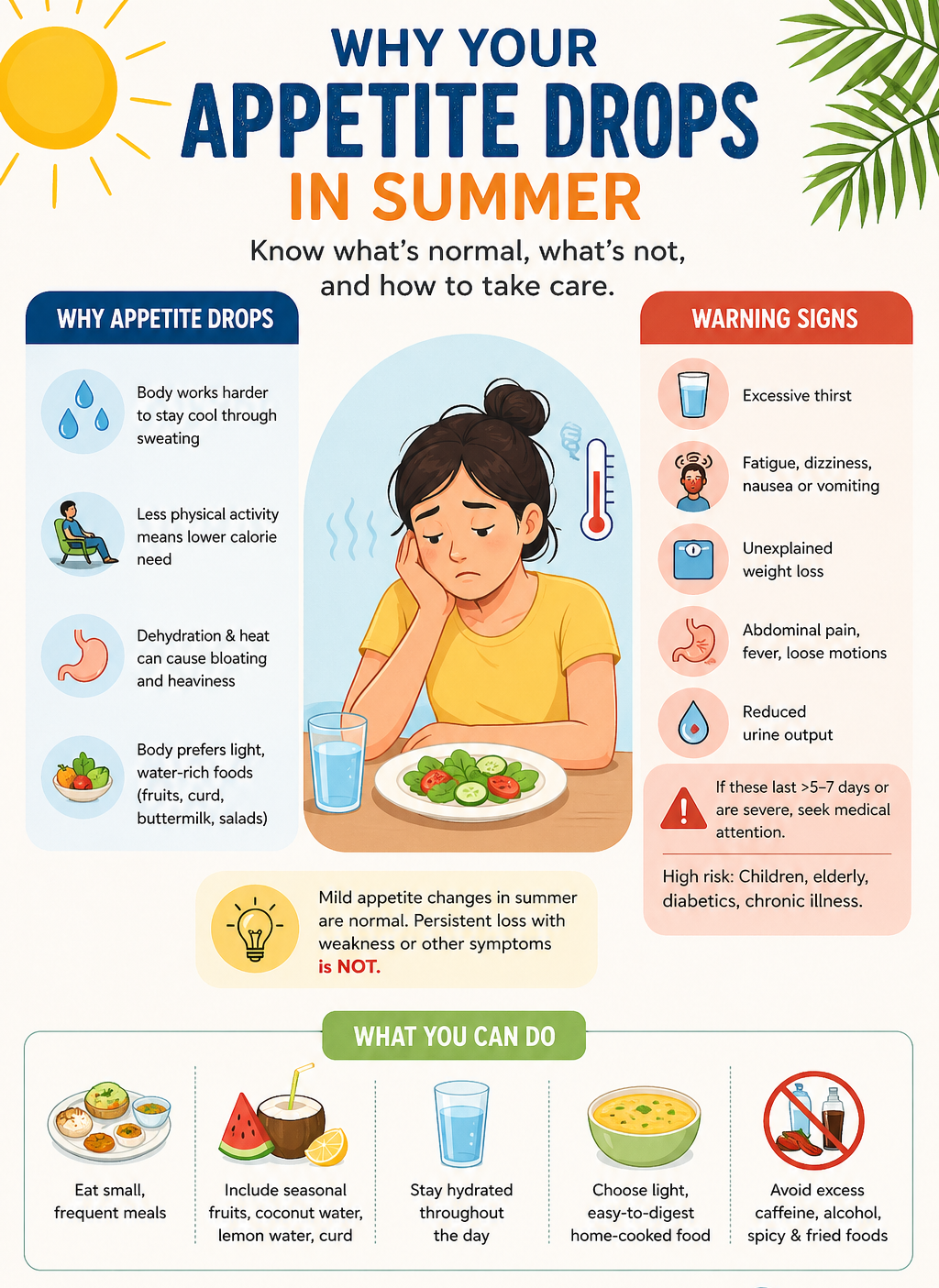
Timely attention and simple dietary adjustments can help maintain balance.
Small habits that help appetite return
There is no need to force large meals. That often makes things worse. The approach needs to be gentle and consistent.Dr Mathur advises, “To support appetite in summer, avoid skipping meals. Prefer small frequent meals, include seasonal fruits, coconut water, lemon water, curd, and easily digestible home-cooked food.”
- Spacing meals through the day works better than relying on three heavy portions.
- Hydration is just as important. Waiting until thirst kicks in is often too late. Fluids should be steady and regular.
- Avoid foods that stress the system. Excess caffeine, alcohol, and very spicy or fried items can make appetite drop further.
There is also a behavioural side. Eating in a cool, calm setting can subtly improve hunger cues. The body responds to environment more than most realise.
The signal that is worth noticing
In summer, the problem is not always what is eaten. It is whether the desire to eat fades too far.Appetite is one of the earliest indicators of internal balance. When it dips briefly, the body is adapting. When it stays low, it may be signalling strain.The difference lies in duration, intensity, and the company of other symptoms. That is where attention matters.Medical experts consultedThis article includes expert inputs shared with TOI Health by:Dr Rahul Mathur, Department of Internal Medicine, CK BIRLA Hospitals, Jaipur.Inputs were used to explain how hot weather can naturally reduce appetite due to changes in the body’s metabolism and hydration levels, and why in some cases a persistent loss of appetite may signal an underlying health issue that requires medical attention instead of self-treatment or relying on natural alternatives.
About the Author