
The thyroid is a small gland in the neck, shaped like a butterfly. It controls some of the body’s most vital functions. It regulates metabolism, heart rate, temperature, menstrual cycles, and even mood. In India, thyroid disorders are common. A study published in the Indian Journal of Endocrinology and Metabolism reports that nearly 42 million Indians suffer from thyroid diseases.Food cannot cure thyroid disorders. But the right diet can support treatment and reduce complications. The wrong food habits can worsen symptoms, delay recovery, and affect hormone balance. So what should a person with thyroid issues actually eat? The answer depends on the type of thyroid disorder and the Indian diet pattern.
Understanding the Indian thyroid picture completely
India once faced widespread iodine deficiency. To address this, the government launched the National Iodine Deficiency Disorders Control Programme (NIDDCP) under the Ministry of Health & Family Welfare. According to official data, universal salt iodisation has significantly reduced goitre prevalence in many states.Yet thyroid problems today are not only about iodine deficiency. Many people now deal with hypothyroidism, hyperthyroidism, or autoimmune conditions like Hashimoto’s thyroiditis.Now, diet here plays a very different role in each of these conditions:
- Hypothyroidism: Metabolism slows down. Weight gain and fatigue can be considered common.
- Hyperthyroidism: Metabolism speeds up. Weight loss, anxiety, and rapid heart rate may occur.
- Autoimmune thyroid disease: The immune system attacks the gland.
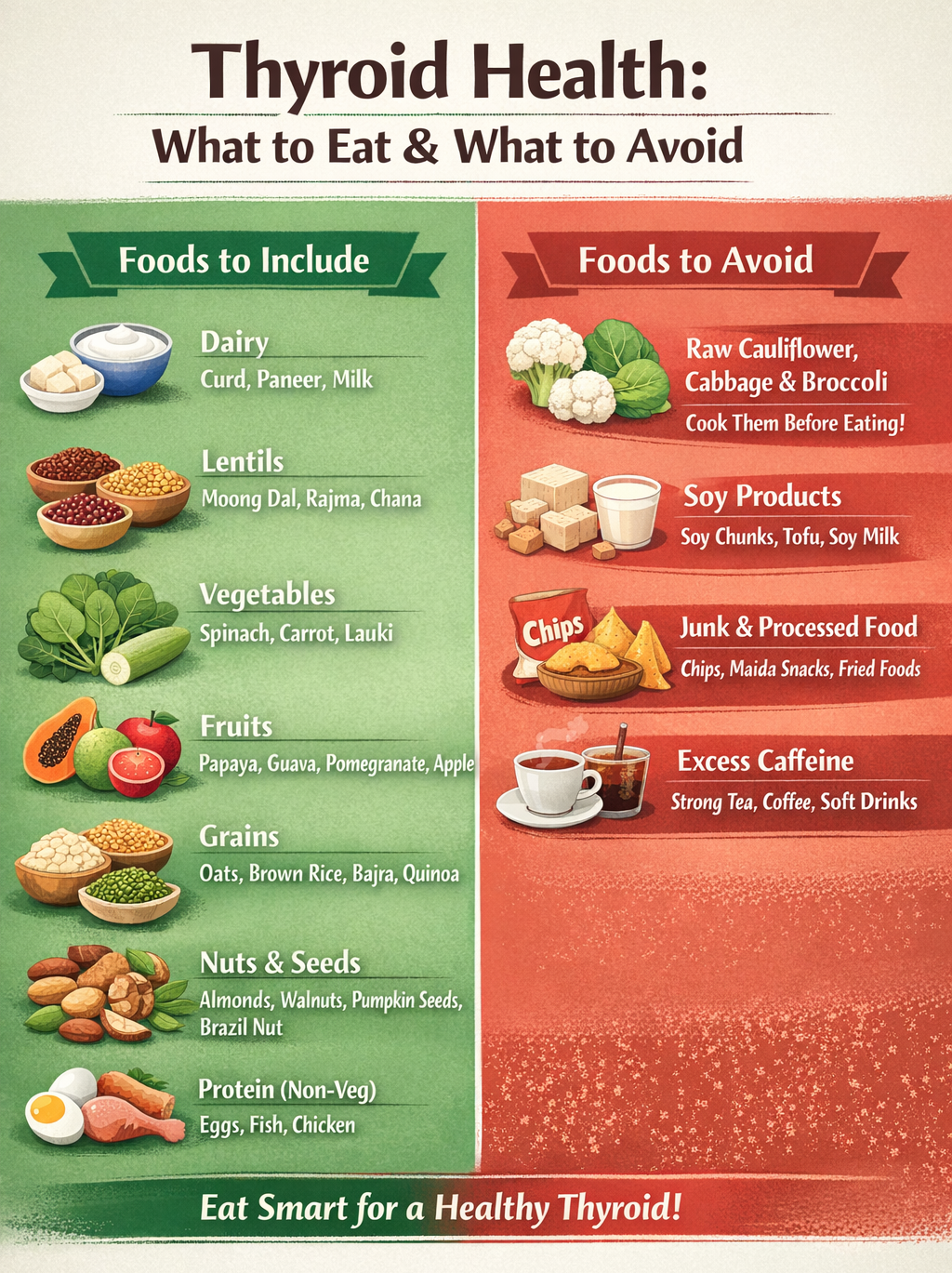
Dr Vineet Arora, Senior Director, Internal Medicine, Max Super Speciality Hospital, Shalimar Bagh, told TOI Health, “Millions in India suffer from thyroid disorder, which can cause fatigue, weight issues and more. A simple dietary habit with the right choices can help in keeping your thyroid under control and can support your energy levels.” Dr Arora also listed some foods that are to be consumed by a person who has thyroid and what foods should be avoided.

Iodine: Essential, but not unlimited
Iodine is necessary to produce thyroid hormones. For most Indians, iodised salt provides an adequate amount of iodine requirement. The Indian Council of Medical Research (ICMR) recommends around 150 micrograms per day for adults.In simple terms:Use normal iodised salt in small but required amounts.Without medical advice, do not totally switch to non-iodized rock salt.Iodine supplements should not be consumed unless they have been recommended by a doctor.Balance matters more than extremes.
Protein and fibre: The everyday heroes
People with hypothyroidism struggle with weight gain and constipation. A diet rich in protein and fibre helps manage both.
Good sources of protein:
- Dal, rajma, chana
- Paneer and curd
- Eggs
- Fish and chicken
Fibre-rich foods:
- Seasonal vegetables
- Whole wheat roti
- Oats
- Brown rice in moderate portions
Protein supports muscle mass. Fibre improves digestion. Together, they stabilise energy levels. Skipping meals or eating very low-calorie diets can slow metabolism further.
Goitrogenic foods : Should they be avoided?
Cruciferous vegetables like cabbage, cauliflower, broccoli, and mustard greens contain compounds called goitrogens. These can interfere with iodine use in very large amounts.But here is the important part: cooking reduces their goitrogenic effect. Moderate consumption is safe for most people who take adequate iodine.There is no need to completely avoid:Cabbage sabziCauliflower currySarson ka saagThe problem arises only when these are eaten raw and in excessive quantities, especially in people with iodine deficiency.Fear-driven food restriction does more harm than good.
Soy, millets and thyroid medication timing
Soy products such as tofu and soy milk can interfere with the absorption of thyroid medication if consumed too close to the dose.The same applies to high-fibre foods and calcium supplements.Doctors usually advise taking levothyroxine on an empty stomach and waiting at least 30-60 minutes before eating. Millets, which are widely promoted in India, contain compounds that may affect thyroid function when consumed excessively and without adequate iodine intake. Millets can be part of a balanced diet, not the only grain source.
A simple, varied Indian plate meets these needs better than expensive supplements.
Selenium, iron and vitamin D: The silent supporters
The thyroid needs more than iodine.Selenium supports hormone conversion. It is found in nuts, seeds, eggs, and fish.Iron deficiency, common among Indian women, can worsen hypothyroid symptoms. Iron-rich foods include spinach, jaggery in moderation, lentils, and meat.Vitamin D deficiency is also common in India. Safe sunlight exposure and fortified foods help.A simple, varied Indian plate meets these needs better than expensive supplements.
What should be limited?
Certain habits can aggravate thyroid-related symptoms:
- Highly processed foods with excess sugar and salt
- Deep-fried snacks eaten frequently
- Crash dieting
- Excess caffeine in hyperthyroidism
- Unregulated herbal supplements claiming to “cure” thyroid
There is no scientifically proven diet that cures thyroid disorders. Medication attention when necessary and regular blood tests remain essential for everyone.As Hippocrates once said, “Let food be thy medicine.” But even he would agree that medicine must sometimes be medicine.Medical experts consulted This article includes expert inputs shared with TOI Health by: Dr Vineet Arora, Senior Director, Internal Medicine, Max Super Speciality Hospital, Shalimar BaghInputs were used to explain how diet can influence thyroid health and what foods may help or hinder thyroid function, and why one should consult a doctor or qualified nutrition expert before making significant dietary changes.
About the Author


